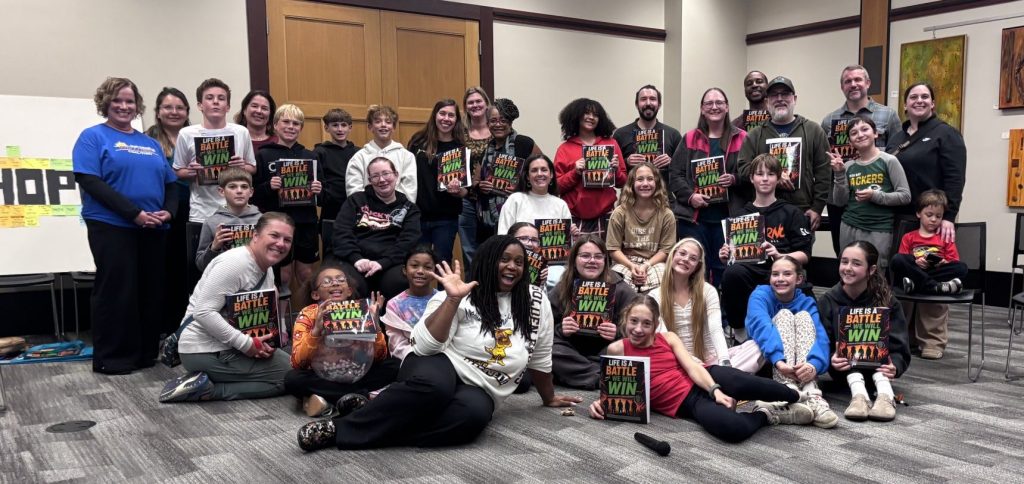
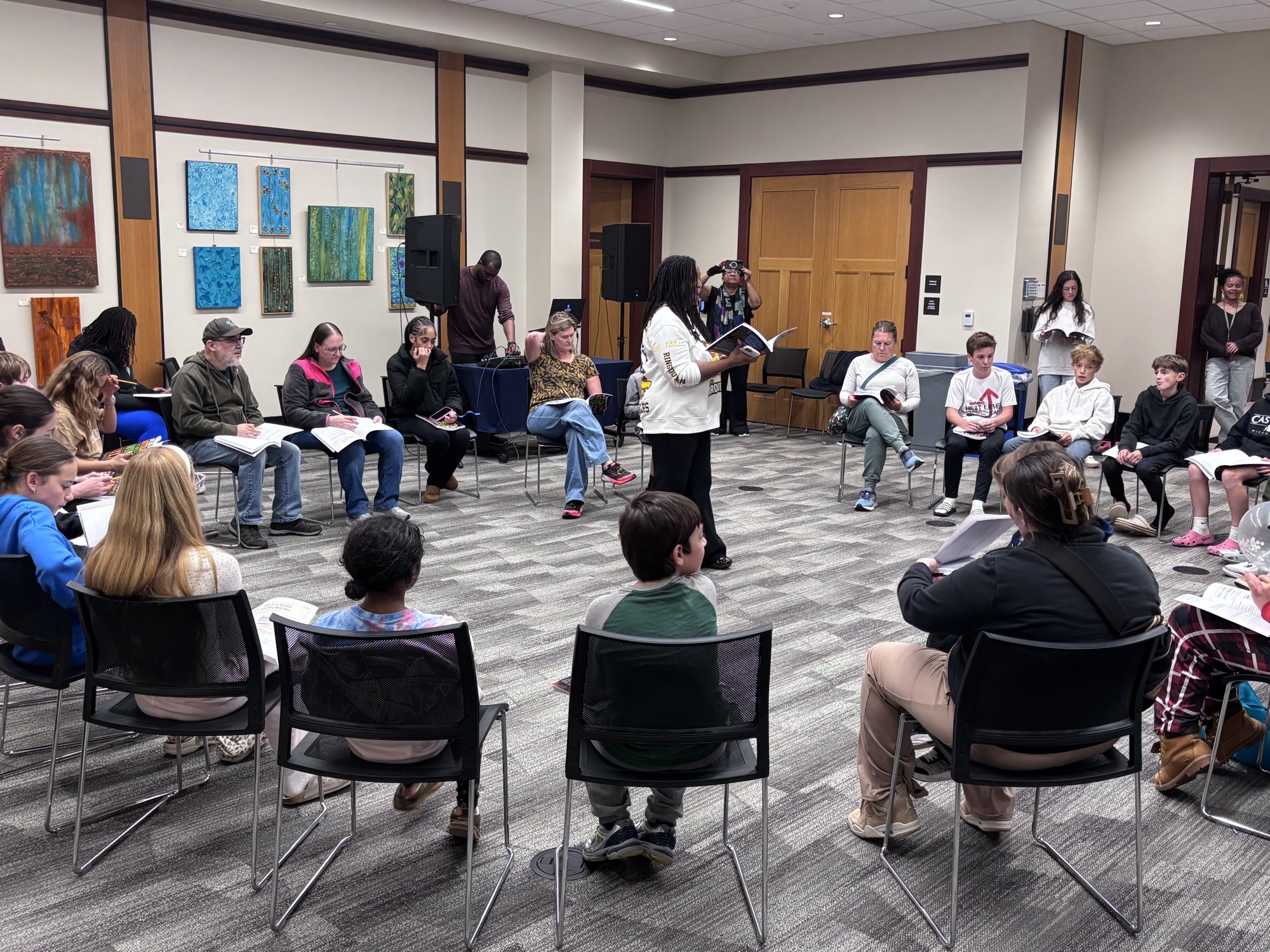
I have said those words many times. On Wednesday night, I got to watch more than 50 people live them. We gathered at the Sun Prairie Public Library for Family Fun Night, a celebration of Life Is a Battle and We Will Win, with one big purpose: to rally around mental health and resilient youth. Kids and grown-ups. Neighbors and new faces. A whole room choosing to support one another.
Timid, curious, and then… laughing
If you have ever walked into a room full of people you don’t know, you know the feeling with shoulders a little tight, eyes rapidly scanning for a familiar face. That’s how many folks came through the door: timid, unsure, but curious.
Curiosity is a wonderful place to start.
Within 10 minutes, the room had changed. We kicked things off with a rousing round of musical chairs and a game of keep-the-balloon-up, and suddenly people were laughing, chatting, and swapping chairs with strangers who didn’t feel like strangers anymore. Media 22 kept the energy high with an amazing playlist (seriously, the music did half the work!).
Play is powerful. It lowers our guard and opens the door to connection, and connection is exactly what so many of our kids are missing right now.
Going deeper, together
Once the room was warm, we opened the book. Dr. Jaz, lead author and publisher of Life is a Battle and We Will Win Volume 2, joined me to guide the evening, and we used reflection questions from the book to help adults and kids talk about real life battles, lessons, and the tactics they lean into when life is hard..
We asked everyone to think about a hard moment and what they learned from it.
One young participant shared about losing a beloved pet, and how life hasn’t felt quite full since.
The room got quiet in the best way. The adults leaned in and, one by one, let him know he wasn’t alone. Many of us have loved and lost a pet, and that ache is something we share. His hard moment didn’t shrink, but it got a little lighter, because now other people were carrying it with him.
That’s resilience. Not pretending it doesn’t hurt. Knowing you don’t have to hurt alone.
From there, the questions explored the good stuff too: the skills that help us through, our inner strengths, the identities that make us who we are, and what we love most about each other and about ourselves. People of all ages proudly shared, “I am strong,” “I am creative,” “I am kind,” “I am forgiving,” “I am dependable,” and even “I am the alpha.”
Everyone gets a voice
Next, we came back together as one big group to share what we’d learned. This was one of my favorite parts of the night. Every person, whether they were 10 or 70, had an equal voice in shaping the key takeaways. Little by little, we built a kind of collective wisdom that none of us could have built alone.
Walking out with hope
We closed with an Art Walk featuring work created by the Central Heights Middle School participants. These young artists poured their hearts onto paper, and it showed.
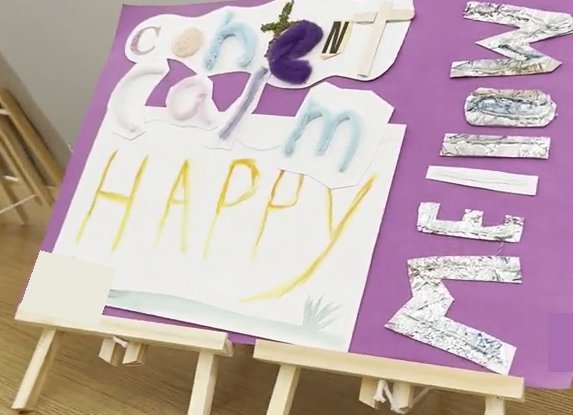
Then everyone added to a collective art piece filled with affirmations of hope. Piece by piece, word by word, a blank space became a wall of encouragement. I can’t think of a better picture of what this night was about.
Thank you
A night like this is never a solo effort. My heartfelt thanks to:
Dr. Jaz Zapata, for co-hosting and for leading all of the work that went into Life is a Battle and We Will Win.
The Sun Prairie Public Library, for opening your doors
Culver’s (Main St, Sun Prairie), for supporting our families with Scoopie tokens
The Central Heights Middle School Art Teachers for supporting the beautiful art walk
Each of these groups works every day to build resources, spark connection, and reduce social isolation for our youth. When we link arms, our kids feel it.
Your turn
Before we said goodbye, we asked everyone to do one simple thing: take what you learned and share it with someone else. So I’ll ask you, too.
What is one hard moment that taught you something? Share it with your child, a friend, or a neighbor this week. You may be the reminder someone needs that they’re not alone.
And if you or a young person in your life is struggling, please reach out. The community partners above are a wonderful place to start, and you can call or text 988, the Suicide and Crisis Lifeline, any time, day or night.
Busy weeks tend to bring more stress, more feelings, and less time to process any of it. That’s exactly when our kids need a soft place to land.
In my experience, kids often open up when the pressure is low and the moment is ordinary. Not at a scheduled “we need to talk” sit-down or family meeting, but in the middle of folding laundry or driving home from practice.
And connection isn’t just a nice extra. It’s part of how kids handle hard things. A large study published in Pediatrics followed more than 14,000 young people from adolescence into adulthood. Those who felt strongly connected to both family and school as teens had 48% to 66% lower odds of several health risks as adults, depending on the outcome, including drug misuse and violence. That’s an association, not a guarantee. But it tells me the small, everyday moments of connection we build now are worth protecting.
Find the time you already have
You probably have more pockets of time than it feels like. A few of my favorites:
Car rides. Side by side, no eye contact required, and nobody can walk away mid-sentence. For a lot of kids, that takes the pressure right off. If you’re like us and have extra ears, it can be a bonus because it adds to the discussion. It also can double the impact and influence. With siblings listening, car talks are less private, so choose the topic with care. It can be a great time to talk through pregame nerves, promote pre-practice visualization or yummy ways to refuel after games. I’d steer away from anxiety-provoking topics like substances, changing bodies or big feelings until it’s a solo ride.
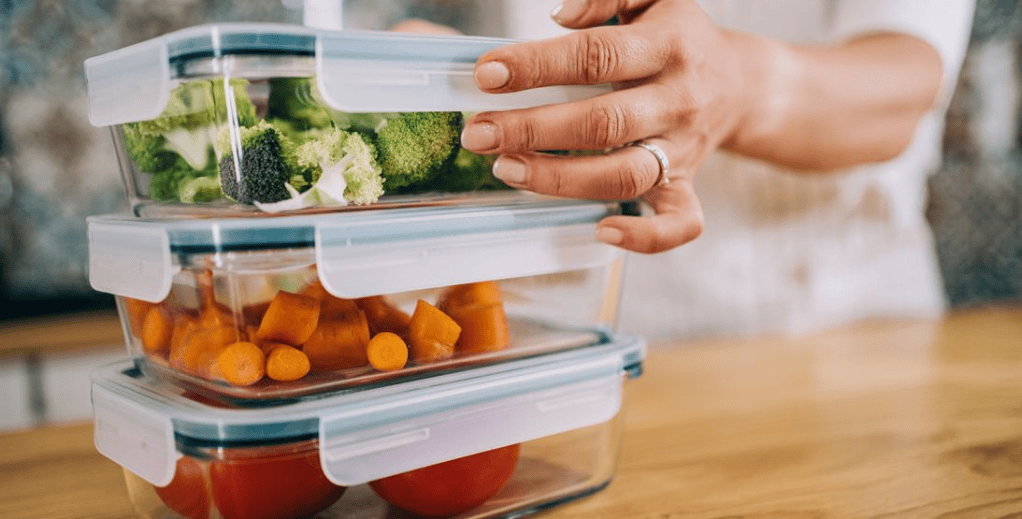
Meal prep and cleanup. Hands busy, conversation easy. A snack after practice counts too. This is a great time to unpack why you chose to serve what you did or to invite your family to help meal plan for the next day. You can hear which meals and snacks are a big hit and those to drop from the rotation.
Bedtime check-ins. Even two minutes at the edge of the bed can turn into the best talk of the day. Yes, this is when energy is low. Yes, I often need a personal pep talk before I make the rounds. Yes, I continue to commit to “tucking” my kiddos in because these two to 20 minutes are often the only time I get to give them where they know they have my attention. It is also when they start to let down their guard after being tough all day. So, while it’s hard, it’s worth it.
Walks, errands, and waiting rooms. The time we usually fill with our phones can become time to connect. Making our way through the grocery store, running errands, and waiting in line are my favorite times to have my family nearby. While it’s unlikely we’ll dig into our deepest darkest secrets in public, these moments build memories, skills and trust.
One-on-one time in a busy (or big) family
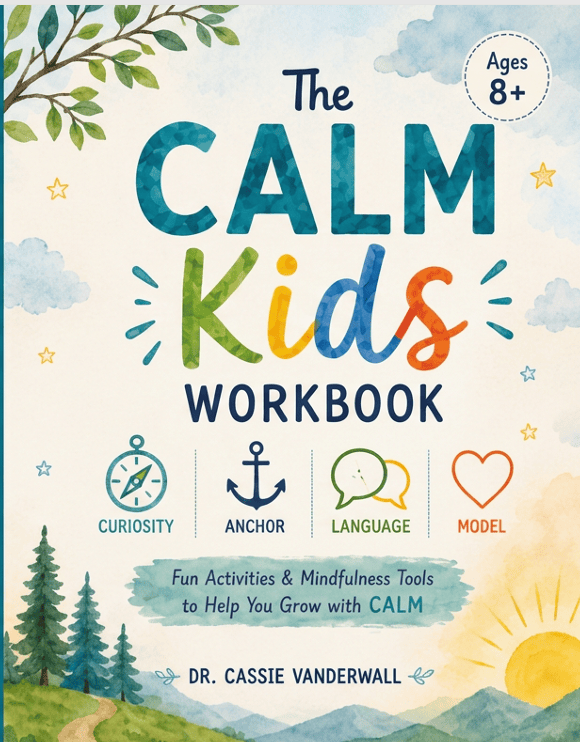
When you have more than one child, group conversations can easily become the default. Family time is wonderful. But some things a child will only say when they have you all to themselves. Additionally, when family meetings are the only time for connection, it is easier for hard topics and unnecessary secrets to stay hidden. Big voices often dominate the conversation and it can be hard to share when siblings are near. The CALM Kids Workbookwas born out of the need to have individual attention within a group effort. This way we can rotate through one-on-one and share as a group. In the end, we all unpacked the same topic and all were seen and heard.
Questions that open the door
“How was your day?” usually gets “fine.” A slightly different question can get a whole different answer. Here are a few we like:
“What was the best and hardest part of today?”
“What is something you learned today?”
“Who did you complement today?”
“What’s something you’re looking forward to?”
“What’s something you’re worried about?”
“Is there anything you want me to know?”
Then comes the part that’s harder than it sounds: listen more than you fix. Reflect back what you heard (“It sounds like that really frustrated you”) before offering any advice. Kids keep talking when they feel heard.
Staying calm and present in those moments takes practice, especially at the end of a long day. Our steadiness gives them room to keep talking.
When the talk is about something hard
Not every real talk is about the best part of the day. Sometimes it’s about friendships, loss, big feelings, or the topics that make us as parents a little nervous.
Stay steady. Your calm helps them stay calm.
It’s okay to pause. “Let me think about that, and we’ll talk more tonight” is a perfectly good answer. Just make sure you come back to it.
Let a book do some of the heavy lifting. Books can make hard topics easier to start. Life’s a Battle and We Will Win, a book I’m proud to be a contributing author of, gives families words for the hard things and the hope to face them together.
Give kids their own tools.The CALM Kids Workbook gives kids tools for big feelings before, during, and after a hard conversation.
One hard topic worth starting early: Substance use
Substance use isn’t harmless fun. School-aged kids are going through a critical period of physical and emotional growth. Using substances like alcohol, cannabis, commercial tobacco, heroin, and methamphetamine during this time exposes their developing brains, lives, and mental health to serious, even deadly, consequences.
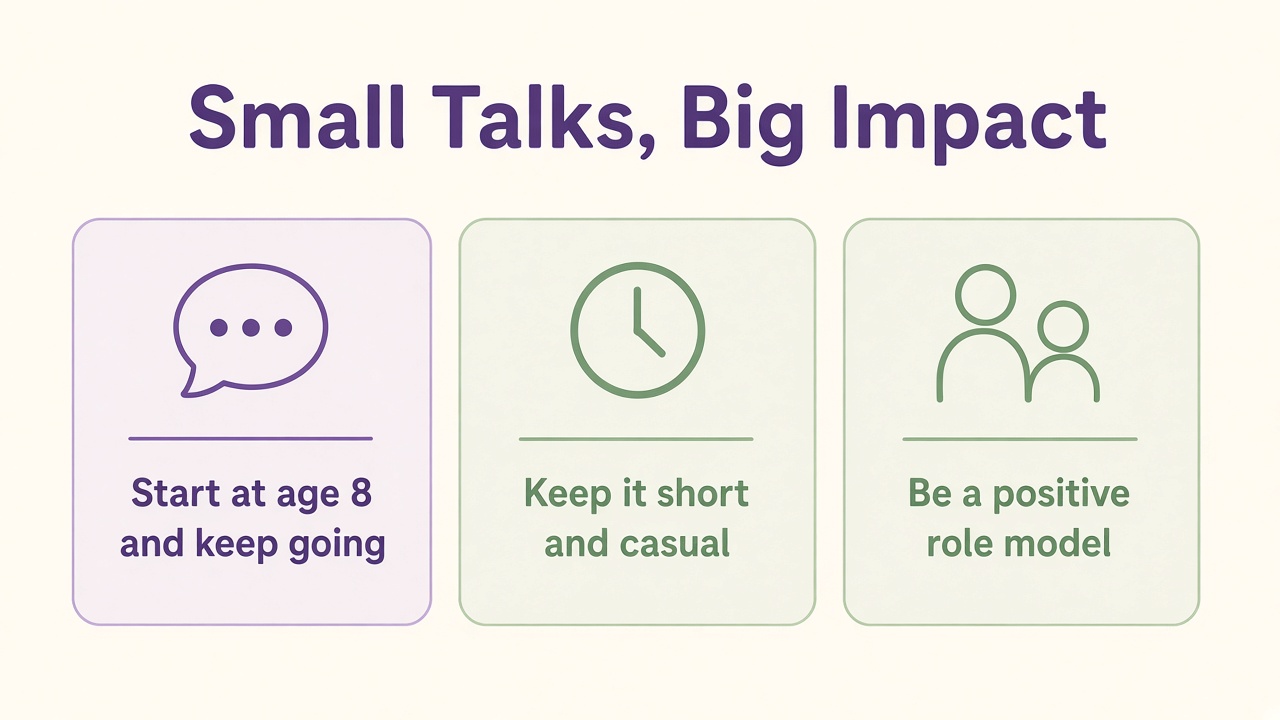
Start early and keep going. DHS recommends starting to talk with kids about the impacts of substance use at age 8 and continuing to talk as they grow up.
Keep it small. Small talks are short, casual conversations that can happen anytime, anywhere. (Sound familiar? The car, the kitchen, bedtime. The same pockets we already talked about.)
Model it. DHS calls being a positive influence on youth the best way to help them make the right choices, especially when it comes to substance use.
What I love about this approach is that it takes the pressure off. You don’t need one big, perfect “talk.” You need lots of small ones, over years.
Bottom line: Make it a rhythm, not a rescue
It’s easy to save connection for the moments when something goes wrong. A steady rhythm works better.
Pick one small weekly ritual for connection. A walk, a treat, reading together. Keep it simple enough that it actually happens.
Protect it during busy weeks. That’s when it matters most, and also when it’s easiest to skip.
When connection is already part of the week, the hard conversations have somewhere to land.
If you’re local, I’d love for you to join us for Family Fun Night on Wednesday, Nov 4, from 6 to 8pm at the Sun Prairie Library. We’ll be featuring Life’s a Battle and We Will Win, and it’s a fun way to start real talks as a family. I hope to see you there!
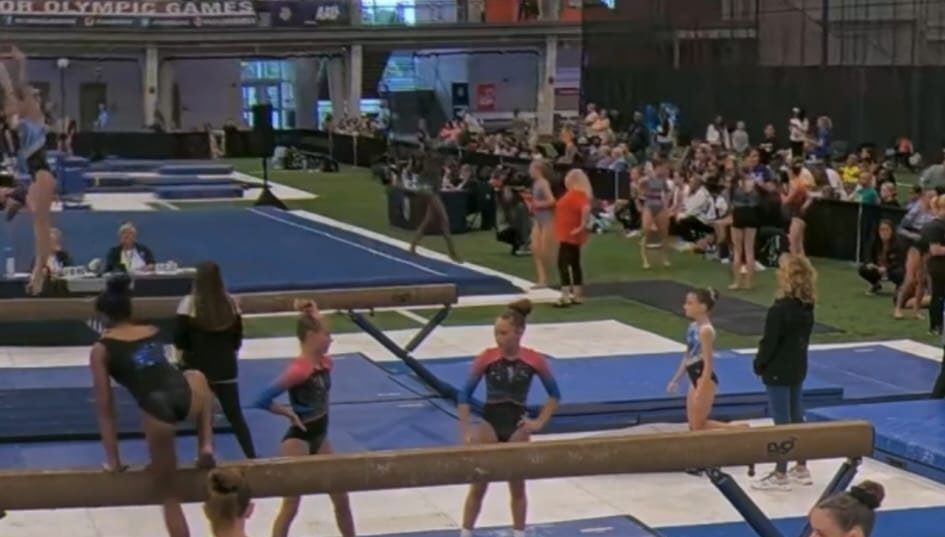
There’s a moment right before every season when the whole house shifts. The calendar fills up, the gear comes out of the closet, and the car starts to smell a little like a locker room. In our house, our kids spend long hours throughout the year on the field or in the gym, and I can feel these shifts coming weeks ahead.
As a registered dietitian, I could talk about fueling our family all day. If you’re looking for the food side of season prep, my earlier post, Feeding the Growing Athlete, covers fueling for busy practice weeks. Today, let’s focus on the heart. I want to talk about something that shapes every practice, game, and meet just as much: how we show up for our athletes as caregivers. That’s where the CALM framework comes in. I introduced the CALM parenting framework in Baby(ies) to Big Kids, and we use it at home, in the car, and on the sidelines.
Stay Curious
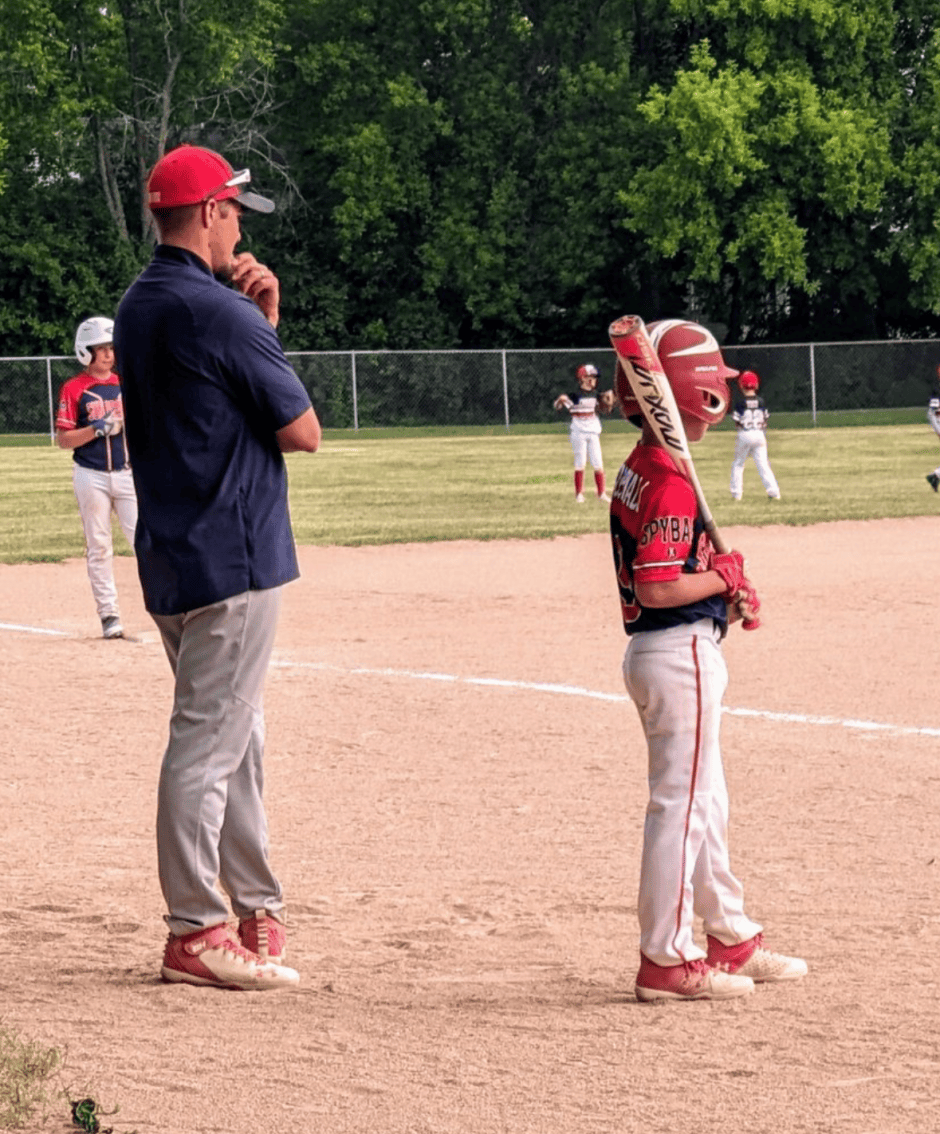
Parents often toe the line of a coach. Those lines blur when caregivers coach their own kids, and some of you do, with a whistle around your neck and a clipboard in the car. But most of the time, we have a different role. Our athletes already have someone telling them what to fix. What they need from us is someone who wants to understand them.
Curiosity builds trust, and trust keeps the door open. When the car door closes after a game, it’s tempting to start with instruction (“You needed to follow through on that swing”) or assumption (“You must be so frustrated”). Instead, try leading with a question:
“How did that play feel for you?”
“What did you notice out there today?”
“Which play or event are you most proud of?”
“Is there anything you want to talk about, or do you want quiet for a bit?”
That last one matters. Sometimes curiosity looks like giving space and trusting they’ll come back when they’re ready. When we ask first, we learn what our kids actually experienced, which is often different from what we saw from the bleachers.
I definitely continue to stumble through this principle, especially letting my assumptions infuse my questions. I’m lucky to get a quick reminder when I do, because my kiddos speak up and usually ask, “Why would you think that?” This honest feedback helps me explain my perspective and quickly course correct to staying curious a little longer.
Remember, we’re not aiming for perfection; we’re all works in progress.
Anchor in Routine
Map the season before the season maps you. When the schedule runs us, everyone feels it: short tempers, rushed dinners, forgotten water bottles, and late nights that bleed into hard mornings. Routines don’t take the fun out of a season. They give kids a steady place to land.
Before the first practice, sit down together and look at the whole season:
Put every practice, game, meet, and travel weekend on one family calendar.
Mark the pinch points, like late practices, early mornings, and back-to-back days.
Decide ahead of time which nights are simple-dinner nights and which ones will need fast food to pinch-hit.
Build a night-before routine: bag packed, uniform or leo ready, water bottle filled, snack in the bag. If it’s the night before a game, it’s often helpful to talk through the pre-game meal since many young athletes already know which foods sit well before they compete.
Protect a wind-down routine on late nights so sleep still happens. We love incorporating visualization into these routines to help our athletes walk through their points of worry and start to paint the picture of how they define success.
Let kids own pieces of the routine based on their age. Teens can pack their own bags and check the calendar themselves. That ownership builds confidence that carries onto the field, the court, and the mat.
Routine also gives you predictable moments to connect. The drive home, the post-practice snack, and the bedtime check-in become anchors your athlete can count on, win or lose.
Lead with Language
Sports bring out big feelings fast. In a single inning, a kid can feel pride, guilt, shame, embarrassment, and anger. When kids don’t have words for those feelings, they tend to come out sideways: slammed doors, tears on the field or in the car, or going quiet for the rest of the night.
We can help by giving them language. Naming a feeling makes it easier to understand and easier to move through. Here are a few that show up often in sports:
Pride: “I worked hard for that, and it showed.”
Guilt: “I feel bad because I think I let my team down.”
Shame: “I feel like I’m not good enough.” This one needs extra gentleness, because it’s about who they are, not what they did.
Embarrassment: “I didn’t want everyone to see me mess up.”
Anger: “That call felt unfair, and I’m mad about it.”
Growth mindset tips for naming feelings in a healthy way:
Separate the feeling from the person. “I made a mistake” is different from “I am a mistake.”
Add the word “yet.” “I can’t stick that skill yet” leaves room for growth.
Normalize the feeling. Big feelings mean they care, and caring is a good thing.
Ask what the feeling is telling them. Frustration might mean “I want to get better at this.”
Pair the feeling with a next step. “I’m disappointed, and tomorrow I’ll ask my coach what to work on.”
The CALM Kids Workbook gives kids their own tools to name and work through big feelings from sports, school and home.
In our family, we navigate mental health challenges and neurodiversity. These challenges don’t remove the need for a growth mindset. They often amplify it, because it’s easy to fall into a fixed mindset or even a victim mentality. We see these differences as a call to be a bit more considerate because words matter a lot, especially in a family of teens where minds can be really sticky and have a propensity to latch on to harsh words and criticism. To prevent these narratives from turning into game film that they’ll run over and over in their mind’s eye, we do our best to lead with language and communicate directly so no one is left guessing.
Model Emotional Regulation
This one is for us. It’s easy to get heated at a ref, an umpire, a coach, or another player. We love our kids, and passion runs high in the stands. But our athletes are watching how we handle big moments, and they learn more from what we do than from what we say.
Modeling emotional regulation doesn’t mean we stop caring or sit silently on the sidelines. It means we show our kids how to feel a big feeling, filter it, and respond in a way that’s still appropriate. We can stay passionate and still stay kind.
Notice it: “I’m feeling really frustrated with that call.”
Pause: take a breath, stand up, or walk a few steps before reacting.
Filter it: ask yourself whether what you’re about to say helps your athlete or the team.
Choose your response: cheer for effort, clap for both teams, and save concerns for the right time and the right person.
Repair when needed: if you lose your cool, own it later. “I got too heated today, and I’m sorry. Here’s what I’ll try next time.”
That repair might be the most powerful lesson of all. It shows our kids that everyone has big feelings, and that we can make it right when we get it wrong. The CALM Parenting Workbook walks caregivers through these moments with practical tools you can use at home and in the stands.
Bringing It All Together
A strong season isn’t only about the scoreboard. It’s about kids who feel understood, supported, and steady, no matter how the game goes. When we stay curious, anchor in routine, lead with language, and model emotional regulation, we give our athletes something that lasts far longer than one season.
Here’s to a season full of growth, grit, and grace.
Ready to bring CALM home this season? Find Baby(ies) to Big Kids, The CALM Parenting Workbook, and The CALM Kids Workbook at https://bump2babies.blog/the-books/.
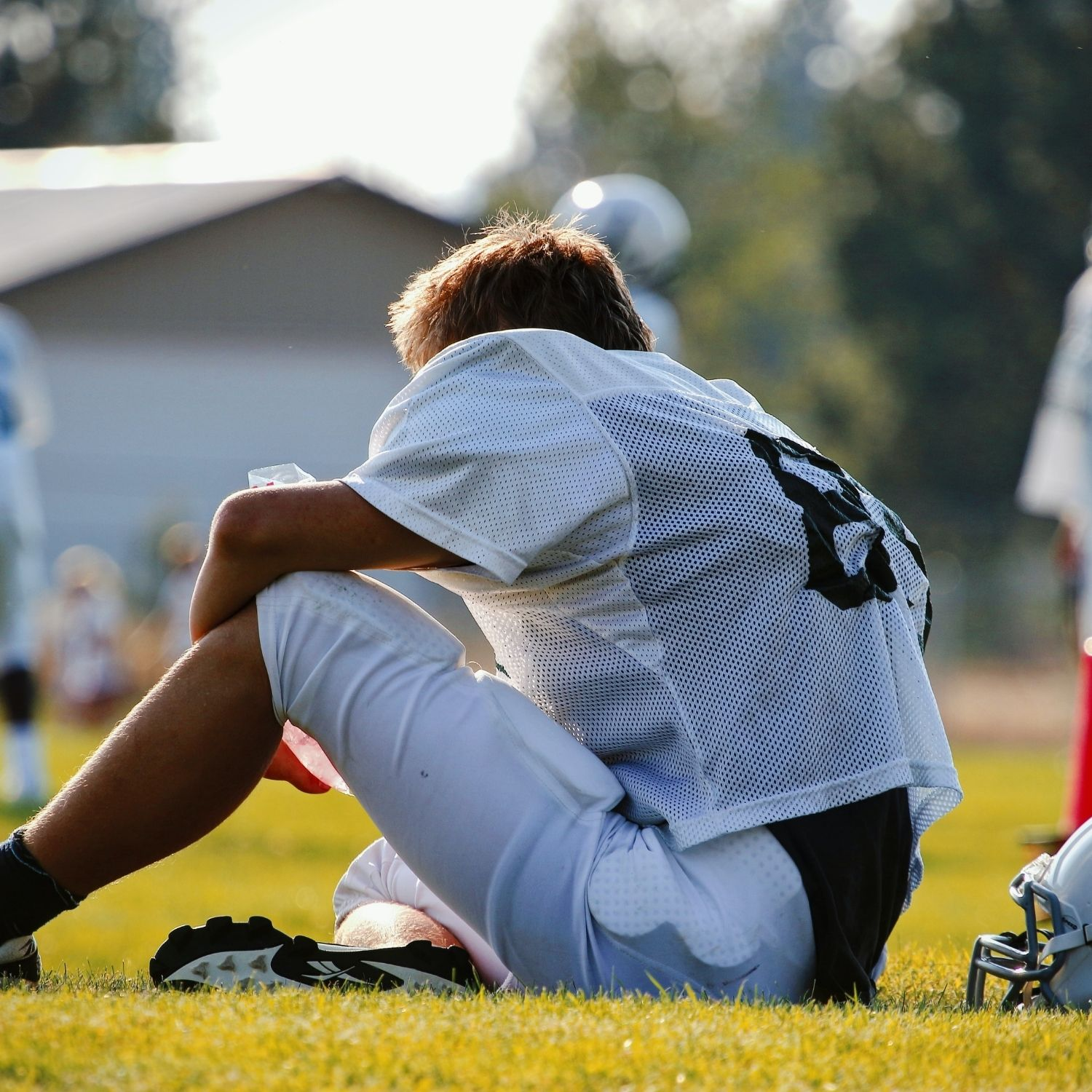
It’s 3:35p.m., One kid needs to be at football by 4:45. Another is lacing up for a cross-country meet. Three more need to be at the gym in a leotard with their hair up 3 towns over, and all five have a science project due tomorrow. That’s a normal Tuesday at our house.
I’m a mom of five teens who also is a dietitian, and I still don’t have a perfect meal plan. What I do have is a plan that works most days, holds up on the messy ones, and keeps five growing bodies fed enough to learn, train, and recover.
The goal isn’t perfect nutrition. It’s a simple plan for real life.
What “Fueling the Growing Body” Really Means
Practice starts before your kid walks in the door. Food, fluids, and recovery are part of training, just like drills and conditioning. Teen athletes are asking their bodies to do three big jobs at once:
Grow. The early teen years bring some of the fastest growth of their whole life: bones, muscles, brains, hormones, all of it.
Learn. A full school day takes real energy. Focus, memory, and mood all run better on regular meals.
Train. Practice, games, meets, and conditioning burn a lot on top of everything else.
When you add those up, most teen athletes need more food than parents expect, and they need it spread out across the day. This is not the season for cutting, skipping meals, “eating clean” to the extreme, or trying to change body size for a sport. A growing athlete who’s under-fueled doesn’t just feel tired. Their body starts making trade-offs, and growth and bone health are often the ones that pay.
So in our house, the question isn’t “Is this the healthiest possible food?” It’s “Did they eat enough, often enough, to do everything we’re asking of them today?”
The Busy-Week Map
Here’s how a typical school-and-practice day breaks down for us. Every family’s schedule is different, so borrow the parts that fit.
Before School: Breakfast Counts
Breakfast is the first fuel stop of a long day. It doesn’t need to be fancy. It needs to happen.
Quick ideas that work in our kitchen:
Eggs + a bagel + avocado or peanut butter (or a seed butter)
Overnight oats with Greek yogurt and a fruit and nuts of their choice
Peanut butter (or seed butter) and banana on toast
A smoothie with yogurt, fruit, and oats, plus a handful of nuts on the way out
If your teen “isn’t hungry” in the morning, start small. A glass of milk and a banana is better than nothing, and appetite often grows once breakfast becomes a habit.
Packing the Day: Lunch and the Backpack Snack
Lunch is what powers the afternoon and the start of practice. A lunch that’s just crackers won’t cover it. We aim for carbs + protein + a healthy fat (more on that formula below).
Then there’s what I call the backpack snack, the one they eat between classes when lunch didn’t last. This snack does a lot of heavy lifting, especially when lunch was at 10:45 and dinner is still hours away. Pack it the night before. Future you will be grateful.
After School, Before Practice
This is where a lot of teen athletes come up short. Lunch was hours ago, and they head straight into training running on fumes.
The general rhythm:
A fuller meal a few hours before practice (that’s usually lunch).
A smaller, easy-to-digest snack closer to practice, mostly carbohydrate with a little protein. Think fruit + a cheese stick, pretzels + a yogurt, half a sandwich, or a granola bar + milk.
Closer to practice, keep high-fat, high-fiber, and very heavy foods lighter. They digest slower and can leave some kids feeling sluggish or crampy, especially runners and gymnasts who are moving, flipping, or bouncing.
Dinner (In the car or at 8 p.m.)
Late dinners are real life in sports families. It’s okay. Dinner is still a full meal: carbs, protein, healthy fat, and some color from fruits or vegetables. If dinner is very late, the after-practice recovery snack becomes even more important so nobody hits the table starving and wiped out.
And then: homework, shower, sleep. Sleep is when a lot of growing and recovering happens. Protect it like you’d protect practice time.
The Next Morning
Recovery doesn’t end at bedtime. Breakfast the next morning restarts the cycle, especially after a hard practice, an evening game, or a long meet day.
The Build-a-Meal Formula
When I’m tired and the fridge is half-empty, I fall back on one simple formula:
Carbs (grains and fruit) + protein + a healthy fat
Carbs are the main fuel for training and for the brain. Think bread, rice, pasta, tortillas, oats, potatoes, crackers, and fruit.
Protein helps build and repair muscle and supports growth. Think meat, chicken, fish, eggs, dairy, beans, and tofu.
Healthy fats help with fullness, growth, and overall health. Think avocado, nut or seed butters, nuts, seeds, olive oil, and cheese.
Add a fruit or vegetable when you can.
Meal Ideas That Work Across Sports
These are on regular rotation at our house. Most travel well, and many can be made ahead.
Meat and cheese sandwich + an apple with peanut butter or seed butter
Hawaiian pita: ham, pineapple, and cheese tucked into a pita
Taco bowl: rice, seasoned meat or beans, cheese, salsa, and avocado
Mediterranean bowl: rice or quinoa, chicken, cucumber, tomato, hummus, and feta
PB&B: peanut butter (or seed butter) and banana on bread or a tortilla
Tuna salad with crackers or on a sandwich
Overnight oats with fruit and a spoonful of nut or seed butter
Mini pizzas on sandwich thins
Meat and cheese snack box with crackers, fruit, and cheese curds
Nut allergy at home or at school? Almond butter, seed butter, or organic soy-based spreads swap in nicely almost anywhere you see peanut butter. Always check your school’s or team’s allergy rules, and read labels for cross-contact.
Hydration: Top Priority
If you only change one thing this week, make it water. Even mild dehydration can make practice feel harder and leave kids feeling tired, headachy, or off. And teens are notorious for forgetting to drink until they’re already thirsty.
What works for us:
Send a full water bottle to school every day, and refill it before practice.
Drink through the day, not just at practice. Chugging a bottle in the car rarely makes up for a dry school day.
For longer or harder sessions (think long runs, hot football practices, two-a-days, all-day meets or tournaments), fluids with electrolytes and some carbohydrate, like a sports drink, can help replace sweat losses and support energy. For a regular practice of about an hour, water is usually enough.
Pay attention to heat. Hot days, heavy pads, and indoor gyms without air conditioning all raise fluid needs.
A Note on Caffeine
Energy drinks, pre-workouts, and coffee drinks are everywhere, and teens see older athletes using them. Caffeine isn’t recommended for kids and teens. It can disrupt sleep, which growing athletes badly need for recovery, and it can leave some kids jittery, anxious, or with a racing heart. Energy drinks – even Bubbler – are a firm no in our house. A good snack, enough water, and a decent night’s sleep do far more for a teen athlete.
Between Sessions, Drills, or Events
Hydration is the priority here. For long sessions, two-a-days, tournaments, or meets, a small, easy carb snack during breaks can help support energy.
On long days with breaks, such as meets, tournaments, or races with multiple events, easy options include:
Applesauce or yogurt pouches
A smoothie
Fruit, pretzels, or crackers
Trail mix
A sport-specific tip on trail mix: it’s great between sessions, but it’s heavier on fat and fiber, so it’s not ideal right before or in the middle of training. For gymnastics, save it for longer breaks rather than between rotations. For football, it works better at halftime of a long day or after practice than mid-drill. For cross-country, save it for after the race; before a run, stick to simpler carbs like a banana or pretzels.
Recovery: Refill the Tank
The car ride home is prime refueling time. A snack with carbs + protein within about 30 to 60 minutes after practice helps muscles recover and refills the tank, especially when dinner is still a ways off. We keep recovery snacks in the car for exactly this reason.
The simple rule: Carbs + protein within about 30 to 60 minutes.
After harder or longer sessions, some families like aiming for roughly twice as many carbs as protein. That ratio is optional. Getting a solid mix of carbs and protein in, and soon, is what matters most.
Our Favorite Recovery Picks
Cottage cheese + crackers + peaches
Snackle box: nuts or seeds, pretzels, cheese, and dried fruit in a tackle-box-style container
Yogurt parfait with granola and berries
Trail mix (with seeds instead of nuts if needed)
Bagel with peanut butter or seed butter + a hard-boiled egg
Eggs in a frame: an egg cooked in the middle of a slice of toast
Half a turkey sandwich + a piece of fruit
Leftover pasta or rice bowl from last night’s dinner
Chocolate milk deserves a special shout-out. It’s cheap, kid-approved, travels in a lunch box with an ice pack, and brings both carbs and protein plus fluid.
When to Worry: Signs a Teen Athlete May Be Under-Fueling
This section is for parents and the clinicians who care for your child, like your pediatrician or a registered dietitian. It is not a checklist for coaches to screen athletes. If you notice something, the next step is a conversation with your child’s doctor or dietitian.
One symptom on its own doesn’t mean something is wrong. Teens get tired, moody, and hungry for all kinds of reasons. But several of these together, or signs that keep showing up, deserve attention:
Low energy that doesn’t bounce back with rest
Performance stalling or getting worse despite hard training
Frequent injuries, especially stress fractures or injuries that are slow to heal
Getting sick often
Mood changes: more irritable, anxious, down, or withdrawn
Trouble focusing at school
Growth slowing, or weight dropping or stalling during a time they should be growing
Feeling cold all the time, dizziness, or lightheadedness
Skipping meals, eating much less than teammates, or avoiding whole food groups
Strong worry about food, body size, or “earning” food through exercise
Changes in periods: periods that stop, become irregular, or haven’t started when expected
Labs that keep coming back low (like iron) at checkups
What’s Going On When Athletes Under-Fuel
When an athlete consistently doesn’t eat enough to cover training plus growth plus everyday life, the body starts cutting back to save energy. Doctors call this relative energy deficiency in sport, often shortened to RED-S. In plain words: there isn’t enough fuel for the amount of training.
You may also have heard of the female athlete triad. That describes three connected issues in girls and women: not enough fuel, changes in periods, and weaker bones.
But this isn’t just a “girl thing.” Boys and teen athletes of every gender can under-fuel too. It can show up as low energy, mood changes, slowed growth, hormone changes, and more injuries. My son’s football schedule and my daughter’s cross-country miles can drain a body just as fast as my gymnasts’ practices.
Many cases aren’t on purpose. A busy schedule, a small appetite, a long gap between lunch and practice, or a big growth spurt can all leave a kid short without anyone noticing. Sometimes, though, under-fueling is tied to disordered eating or an eating disorder.
Early care matters. Getting help sooner lowers the chance of lasting effects on growth, bones, and health. If you’re worried, call your pediatrician and ask about seeing a registered dietitian who works with young athletes.
If you suspect an eating disorder, please don’t try to handle it with a meal plan. This post isn’t medical advice or treatment for eating disorders. Reach out to your child’s doctor right away. If there are signs of immediate danger, such as fainting, chest pain, or thoughts of self-harm, seek urgent care or call or text 988.
A Simple Plan Beats a Perfect One
Most weeks at our house are not Pinterest-worthy. There are drive-thru nights, cereal-for-dinner nights, and nights when somebody eats a granola bar in the car while finishing a worksheet. That’s okay.
What keeps us steady is a handful of simple habits:
Eat breakfast, even a small one.
Pack the backpack snack the night before.
Carry a water bottle everywhere.
Fuel before practice: carbs + a little protein.
Refuel after practice: carbs + protein within an hour.
Protect sleep.
Watch the big picture, and loop in your pediatrician or dietitian if something feels off.
Our kids are growing, learning, and training all at the same time. When we fuel them for all three, they don’t just perform better. They have what they need to grow, recover, and enjoy the sports they love.
That’s what Fuel to Flourish™ is all about.
This post is for general education and isn’t a substitute for individual medical or nutrition care. Every athlete is different. Talk with your child’s pediatrician or a registered dietitian about your family’s specific needs, allergies, or health concerns.
Every July I open the virtual photo albums and reminisce over the last 365 days. I smile, I cry, I chuckle, I think about the “what if’s” and let those worries go, and count my blessings: 1, 2, 3, 4, and 5. I compile photos that articulate where each member of the V5 started the previous year and who they became. I add photos I know that they’ll cherish and sprinkle in a few that I know will make them cringe but smile inside. Then, I listen to countless songs trying to find the right one that I know they’d listen to and think, “yep that was me at 13.” My favorite part of building these collages is watching them one-on-one with each of them. We always catch little mistakes the first time through and they beg for me to take a photo out but they typically stay. Each one ends with a side hug and kiss on their head.
Join me as we look at Theo, Bella, Lily, Kali and Ellie over the last year!
This week, the V5 turn thirteen. Thirteen. I sat with that sentence for a minute because for so long, our story was defined by the beginning. The shock of discovering there weren’t one, two, or even three babies growing inside me but five.
The appointments. The preparation. The uncertainty. The NICU. Then, the bottles and diapers and feeding schedules. Five car seats. Five cribs. Five tiny people who somehow needed us all at once.
When I wrote Bump to Baby(ies), I told the story of how our family began. It was a story about pregnancy, surrender, survival, and discovering courage when life multiplied in ways we never could have imagined.
That first season passed quickly. The days were long but the years short. They became toddlers with opinions. Preschoolers with personalities. Elementary schoolers discovering friendships, sports, strengths, and struggles. And now, somehow, they are teenagers.
The Story After Survival
People have asked us versions of the same question since the kids were born: How do you do it with five?
When they were babies, the answers were practical. Schedules. Systems. Preparation. Teamwork. And probably more coffee than medically advisable.
But as they grew, the question became much more complicated. How do we raise five children at the exact same age while honoring that they are five completely different people?
How do we create structure without controlling them?
How do we help them become resilient without protecting them from every struggle?
How do we teach responsibility while making home a place where mistakes are safe?
How do we stay connected as schedules, sports, school, friends, emotions, and independence begin pulling everyone in different directions?
And maybe the biggest question of all: How do we raise children who know they are deeply loved while preparing them to eventually walk into the world without us?
I definitely don’t have all the answers. Thirteen years into this parenting, social experiment, I’m more convinced of that than ever.
What I do have are lessons. Lots and lots of lessons. Some learned beautifully. Others learned the hard way.
One of the surprises of parenting has been realizing that children aren’t the only ones growing. The parents we were when five babies came home are not the parents we are today.
We’ve learned that connection matters more than control. That repair matters more than getting every interaction right. That our children can share the same home, the same parents, and even the same birthday and still need completely different things from us.
We’ve learned to laugh. We’ve learned to apologize. We’ve learned to have hard conversations. We’ve learned that sometimes the best parenting happens around the dinner table, driving to practice, or during a completely ordinary Tuesday night.
And we’ve learned that resilient families aren’t families without struggle. They’re families who learn how to move through struggle together. That became the heart of Baby(ies) to Big Kids.
A Book About Becoming
Baby(ies) to Big Kidsisn’t a story about how we figured out parenting. Quite the opposite. It’s about what we’ve learned while figuring it out.
The CALM parenting framework is about raising resilient kids while continuing to become resilient adults. It’s about communication rooted in curiosity, anchoring values, connection through words and actions, responsibility, emotional awareness, and creating a family culture intentionally even when real life is loud and messy.
And because reading about these ideas only takes us so far, the story grew again. I created companion workbooks for parents and youth so families could move from reading about resilience and connection to actually practicing them together. What began as a story had become a set of resources.
We Were Never Meant to Do This Alone
There’s another lesson woven throughout these thirteen years that deserves its own chapter: Family resilience doesn’t happen in isolation.
Our children have been shaped by grandparents, teachers, coaches, healthcare professionals, neighbors, friends, and people who have simply shown up again and again. So have I.
We have been privileged to grow up alongside two of our people, Alex and Danielle. Frank and Alex became best friends in high school, two kids from neighboring towns bonded by Seinfeld, classic rock, and countless hours writing and playing music in Alex’s basement before rocking talent shows and benefit concerts together. Their friendship followed them to college, where they joined the same fraternity and eventually served as president and vice president, and where Alex met Danielle, who quickly became part of our story, too. Over the years, the four of us have celebrated, struggled, built careers, raised families, laughed, challenged one another, and become family. We are iron that sharpens iron, but perhaps our greatest lesson has been that even strong people need a village.
Danielle has been part of ours through so many chapters, which makes it especially meaningful that she wrote the foreword to Baby(ies) to Big Kids. There is something incredibly special about having someone who has witnessed the messy middle of your story help introduce it to the world.
And Now There Are Five Teenagers
On the weekend of their thirteenth birthday, I find myself looking backward and forward at the same time. I can still see those five tiny babies. But I also see five young people becoming increasingly themselves. And I know the next chapter will bring questions I haven’t even thought to ask yet.
But this week? I’m going to celebrate five thirteen-year-olds. I’m going to marvel at the fact that somehow we made it from five NICU isolettes to five teenagers. And I’m going to remind myself that we still haven’t arrived. Thank goodness.
Happy 13th birthday, Theo, Bella, Lily, Kali, and Ellie!
What an extraordinary adventure it is to grow alongside you.