There’s something powerful about taking a story that lives in your heart and finally putting it into words.
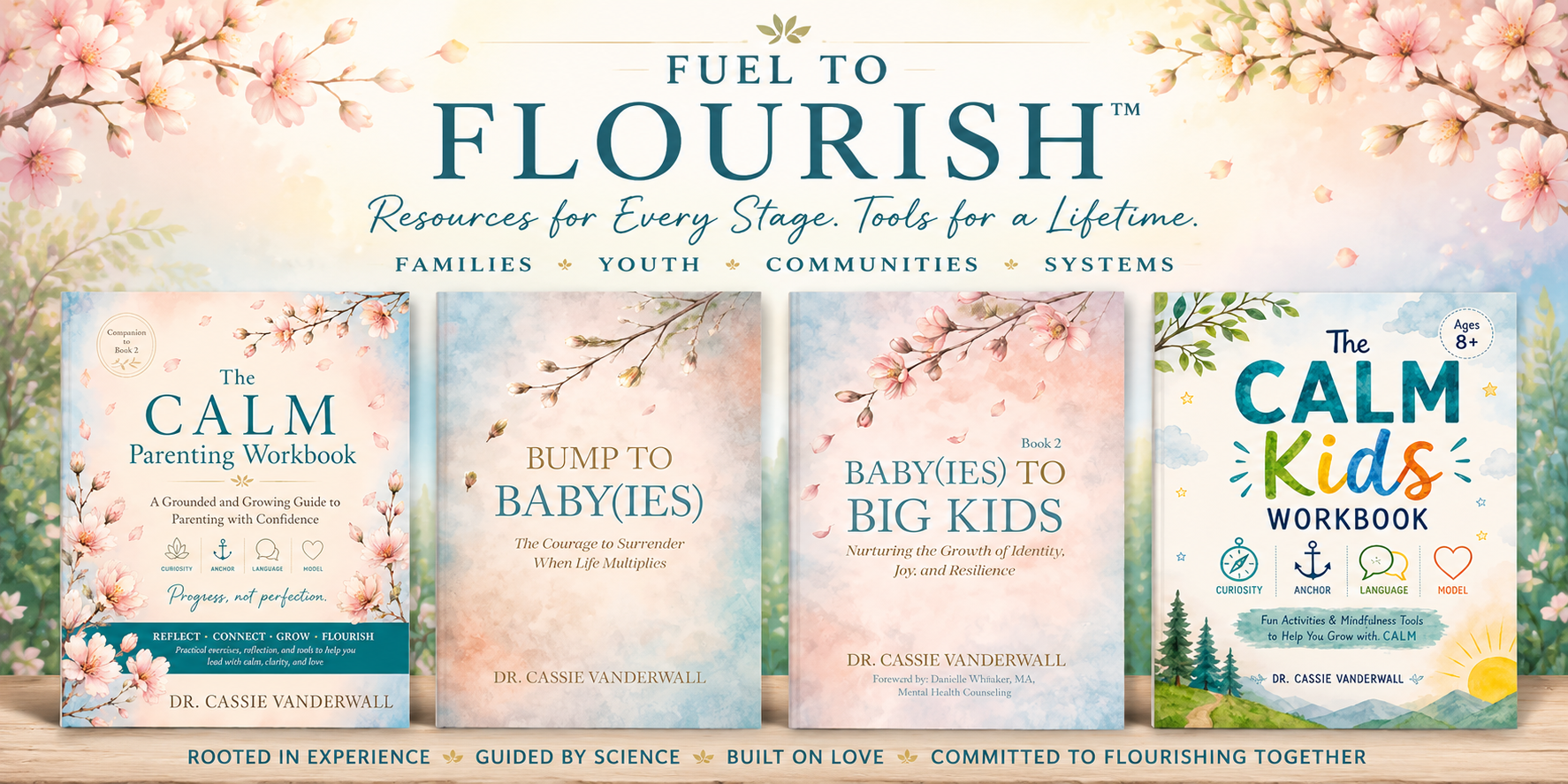
I’m incredibly grateful to Motivational MD Publishing for helping me transform one story into a growing collection of books and, ultimately, a bigger vision for Fuel to Flourish™.
Sometimes writing a book doesn’t just tell your story. It helps you discover what you’re meant to do with it!
Every July I open the virtual photo albums and reminisce over the last 365 days. I smile, I cry, I chuckle, I think about the “what if’s” and let those worries go, and count my blessings: 1, 2, 3, 4, and 5. I compile photos that articulate where each member of the V5 started the previous year and who they became. I add photos I know that they’ll cherish and sprinkle in a few that I know will make them cringe but smile inside. Then, I listen to countless songs trying to find the right one that I know they’d listen to and think, “yep that was me at 13.” My favorite part of building these collages is watching them one-on-one with each of them. We always catch little mistakes the first time through and they beg for me to take a photo out but they typically stay. Each one ends with a side hug and kiss on their head.
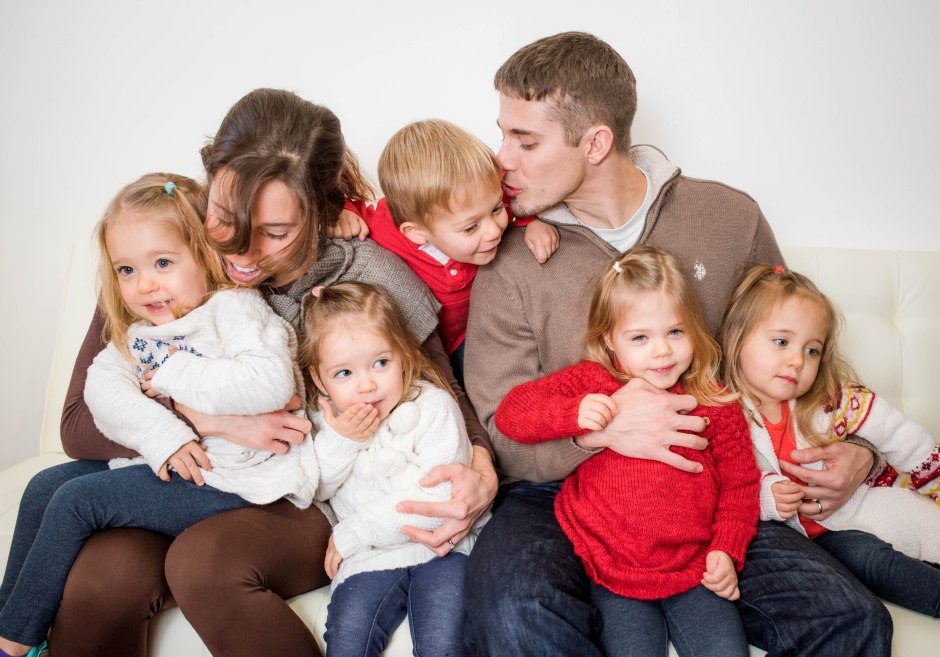
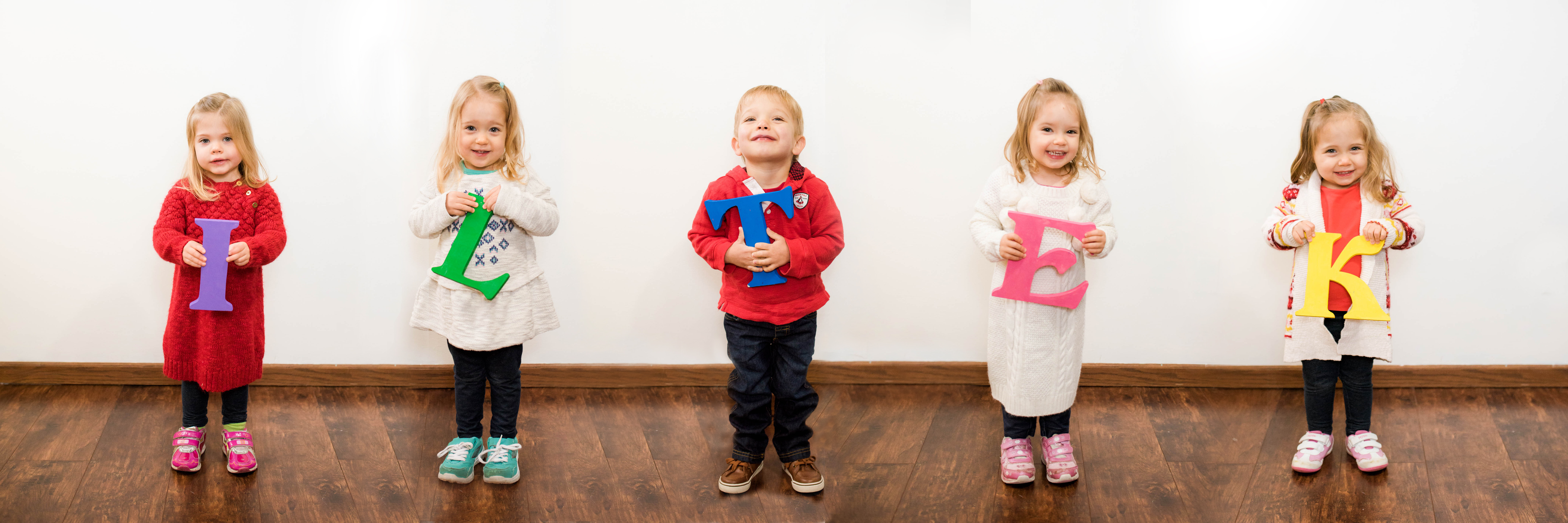
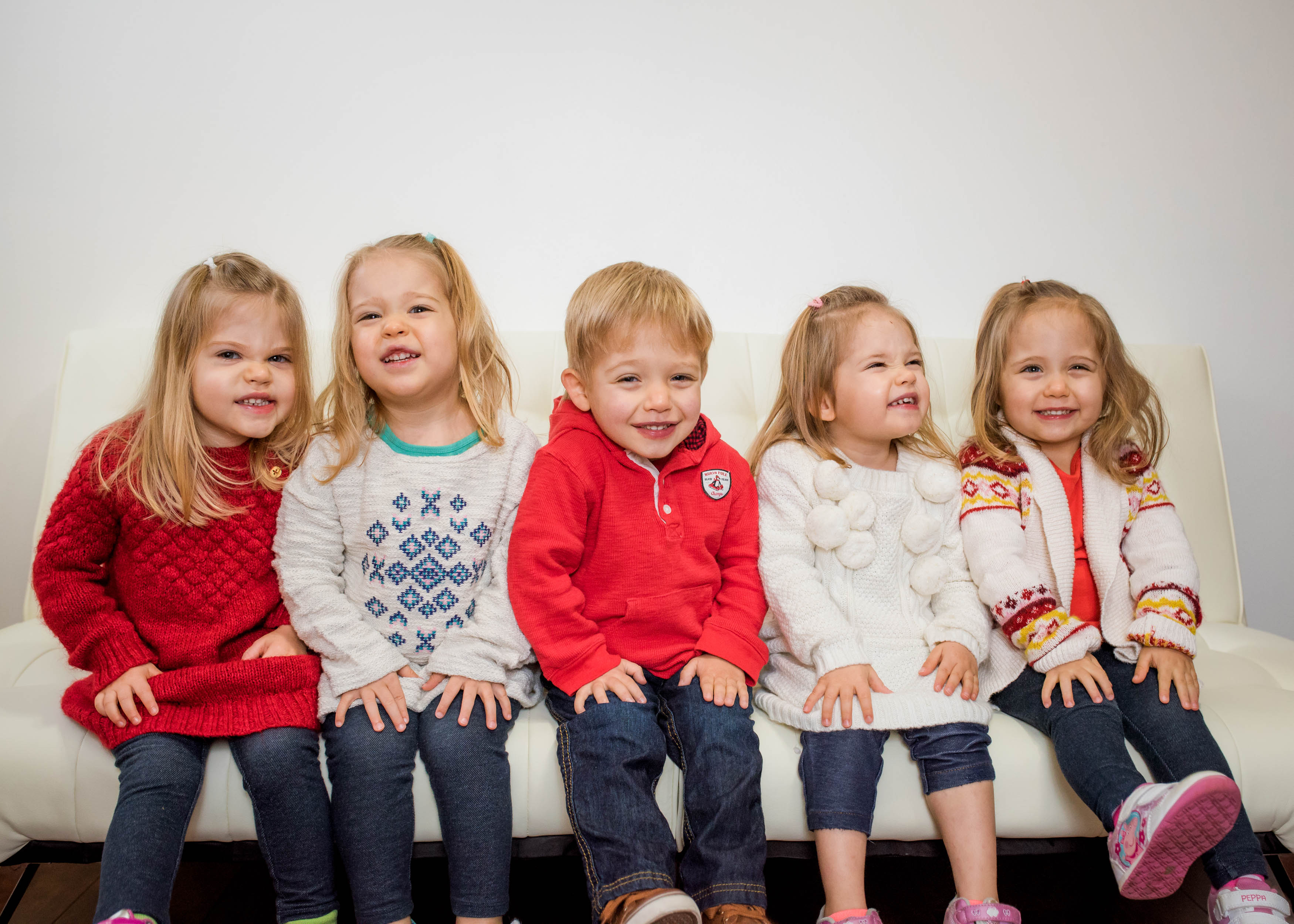
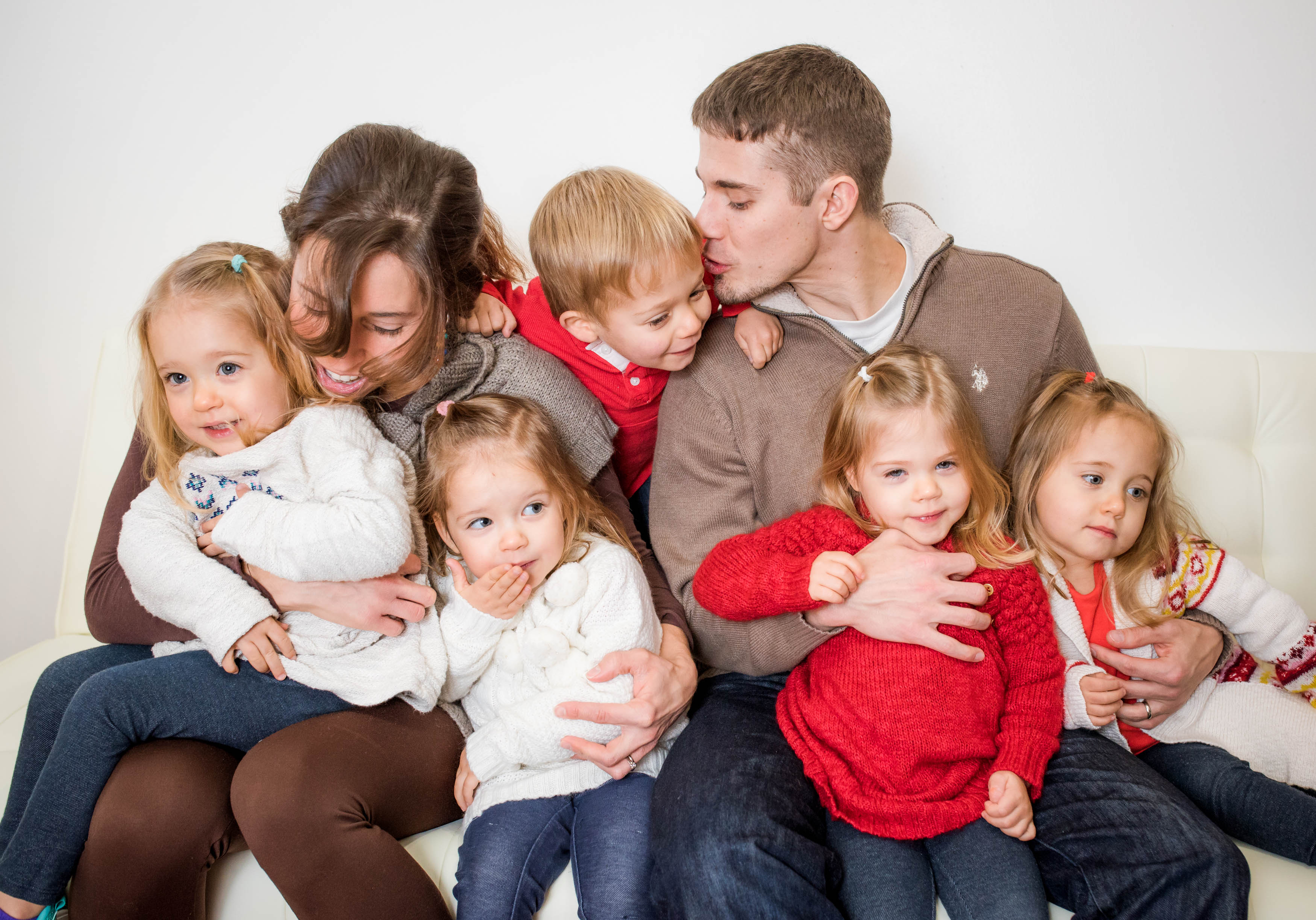
Join me as we look at Theo, Bella, Lily, Kali and Ellie over the last year!
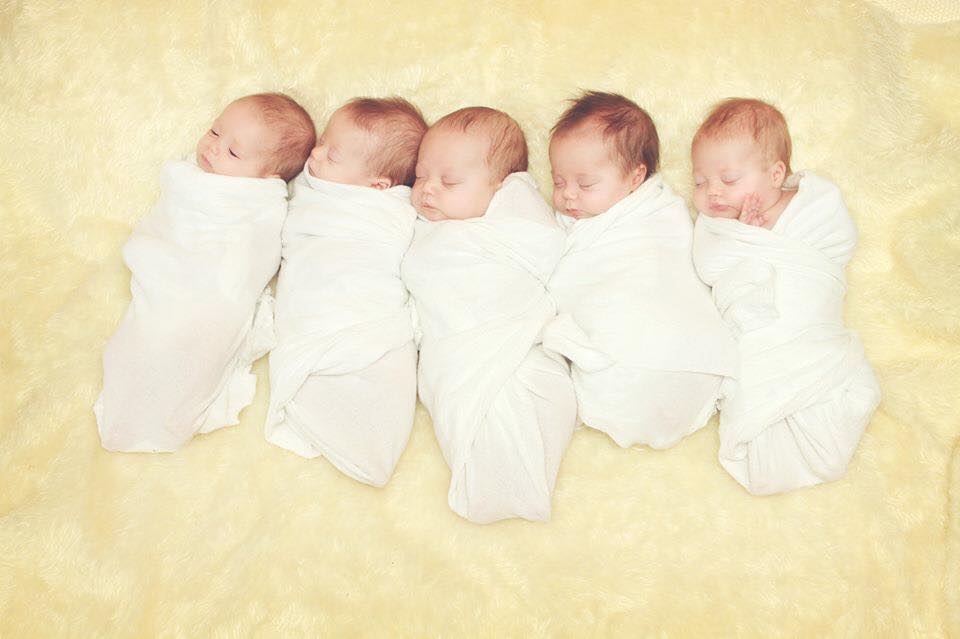
This week, the V5 turn thirteen. Thirteen. I sat with that sentence for a minute because for so long, our story was defined by the beginning. The shock of discovering there weren’t one, two, or even three babies growing inside me but five.
The appointments. The preparation. The uncertainty. The NICU. Then, the bottles and diapers and feeding schedules. Five car seats. Five cribs. Five tiny people who somehow needed us all at once.
When I wrote Bump to Baby(ies), I told the story of how our family began. It was a story about pregnancy, surrender, survival, and discovering courage when life multiplied in ways we never could have imagined.
That first season passed quickly. The days were long but the years short. They became toddlers with opinions. Preschoolers with personalities. Elementary schoolers discovering friendships, sports, strengths, and struggles. And now, somehow, they are teenagers.
The Story After Survival
People have asked us versions of the same question since the kids were born: How do you do it with five?
When they were babies, the answers were practical. Schedules. Systems. Preparation. Teamwork. And probably more coffee than medically advisable.
But as they grew, the question became much more complicated. How do we raise five children at the exact same age while honoring that they are five completely different people?
How do we create structure without controlling them?
How do we help them become resilient without protecting them from every struggle?
How do we teach responsibility while making home a place where mistakes are safe?
How do we stay connected as schedules, sports, school, friends, emotions, and independence begin pulling everyone in different directions?
And maybe the biggest question of all: How do we raise children who know they are deeply loved while preparing them to eventually walk into the world without us?
I definitely don’t have all the answers. Thirteen years into this parenting, social experiment, I’m more convinced of that than ever.
What I do have are lessons. Lots and lots of lessons. Some learned beautifully. Others learned the hard way.
One of the surprises of parenting has been realizing that children aren’t the only ones growing. The parents we were when five babies came home are not the parents we are today.
We’ve learned that connection matters more than control. That repair matters more than getting every interaction right. That our children can share the same home, the same parents, and even the same birthday and still need completely different things from us.
We’ve learned to laugh. We’ve learned to apologize. We’ve learned to have hard conversations. We’ve learned that sometimes the best parenting happens around the dinner table, driving to practice, or during a completely ordinary Tuesday night.
And we’ve learned that resilient families aren’t families without struggle. They’re families who learn how to move through struggle together. That became the heart of Baby(ies) to Big Kids.
A Book About Becoming
Baby(ies) to Big Kidsisn’t a story about how we figured out parenting. Quite the opposite. It’s about what we’ve learned while figuring it out.
The CALM parenting framework is about raising resilient kids while continuing to become resilient adults. It’s about communication rooted in curiosity, anchoring values, connection through words and actions, responsibility, emotional awareness, and creating a family culture intentionally even when real life is loud and messy.
And because reading about these ideas only takes us so far, the story grew again. I created companion workbooks for parents and youth so families could move from reading about resilience and connection to actually practicing them together. What began as a story had become a set of resources.
We Were Never Meant to Do This Alone
There’s another lesson woven throughout these thirteen years that deserves its own chapter: Family resilience doesn’t happen in isolation.
Our children have been shaped by grandparents, teachers, coaches, healthcare professionals, neighbors, friends, and people who have simply shown up again and again. So have I.
We have been privileged to grow up alongside two of our people, Alex and Danielle. Frank and Alex became best friends in high school, two kids from neighboring towns bonded by Seinfeld, classic rock, and countless hours writing and playing music in Alex’s basement before rocking talent shows and benefit concerts together. Their friendship followed them to college, where they joined the same fraternity and eventually served as president and vice president, and where Alex met Danielle, who quickly became part of our story, too. Over the years, the four of us have celebrated, struggled, built careers, raised families, laughed, challenged one another, and become family. We are iron that sharpens iron, but perhaps our greatest lesson has been that even strong people need a village.
Danielle has been part of ours through so many chapters, which makes it especially meaningful that she wrote the foreword to Baby(ies) to Big Kids. There is something incredibly special about having someone who has witnessed the messy middle of your story help introduce it to the world.
And Now There Are Five Teenagers
On the weekend of their thirteenth birthday, I find myself looking backward and forward at the same time. I can still see those five tiny babies. But I also see five young people becoming increasingly themselves. And I know the next chapter will bring questions I haven’t even thought to ask yet.
But this week? I’m going to celebrate five thirteen-year-olds. I’m going to marvel at the fact that somehow we made it from five NICU isolettes to five teenagers. And I’m going to remind myself that we still haven’t arrived. Thank goodness.
Happy 13th birthday, Theo, Bella, Lily, Kali, and Ellie!
What an extraordinary adventure it is to grow alongside you.
For most of my life, I thought flourishing would look like arriving.
Arriving at motherhood.
Arriving at health.
Arriving at a credential.
Arriving at a career title.
Arriving at peace.
Like many of us, I have spent years believing that life would finally make sense once I reached the next milestone. If I could just make it through school. Build my career. Have a family. Find balance. Achieve success. Then I would finally feel like I had arrived.
But life has a remarkable way of rewriting our plans.
When I learned I was pregnant with quintuplets, every expectation I had for motherhood changed overnight. My carefully imagined future gave way to uncertainty, high-risk pregnancy, months of medical appointments, and eventually the quiet, sacred halls of the NICU. The destination I had envisioned disappeared, replaced by one I never would have chosen.
And yet, that’s where I first began to understand what flourishing really means.
It wasn’t found in having all the answers.
It wasn’t found in perfect health, perfect circumstances, or a perfectly predictable life.
It was found in the courage to keep growing anyway amidst a perfect mess.
Over the years, life has continued to teach me this lesson.
Sometimes flourishing looks like surviving the NICU one day at a time.
Sometimes it looks like rebuilding after heartbreak or disappointment.
Sometimes it looks like changing careers, embracing new opportunities, or letting go of a version of yourself you thought you had to become.
Sometimes it looks like sitting around the dinner table laughing with the people you love after an incredibly hard day.
Sometimes it looks like asking for help.
Sometimes it looks like extending grace to yourself.
Sometimes it simply looks like trying again tomorrow.
I’ve come to believe that flourishing isn’t reserved for people whose lives are easy. It’s available to every one of us. Not because our circumstances are perfect, but because growth is always possible if we choose it.
As both a healthcare leader and a mom, I’ve had the privilege of walking alongside thousands of people navigating some of life’s biggest battles. I have partnered with patients digesting a new diagnosis, families managing chronic illness, children building resilience, communities working toward better health, and people searching for hope in the midst of uncertainty.
What I’ve learned is that beneath every diagnosis, every challenge, every success, and every setback is the same universal question: How do we continue to grow when life doesn’t unfold the way we expected?
That question has shaped every part of my journey.
It inspired Bump to Baby(ies), where I shared the unexpected story of pregnancy, the NICU, and discovering courage in surrender.
It continued through Baby(ies) to Big Kids, where the focus shifted from surviving parenthood to intentionally raising resilient, connected families.
It found new life in workbooks created to help parents and children put those ideas into practice.
It expanded through Life is a Battle, And We Will Win, reminding young people that every challenge they face can become part of a story of hope, resilience, and perseverance.
And now, it has grown into something even bigger.
Fuel to Flourish™ isn’t simply a program or a collection of books. It’s a philosophy. A commitment. A movement rooted in one simple belief: Every person deserves the opportunity not just to survive but to flourish.
Whether that means helping a new mom feel less alone.
Supporting a child who is learning to navigate anxiety.
Equipping families with practical tools to strengthen connection.
Partnering with schools to build resilient students.
Collaborating with healthcare systems to create more compassionate, person-centered care.
Or working alongside communities to improve health from the inside out.
It’s all connected. Because flourishing isn’t about arriving. It’s about becoming.
It’s about choosing hope when circumstances feel uncertain.
Choosing connection when life feels busy.
Choosing courage when fear feels loud.
Choosing growth when giving up would be easier.
None of us will escape life’s battles. But together, we can learn to face them with resilience, compassion, and purpose.
My hope is that Fuel to Flourish becomes more than a collection of resources.
I hope it becomes a community where families feel supported, young people feel seen, healthcare becomes more human, and every person is reminded that flourishing isn’t something we earn once we’ve reached perfection. It’s something we practice every single day.
So whether you’re navigating pregnancy, parenting, adolescence, illness, career transitions, or simply trying to become the person you were created to be…
Welcome. I’m so grateful you’re here. Because this journey isn’t about arriving. It’s about flourishing together.
For a long time, health was measured by what we could see; Blood pressure. Weight. Lab values. Physical endurance. If those checked out, we called ourselves “healthy.” But something has shifted. We’re beginning to understand that mental and social wellbeing aren’t secondary – they are foundational. You can be physically “fine” and still be carrying a level of emotional weight that quietly erodes your quality of life.
And the data is catching up to what many have been feeling:
Among youth, rates of persistent sadness and hopelessness have risen significantly over the past decade, with nearly 1 in 3 adolescents reporting poor mental health in recent national surveys.
Adults report increasing levels of anxiety, burnout, and emotional exhaustion, especially those balancing caregiving, careers, and constant connectivity.
Older adults face rising levels of loneliness and isolation, both of which are now recognized as serious health risks comparable to chronic disease.
Here in the Midwest, including communities across Wisconsin, these trends are showing up in our schools, our workplaces, and our homes.
Struggling doesn’t always look like falling apart. Sometimes it looks like showing up… while quietly unraveling.
The Cost of Holding It All Together
There’s a version of strength that gets praised in our culture; the ability to push through, stay composed, keep going no matter what. But there’s a cost to that kind of strength when it comes at the expense of processing what we carry.
These don’t just disappear because we stay busy. They settle. And over time, that emotional weight doesn’t stay contained to the mind, it begins to show up in the body. It can look like irritability that feels disproportionate to the situation. Exhaustion that sleep doesn’t fix. A sense of numbness where joy used to live. When we carry things we haven’t acknowledged, the body keeps score in quiet, persistent ways. Holding it together isn’t the same as being okay.
The Brain–Body Connection
We often think of “impact on the body” as something reserved for major trauma. And while trauma absolutely leaves a physiological footprint, it’s not the only thing that does. Chronic, unrelenting stress – the kind that feels manageable day-to-day – can have a profound biological effect over time. When the body perceives stress, it releases cortisol. In short bursts, that’s helpful. It keeps us alert and responsive (think fight or flight). But when stress becomes constant, cortisol stays elevated. And that matters because sustained high cortisol levels are associated with increased visceral adiposity (fat stored around vital organs) which is linked to higher risks of cardiovascular disease, metabolic dysfunction, and inflammation. In other words: the body responds to emotional strain as if it were a physical threat.
This isn’t about blame – it’s about awareness.
Because the same system that responds to stress can also be supported and regulated. Small, consistent practices can help. The goal isn’t perfection. It’s giving the body signals of safety again.
The Turning Point: Holding Two Things at Once
There’s a concept introduced by Dr. Kim Whitmore in her book Grateful and Grieving that resonates deeply: the “ampersand” moments. The idea that two things can be true at the same time.
You can be grateful and grieving. Strong and struggling. Functioning and not okay.
That tension isn’t something to fix, it’s something to acknowledge. For many of us, the turning point doesn’t come from a dramatic breakdown. It comes from a quiet moment of honesty: Something feels off… and I’m willing to notice it.
Naming a feeling doesn’t make it worse. It makes it visible. And visibility is where change begins.
Even when your mind tells you to push it down. Even when old messages from childhood, culture, or expectation tell you to “get over it.” You’re allowed to feel what you feel.
Small Steps That Actually Help
When everything feels heavy, the answer isn’t to overhaul your life overnight. It’s to start small and start honestly. Here are a few simple ways to begin:
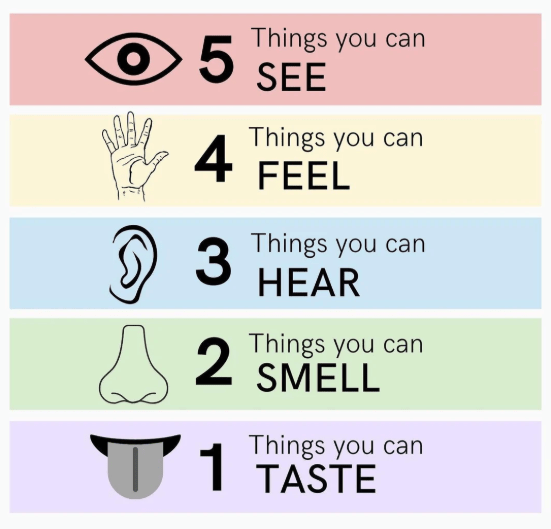
A 5-Step Grounding Exercise
This brings your body out of overwhelm and back into the present.
Name 5 things you can see
4 things you can feel
3 things you can hear
2 things you can smell
1 thing you can taste
Name the Feeling (Without Fixing It) Instead of “I’m fine,” try:
“I feel overwhelmed.”
“I feel frustrated.”
“I feel hurt.”
Clarity reduces internal tension.
Control What You Can, Release What You Can’t Draw two columns:
What I can control
What I cannot
Seeing it visually helps your brain stop trying to solve the unsolvable.
Gentle Body Reset A short walk. Stretching. Deep breathing. Not as punishment but as support.
One Honest Conversation With yourself, or someone you trust. You don’t have to carry everything alone.
A Small Invitation Forward
You don’t have to solve everything today. You don’t have to unpack every layer of what you’ve been carrying. But you can start here:
Name one thing that’s been sitting beneath the surface. Acknowledge it without minimizing it. And take one small step forward.
Because progress in mental health doesn’t come from force. It comes from awareness followed by gentle action.
What’s Next
In the next piece, during Mental Health Awareness Month, I’ll be inviting a perspective that’s often missing from this conversation – our kids. Not as observers of mental health, but as participants in it.
Through their own words, we’ll explore what it looks like to experience emotions, pressure, resilience, and growth in the first 12 years of life. Because mental health isn’t something we arrive at later. It’s something we’re building together from the very beginning.
Tradition. What is a tradition? We describe it as something you do every year. In our home, the Christmas tradition revolves around Jesus’ birthday. God gave us Jesus, who gives us the gift of grace. Therefore, each Christmas we celebrate this priceless gift by giving others gifts. Sometimes these gifts can be wrapped up with a bow, but the more precious gifts cannot. This season, I’m resolving to give my children the gift of time.
We recently received the V5’s first school pictures. At first glance, I was taken back at how old they looked! My babies are growing up, toddlerhood is in the past, my little miracles are kids; Rough, tumble, sassy and sweet children.
About the same time, the school pictures came in the mail, I also uncovered their birthing video. Banner Health invites each family the opportunity to record their birthing event [it’s certainly an event]. Viewing these two book-ends of the last four plus years only accentuated how vital time is.
I write this post now, during one of the busiest times of year, as a reminder to myself to slow down. To rethink the to-do list and truly evaluate what “needs” to get done versus what would make me feel good to get done. Is it a “need to do” or a “nice to do?” While the days are long in our home, the weeks, months and years are short. I often need divine intervention to make it through a lunch hour with the kiddos, but at the end of the day, the hugs, giggles and sweet moments shine through.
So, now my challenge to you is to do the same. Take a time out, to consider your reason for the season. Slow down enough to see the years flying by, to hear the snow and to meditate on the healing power of time with loved ones.
It was only a matter of time before the children of Harry Caray (aka Frank) needed glasses, granted my poor vision didn’t probably help either. In fact, researchers have found that if both parents are near-sighted, the child has a 33% chance of also being near-sighted. This is the case for Theo, Bella and Elliott. We learned at their latest eye exam that all are near-sighted and have astigmatism.
What’s Astigmatism?
Astigmatism is caused by an abnormal curve of the cornea, or the outer region of the eye. Technically, it’s a refractive error because the shape does not bend light correctly. Their optician stated that their eyes look more like footballs versus the normal baseballs. In order to see clearly, light needs to be bent by the cornea and the lens of the eye before it reaches the retina.
How did we know?
Since the V5 were premature, we have been seeing an eye doctor annually since birth. The early examinations were quite medieval and used an odd contraption to keep their eyes open during the exam. Now, the visits resemble an adult visit where they complete a variety of vision tests near to the eye and far from the eye. Then, the eyes are dilated (takes 30 minutes) and the back of the eye or retina is examined. The dilation is necessary to evaluate astigmatism.
In the end, you will receive a “score card” describing the prescription for the right eye (“OD”) and left eye (“OS”). It starts with the “spherical error,” or whether the child is nearsighted (can’t see faraway) or farsighted (can’t see close up). A positive sign indicates farsightedness whereas the negative sign indicates nearsightedness. The higher the prescription the worse the vision. The “Cyl,” or cylinder numbers describes the astigmatism and the “Axis” indicates which way the astigmatism is oriented. Finally, the “Add” section is used for bifocals.
Getting Gear
There are several companies that make child-proof glasses. Our insurance company covered Miraflex and after 2 weeks, they’ve proven their worth in not only correcting vision but withstanding some trauma. You can choose from a variety of shapes and colors. Of course, our 3 chose their favorite colors: blue. purple and pink; they’re true to their brands.
First Impressions
When trying on the glasses in the optical shop, we observed different reactions.
Theo was excited for his new gear, Bella appeared quite upset and slightly confused and Ellie was unsure. I believe its important to recognize these feelings as simply feelings and help children to understand that glasses are just like medicine and they can help to heal your eyes just like medicine does for the body.
The first few days required a lot of reinforcement.
For example, Theo thought it made sense to hide his glasses in a tree in the yard for almost a whole day. Many thanks to Nana for tracking them down. On the other side of the spectrum, Ellie’s words after putting them on were,”I can see you Mom!”
Bella has also grown to love her glasses and has come to recognize how much they are helping her. While it first it was disheartening to learn of their vision problems, it warms my heart to see how much better they can see and thus experience life now.
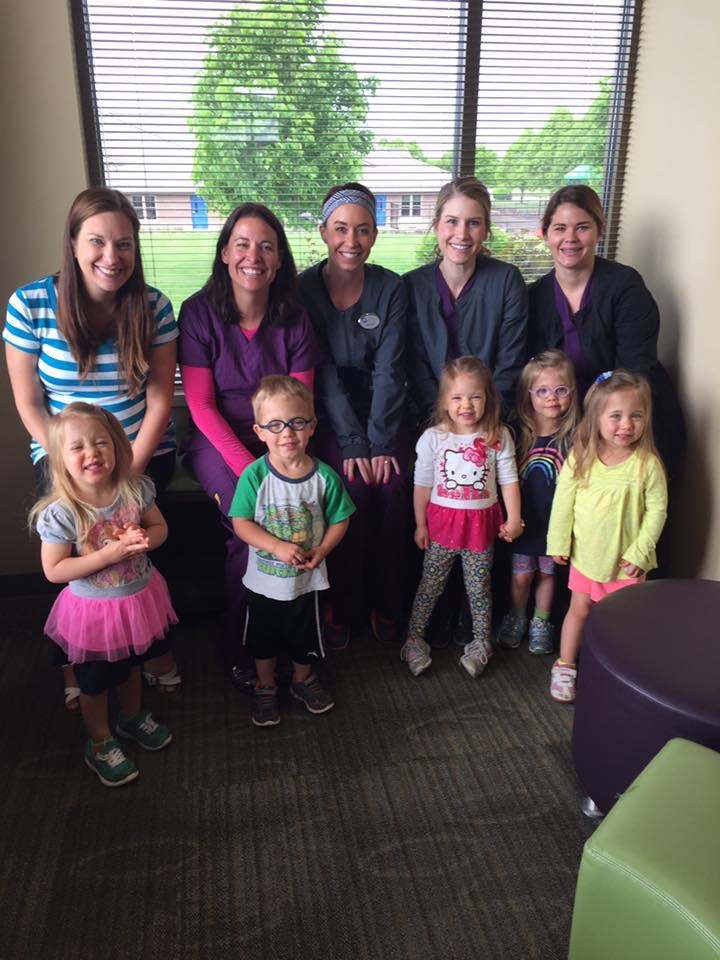
V5 at their Dental Appt with Dr. Cece and her crew
Yesterday evening was a stormy night. The V5 are not keen on thunderstorms and thus I made another attempt to normalize nature with use of a fable. When I was a “small” girl, I also was rattled by thunder. My Dad’s dad was quite the bowler and passed away when my Dad was young and thus my Dad used to tell me that the thunder was my Grandpa Joe bowling with his fellow angels. I shared this story with my children last night.
After our evening snack, instead of wrestling them to bed, I gathered them beneath the skylights in Theo, Lily and Ellie’s room. We turned off all of the lights and just took in the thunder and hail storm. They loved the lightning but the crashing hail and thunder rattled them all. I let them know that I was not scared because I knew that we needed the rain to help the things we loved to grow. I also shared that the big booms were the angels bowling. I reminded them that I was there to keep them safe and the angels were also there to look out for them from heaven. Kali Mae then asked if God would also keep her safe, and I replied, “Always.” Then, Bella chimed in to share that God wasn’t in the sky but that He was in her heart. Kali quickly added that Jesus lived in her heart; Theo confirmed the same for himself. I was speechless and could only smile. Kali asked me if Jesus lived in my heart and I said, “Yes, yes He does.”
The conversation quickly turned to whether God is a boy or a girl and I tried my best to save that one for another day. This completely took me off guard because we had never talked about this before. We read the bible and go to church but this was a conclusion that they had come upon based on their experiences at Sunday school. In all honesty, I didn’t think they were absorbing much from Sunday school because I always ask what they learned or talked about and I get the same answer… “I don’t know.” Turns out the Spirit is working and now all I can think about is this precious moment and praise God for His grand purposes and plans that are carried out independent of our actions. I will continue to pray that this newfound knowledge for Theo, Kali and Bella will continue to grow and help shape their identities as God’s beautiful children. I will also pray that God’s Spirit will continue to whisper in the ears of Elliott and Lillian.
As I reminisce today, I recall their dedication and what that ceremony meant. For me, I dedicated them the moment I found out I was pregnant because I knew this was a God-thing and I was simply along for the ride. I was called to fight for their livelihood and ensure their delivery. In the NICU, I was an advocate for their care. Once home, it was and is my job to create and maintain a safe environment for growth; growth in mind, body and spirit. These, however, are earthly concerns. I feel my primary responsibility is to love them; to love them with play, instruction and discipline. To love them by modeling; modeling love for others, modeling respect for their father and honor for their elders, modeling forgiveness, gratitude and thanksgiving. To love them by knowing my role; knowing when to close my mouth and open my eyes and ears wide to watch. When it is my turn to talk, I will love them with my words.
I await the day to share these words with my children. I want them to know…
Instead of “Mama,” call me” home” because you will always have a place to lay your head with me.
I want you to know knowledge, to learn skills but most of all to maintain the attitude of one who humbly acknowledges they are still learning.
You will experience hardship. Life will trip you and then hit you when you’re down but getting the wind knocked out of you is the only way you will ever learn to appreciate the sweet taste of air. Life can hurt and time can heal. Falling and failing are part of the journey and the only way you will fly, is if you jump.
You also won’t always get what you want. You’ll want what your neighbor has, your first love to last, your pain to go away, and to save the world. But, our hands are too small, our lives to short and no bucket big enough to catch all the tears that the earth cries. These are the days for running in the rain.
Running away the worry, the pain, and the anxiety. Emptying the body of its strength so that all you’re left with is who you are and who you were made to be.
I want you to look at the world as your oyster. Every moment is the zenith. Find your strength and power from above, know your time, and get out of your way.
There will be those days; the days to lift your eyes to lift your chin, and seek out the blessings.
Slow down to go fast. Close your mouth to open your ears. Shut your eyes to open them.
Always apologize and own your mistakes but never apologize for who you are.
The world will ask you to stop crying, quiet down and button up. Choose to embrace your emotions, plant your passion, water it and watch it grow.
Do you have the thrifty gene? Not the “thrifty genotype” that’s another story for a different blog, but rather the innate desire to be frugal? I do and I certainly hope my children do, too. Signs that you have the frugal-kind of thrifty gene…
You maintain a minimalist wardrobe
You re-use Zip-loc bags
Forget about napkins, paper towels, Kleenex and other unnecessary paper goods with the exception of toilet paper
Use the library
Enjoy free entertainment
Cook from scratch and brown bag it daily
Seek to reduce water usage and electricity
These may sound like confessions of a cheap-skate, which perhaps it is, but it is also a list of habits and a philosophy that I hope to share with my children.
There is so much want, desire and greed in the world. So many people “thrive” and try to survive by chasing after the next big innovation, but what about maintenance? What about using what we have? Being grateful and counting our blessings. I, personally, believe life can be so much more when we live below our means and seek and savor the things in life that are priceless.
I know that my children will reap the benefits of frugality in mind, body and spirit as we continue to model ways to avoid waste by- not only preaching- but practicing the differences between “wants” and “needs” and being greedy versus grateful. At the ripe age of 3 1/2, I have already witnessed my children using this language and even discussing a need versus a want with each other; it makes my heart smile.
What are the non-monetary benefits of frugality?
They include:
Creativity
Being green and friendly to the environment
Reduces waste
Keeps priorities in check
Fosters relationship and community
Keeps life simple
Those last two are what keeps me from drifting from my thrifty gene. The minimalist mindset reduces the number of choices, keeping it simple and crafting an environment where the healthy choice is easy. It also minimizes distractions so we can build true relationships that will last a lifetime.
I was reflecting today on how much life changes when someone becomes a parent and even more so how the change does not stop at child birth; with each stage, the child grows and the parent changes.
At conception, I grew in my passion, responsibility and intent to protect my unborn children. I witnessed a side of me that I had never seen before- the Mama bear. I was keenly aware of the needs of the “fruit of my womb” and there was nothing that was going to stop me in fighting for their lives.
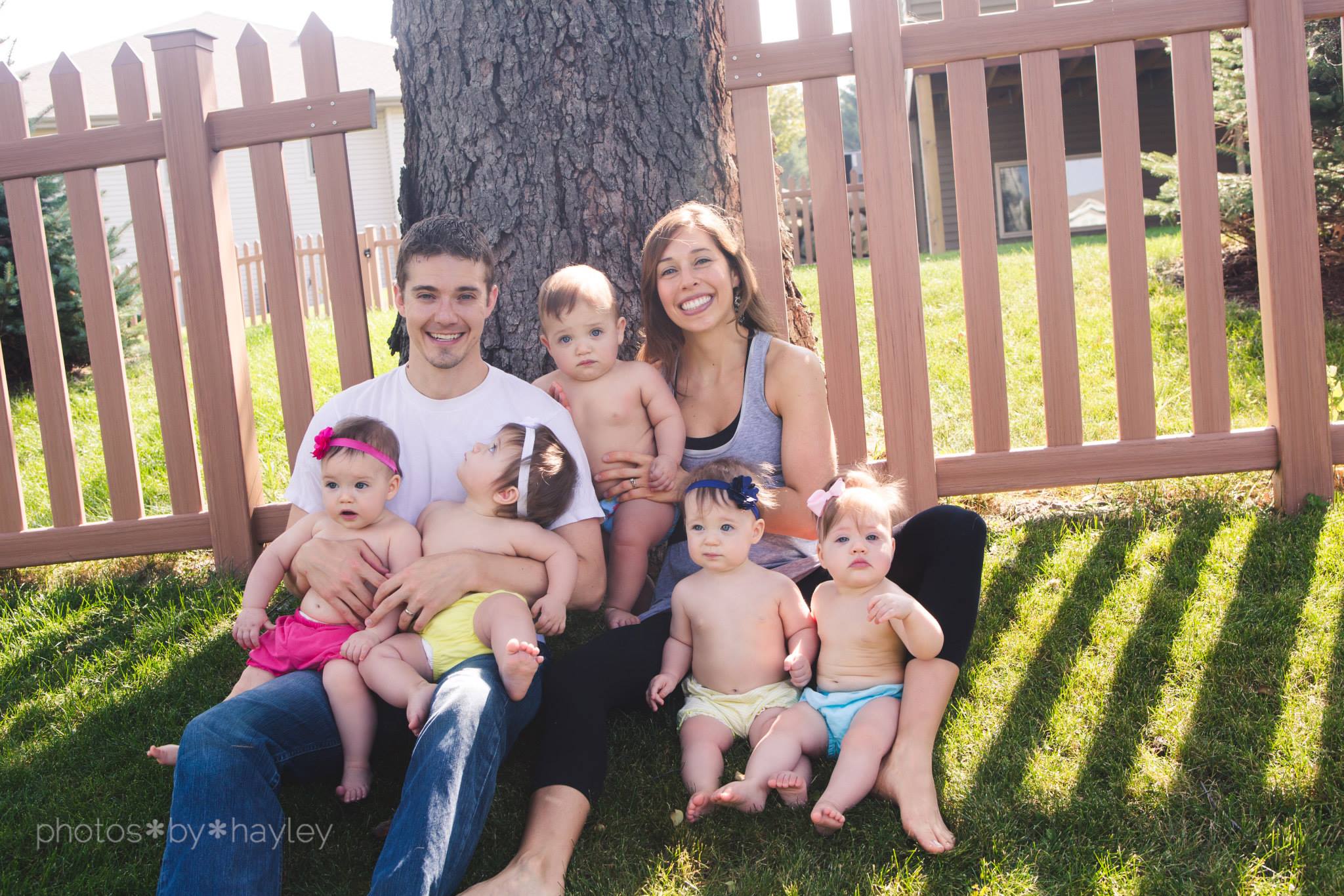
Photo Credit: Hayley Painter
At birth, I grew in love, and all that encompasses this word: sacrifice, friendship, and intimacy. I never knew this type of love; the love of a parent for their children. It is this love that grounds all future growth and is the “why” for each and every day.
In infancy, my managerial capabilities were tested; could I pump, feed, bathe, cuddle, console, play and nurture five infants every day? We would see. We did, but not alone, and thus I grew in humility. I had to fight my pride and welcome- and rely- on the help of others. Still to this day, our family is living proof that it takes a village.
In toddlerhood, the challenges shifted to be more mental and psychological than physical. Yes, it can be tiresome to chase around five two-year-olds, but it is more challenging to teach and coach them through their new emotions, experiences and misunderstandings. It is in this stage that I took Daniel Tiger’s advice, “when you feel like you want to roar, take a deep breath and count to four.” Between this mantra and my many parenting mishaps, I believe I have learned the value of remaining calm during chaos and calamity… unfortunately knowledge does not translate into skill very easily.
Today, we are in the preschool era. Being three is so very different than two. At three, children move with ease, can articulate what they are thinking and have a basic understanding of the world that they witness day-in and day-out. They are still naive to everything outside of their four walls but that presents caregivers with a priceless opportunity. Preschoolers are hungry, hungry for knowledge of all of the what, when, where, why and how of this world. It is a true joy to help a youngster navigate a new experience that you know they will remember with smiles in their heart.
Yes, I will not deny there are the threenager moments and mood swings; the “holes” in their oatmeal, the zipper that won’t budge, when they wanted triangles instead of rectangles, or even when all of the bubbles in the bathtub have come and gone. These little things that make the littles steam; it is in these moments that I pray I am able to remain calm and that my peace would transcend their anguish. It is these times that are preparing me for their true teenage years.
At the end of every day, I lie in bed reviewing the day- as I’m sure they do- recalling my good choices and my bad choices. I try to remind myself of the elementary lesson that bad choices don’t make you a bad person, or a bad parent for that matter. We are all under construction… works in progress… building, refining and polishing each other in each moment of everyday and in each stage and we all play a role in this process independent of our age.




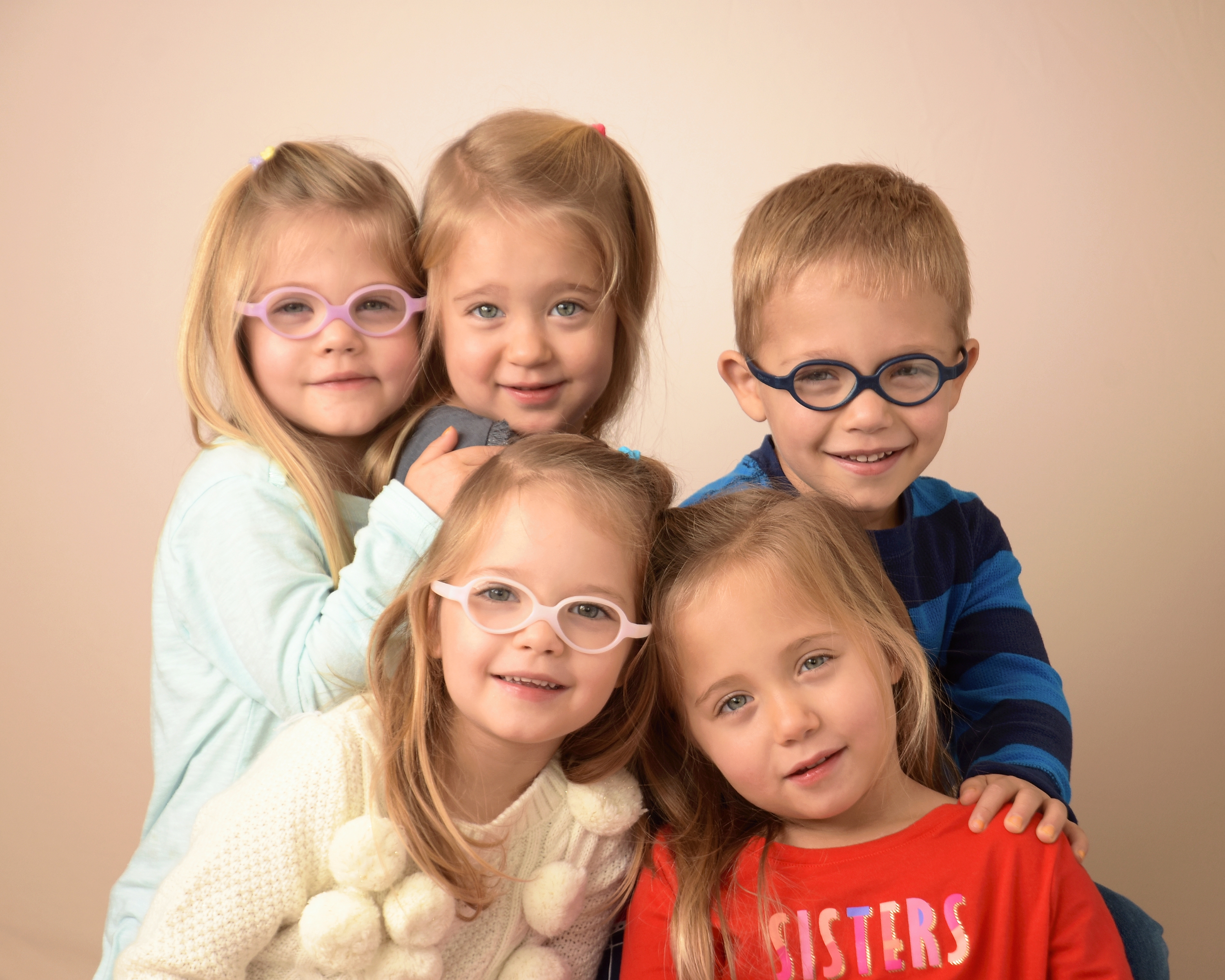


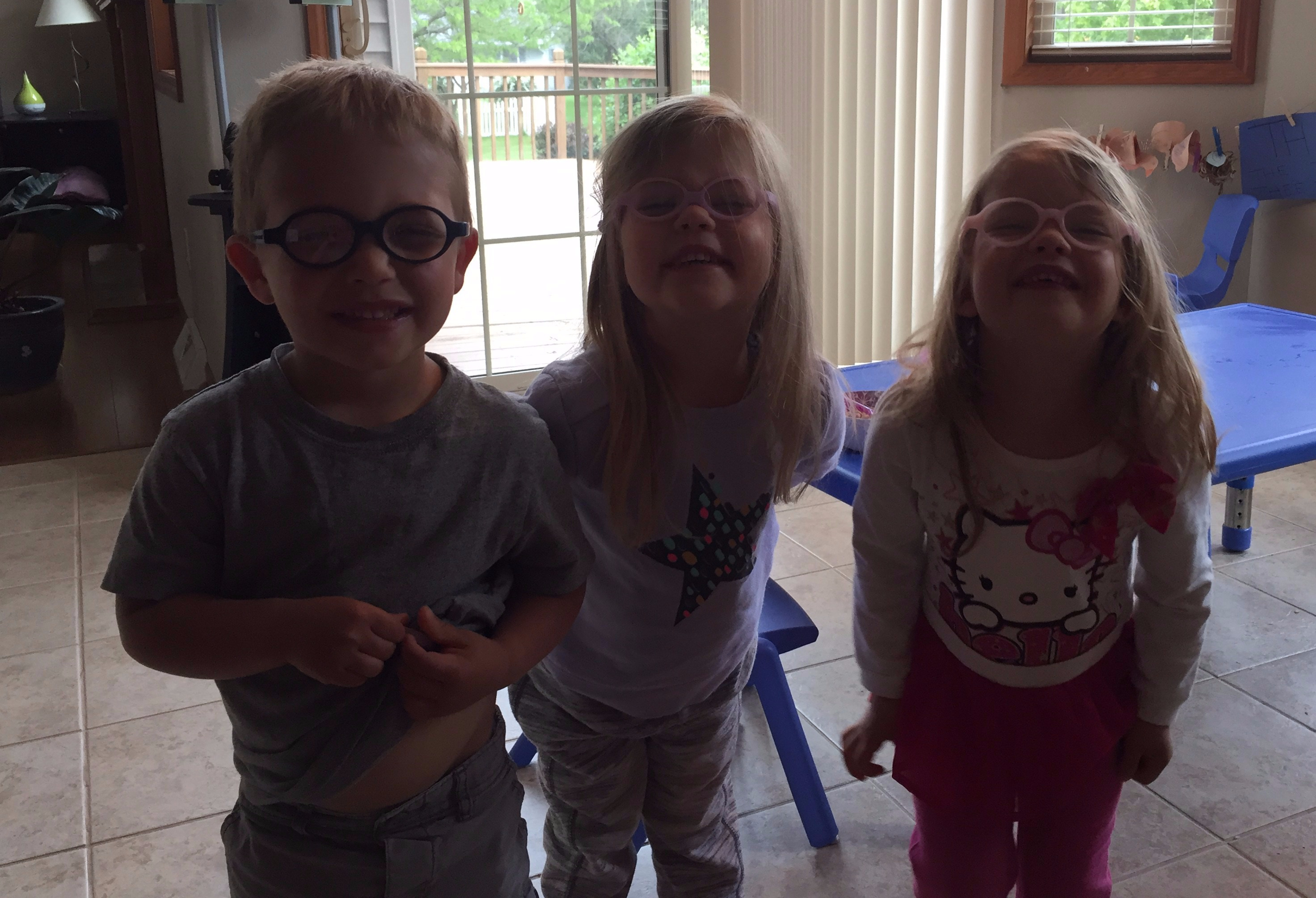

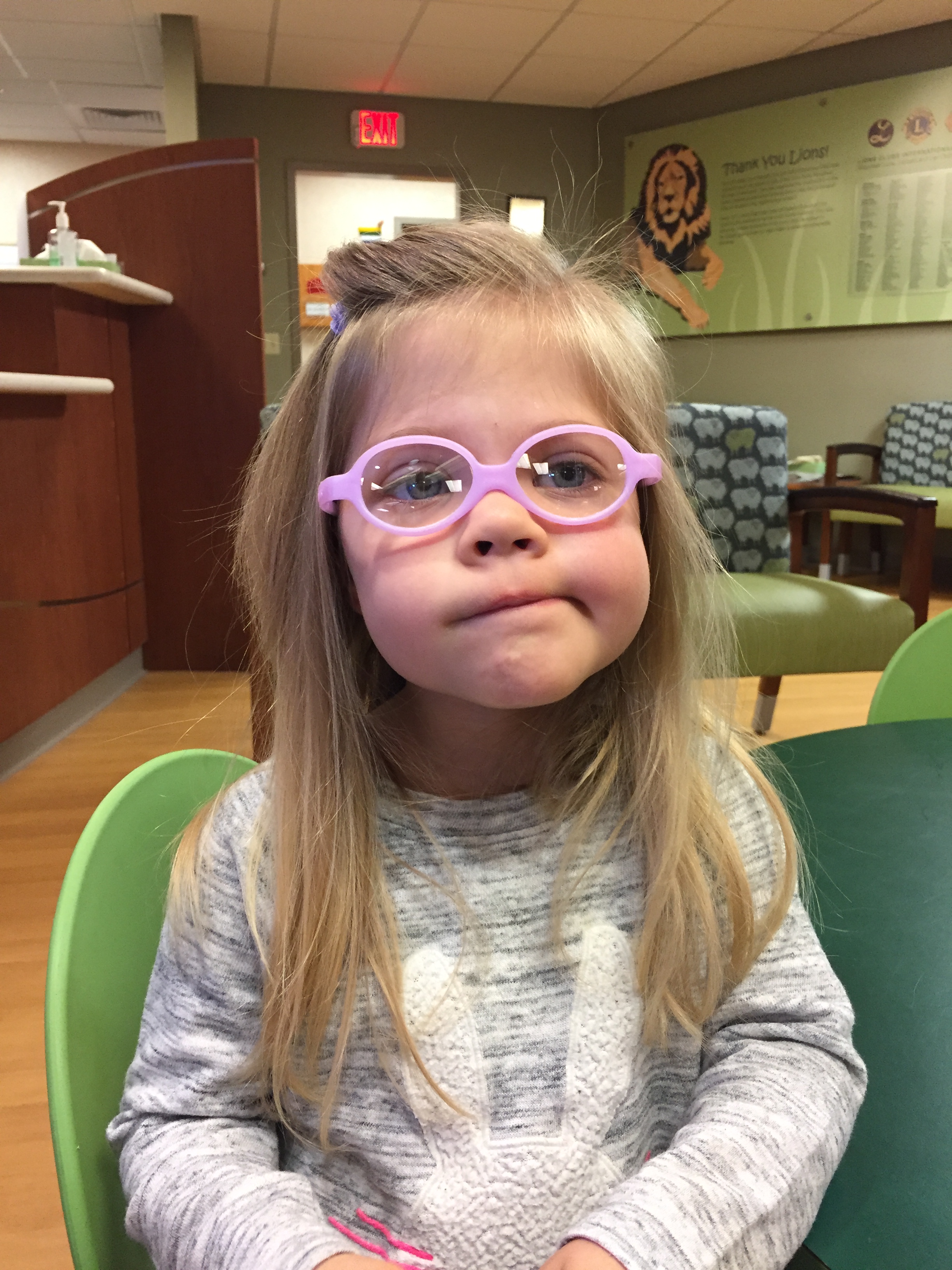
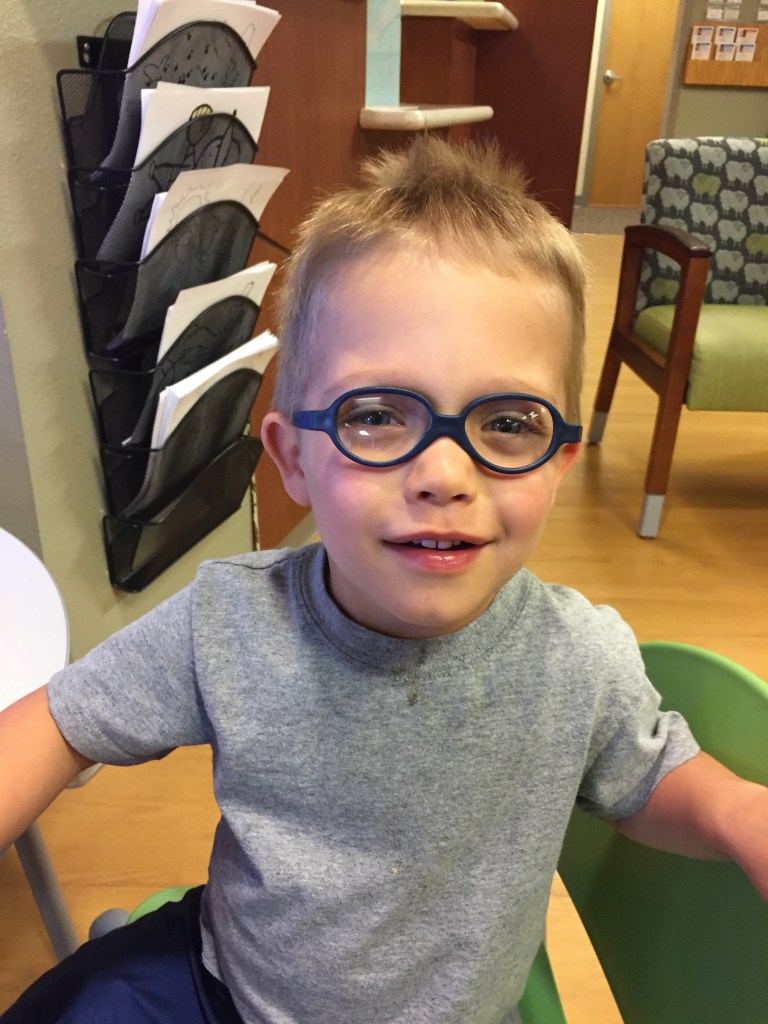 For example, Theo thought it made sense to hide his glasses in a tree in the yard for almost a whole day. Many thanks to Nana for tracking them down. On the other side of the spectrum, Ellie’s words after putting them on were,”I can see you Mom!”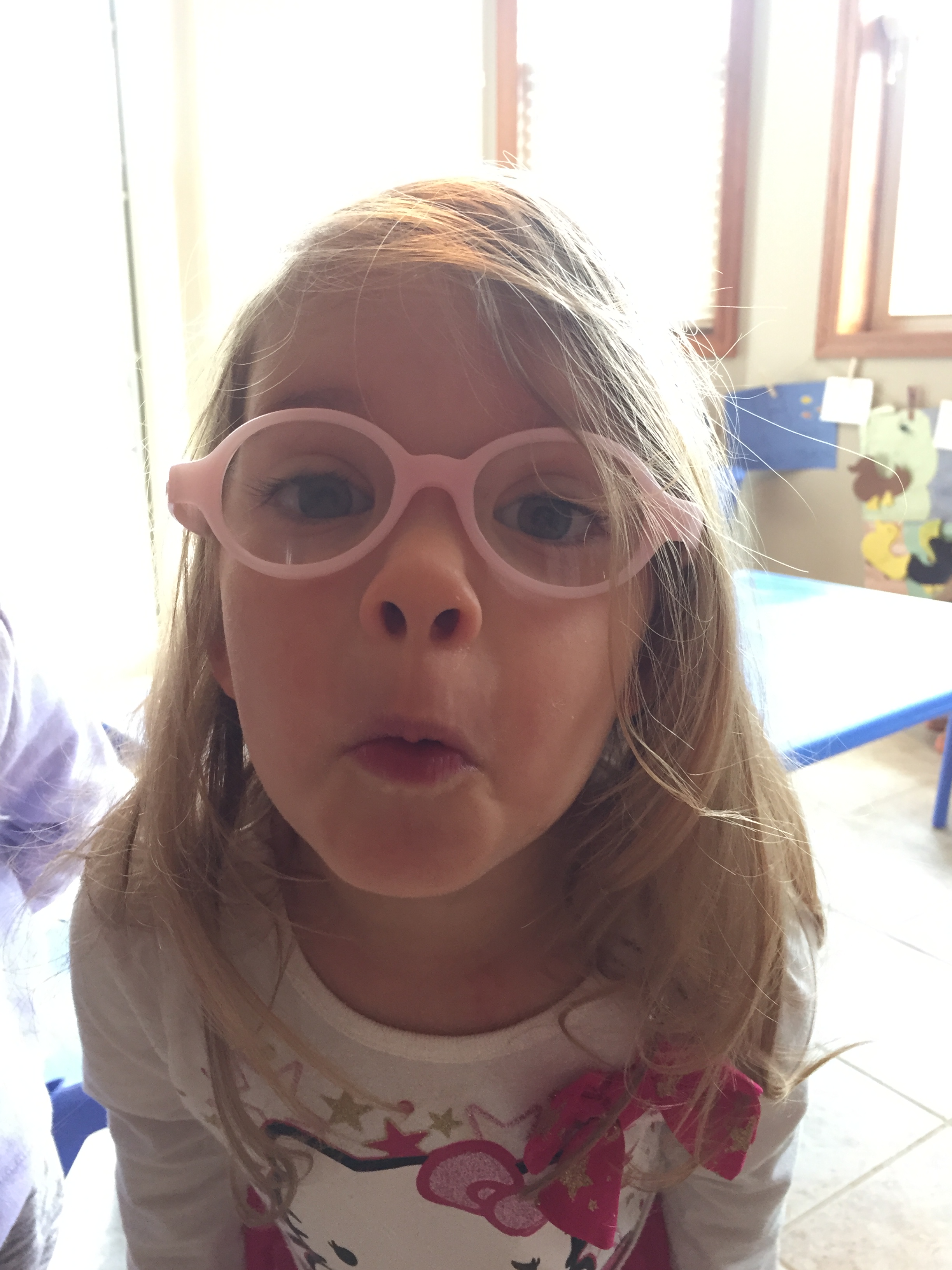
 Yesterday evening was a stormy night. The V5 are not keen on thunderstorms and thus I made another attempt to normalize nature with use of a fable. When I was a “small” girl, I also was rattled by thunder. My Dad’s dad was quite the bowler and passed away when my Dad was young and thus my Dad used to tell me that the thunder was my Grandpa Joe bowling with his fellow angels. I shared this story with my children last night.