Feeding the Growing Athlete

It’s 3:35p.m., One kid needs to be at football by 4:45. Another is lacing up for a cross-country meet. Three more need to be at the gym in a leotard with their hair up 3 towns over, and all five have a science project due tomorrow. That’s a normal Tuesday at our house.

I’m a mom of five teens who also is a dietitian, and I still don’t have a perfect meal plan. What I do have is a plan that works most days, holds up on the messy ones, and keeps five growing bodies fed enough to learn, train, and recover.

The goal isn’t perfect nutrition. It’s a simple plan for real life.

What “Fueling the Growing Body” Really Means

Practice starts before your kid walks in the door. Food, fluids, and recovery are part of training, just like drills and conditioning. Teen athletes are asking their bodies to do three big jobs at once:

  1. Grow. The early teen years bring some of the fastest growth of their whole life: bones, muscles, brains, hormones, all of it.
  2. Learn. A full school day takes real energy. Focus, memory, and mood all run better on regular meals.
  3. Train. Practice, games, meets, and conditioning burn a lot on top of everything else.

When you add those up, most teen athletes need more food than parents expect, and they need it spread out across the day. This is not the season for cutting, skipping meals, “eating clean” to the extreme, or trying to change body size for a sport. A growing athlete who’s under-fueled doesn’t just feel tired. Their body starts making trade-offs, and growth and bone health are often the ones that pay.

So in our house, the question isn’t “Is this the healthiest possible food?” It’s “Did they eat enough, often enough, to do everything we’re asking of them today?”

The Busy-Week Map

Here’s how a typical school-and-practice day breaks down for us. Every family’s schedule is different, so borrow the parts that fit.

Before School: Breakfast Counts

Breakfast is the first fuel stop of a long day. It doesn’t need to be fancy. It needs to happen.

Quick ideas that work in our kitchen:

  • Eggs + a bagel + avocado or peanut butter (or a seed butter)
  • Overnight oats with Greek yogurt and a fruit and nuts of their choice
  • Peanut butter (or seed butter) and banana on toast
  • A smoothie with yogurt, fruit, and oats, plus a handful of nuts on the way out

If your teen “isn’t hungry” in the morning, start small. A glass of milk and a banana is better than nothing, and appetite often grows once breakfast becomes a habit.

Packing the Day: Lunch and the Backpack Snack

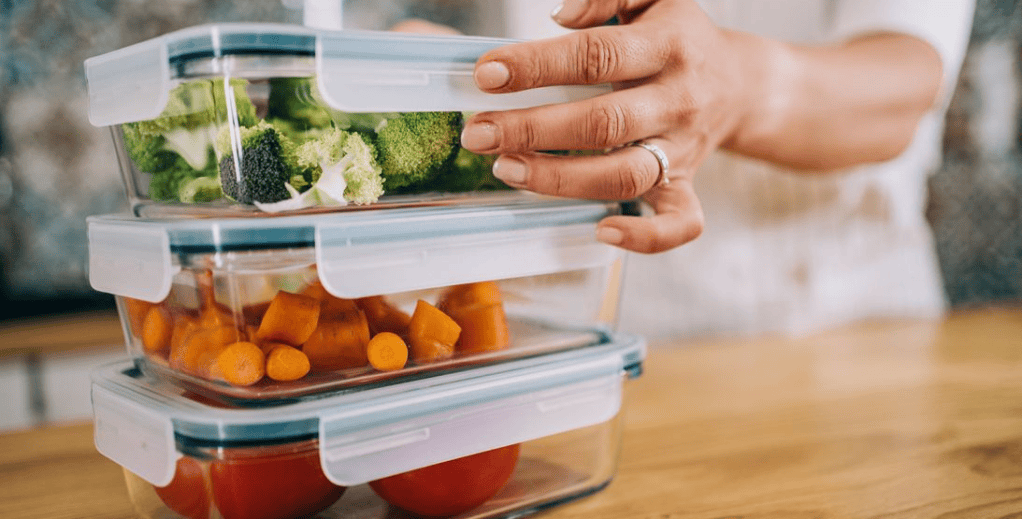
Lunch is what powers the afternoon and the start of practice. A lunch that’s just crackers won’t cover it. We aim for carbs + protein + a healthy fat (more on that formula below).

Then there’s what I call the backpack snack, the one they eat between classes when lunch didn’t last. This snack does a lot of heavy lifting, especially when lunch was at 10:45 and dinner is still hours away. Pack it the night before. Future you will be grateful.

After School, Before Practice

This is where a lot of teen athletes come up short. Lunch was hours ago, and they head straight into training running on fumes.

The general rhythm:

  • A fuller meal a few hours before practice (that’s usually lunch).
  • A smaller, easy-to-digest snack closer to practice, mostly carbohydrate with a little protein. Think fruit + a cheese stick, pretzels + a yogurt, half a sandwich, or a granola bar + milk.

Closer to practice, keep high-fat, high-fiber, and very heavy foods lighter. They digest slower and can leave some kids feeling sluggish or crampy, especially runners and gymnasts who are moving, flipping, or bouncing.

Dinner (In the car or at 8 p.m.)

Late dinners are real life in sports families. It’s okay. Dinner is still a full meal: carbs, protein, healthy fat, and some color from fruits or vegetables. If dinner is very late, the after-practice recovery snack becomes even more important so nobody hits the table starving and wiped out.

And then: homework, shower, sleep. Sleep is when a lot of growing and recovering happens. Protect it like you’d protect practice time.

The Next Morning

Recovery doesn’t end at bedtime. Breakfast the next morning restarts the cycle, especially after a hard practice, an evening game, or a long meet day.

The Build-a-Meal Formula

When I’m tired and the fridge is half-empty, I fall back on one simple formula:

Carbs (grains and fruit) + protein + a healthy fat

  • Carbs are the main fuel for training and for the brain. Think bread, rice, pasta, tortillas, oats, potatoes, crackers, and fruit.
  • Protein helps build and repair muscle and supports growth. Think meat, chicken, fish, eggs, dairy, beans, and tofu.
  • Healthy fats help with fullness, growth, and overall health. Think avocado, nut or seed butters, nuts, seeds, olive oil, and cheese.

Add a fruit or vegetable when you can. 

Meal Ideas That Work Across Sports

These are on regular rotation at our house. Most travel well, and many can be made ahead.

  • Meat and cheese sandwich + an apple with peanut butter or seed butter
  • Chicken and rice with sliced avocado
  • Protein pasta with your favorite sauce
  • Eggs + bagel + avocado or peanut butter (or seed butter)
  • Tortellini with red sauce and spinach
  • Turkey and cheese wrap + fruit
  • Hawaiian pita: ham, pineapple, and cheese tucked into a pita
  • Taco bowl: rice, seasoned meat or beans, cheese, salsa, and avocado
  • Mediterranean bowl: rice or quinoa, chicken, cucumber, tomato, hummus, and feta
  • PB&B: peanut butter (or seed butter) and banana on bread or a tortilla
  • Tuna salad with crackers or on a sandwich
  • Overnight oats with fruit and a spoonful of nut or seed butter
  • Mini pizzas on sandwich thins
  • Meat and cheese snack box with crackers, fruit, and cheese curds

Nut allergy at home or at school? Almond butter, seed butter, or organic soy-based spreads swap in nicely almost anywhere you see peanut butter. Always check your school’s or team’s allergy rules, and read labels for cross-contact.

Hydration: Top Priority

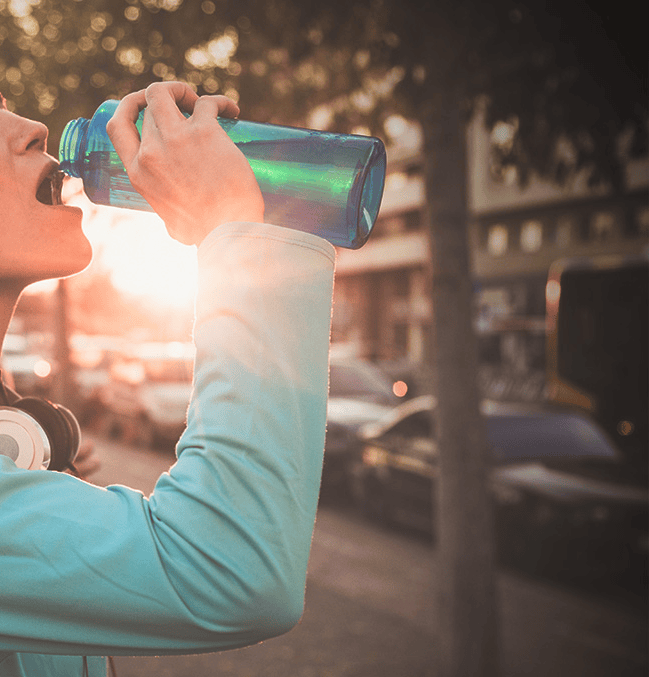
If you only change one thing this week, make it water. Even mild dehydration can make practice feel harder and leave kids feeling tired, headachy, or off. And teens are notorious for forgetting to drink until they’re already thirsty.
What works for us:

  • Send a full water bottle to school every day, and refill it before practice.
  • Drink through the day, not just at practice. Chugging a bottle in the car rarely makes up for a dry school day.
  • For longer or harder sessions (think long runs, hot football practices, two-a-days, all-day meets or tournaments), fluids with electrolytes and some carbohydrate, like a sports drink, can help replace sweat losses and support energy. For a regular practice of about an hour, water is usually enough.
  • Pay attention to heat. Hot days, heavy pads, and indoor gyms without air conditioning all raise fluid needs.

A Note on Caffeine

Energy drinks, pre-workouts, and coffee drinks are everywhere, and teens see older athletes using them. Caffeine isn’t recommended for kids and teens. It can disrupt sleep, which growing athletes badly need for recovery, and it can leave some kids jittery, anxious, or with a racing heart. Energy drinks – even Bubbler – are a firm no in our house. A good snack, enough water, and a decent night’s sleep do far more for a teen athlete.

Between Sessions, Drills, or Events

Hydration is the priority here. For long sessions, two-a-days, tournaments, or meets, a small, easy carb snack during breaks can help support energy.

On long days with breaks, such as meets, tournaments, or races with multiple events, easy options include:

  • Applesauce or yogurt pouches
  • A smoothie
  • Fruit, pretzels, or crackers
  • Trail mix

A sport-specific tip on trail mix: it’s great between sessions, but it’s heavier on fat and fiber, so it’s not ideal right before or in the middle of training. For gymnastics, save it for longer breaks rather than between rotations. For football, it works better at halftime of a long day or after practice than mid-drill. For cross-country, save it for after the race; before a run, stick to simpler carbs like a banana or pretzels.

Recovery: Refill the Tank

The car ride home is prime refueling time. A snack with carbs + protein within about 30 to 60 minutes after practice helps muscles recover and refills the tank, especially when dinner is still a ways off. We keep recovery snacks in the car for exactly this reason.

The simple rule: Carbs + protein within about 30 to 60 minutes.

After harder or longer sessions, some families like aiming for roughly twice as many carbs as protein. That ratio is optional. Getting a solid mix of carbs and protein in, and soon, is what matters most.

Our Favorite Recovery Picks

  • Cottage cheese + crackers + peaches
  • Snackle box: nuts or seeds, pretzels, cheese, and dried fruit in a tackle-box-style container
  • Yogurt parfait with granola and berries
  • Trail mix (with seeds instead of nuts if needed)
  • Bagel with peanut butter or seed butter + a hard-boiled egg
  • Chocolate milk + peanut butter toast (or seed butter toast)
  • Eggs in a frame: an egg cooked in the middle of a slice of toast
  • Half a turkey sandwich + a piece of fruit
  • Leftover pasta or rice bowl from last night’s dinner

Chocolate milk deserves a special shout-out. It’s cheap, kid-approved, travels in a lunch box with an ice pack, and brings both carbs and protein plus fluid.

When to Worry: Signs a Teen Athlete May Be Under-Fueling
This section is for parents and the clinicians who care for your child, like your pediatrician or a registered dietitian. It is not a checklist for coaches to screen athletes. If you notice something, the next step is a conversation with your child’s doctor or dietitian.

One symptom on its own doesn’t mean something is wrong. Teens get tired, moody, and hungry for all kinds of reasons. But several of these together, or signs that keep showing up, deserve attention:

  • Low energy that doesn’t bounce back with rest
  • Performance stalling or getting worse despite hard training
  • Frequent injuries, especially stress fractures or injuries that are slow to heal
  • Getting sick often
  • Mood changes: more irritable, anxious, down, or withdrawn
  • Trouble focusing at school
  • Growth slowing, or weight dropping or stalling during a time they should be growing
  • Feeling cold all the time, dizziness, or lightheadedness
  • Skipping meals, eating much less than teammates, or avoiding whole food groups
  • Strong worry about food, body size, or “earning” food through exercise
  • Changes in periods: periods that stop, become irregular, or haven’t started when expected
  • Labs that keep coming back low (like iron) at checkups

What’s Going On When Athletes Under-Fuel

When an athlete consistently doesn’t eat enough to cover training plus growth plus everyday life, the body starts cutting back to save energy. Doctors call this relative energy deficiency in sport, often shortened to RED-S. In plain words: there isn’t enough fuel for the amount of training.

You may also have heard of the female athlete triad. That describes three connected issues in girls and women: not enough fuel, changes in periods, and weaker bones.

But this isn’t just a “girl thing.” Boys and teen athletes of every gender can under-fuel too. It can show up as low energy, mood changes, slowed growth, hormone changes, and more injuries. My son’s football schedule and my daughter’s cross-country miles can drain a body just as fast as my gymnasts’ practices.

Many cases aren’t on purpose. A busy schedule, a small appetite, a long gap between lunch and practice, or a big growth spurt can all leave a kid short without anyone noticing. Sometimes, though, under-fueling is tied to disordered eating or an eating disorder.

Early care matters. Getting help sooner lowers the chance of lasting effects on growth, bones, and health. If you’re worried, call your pediatrician and ask about seeing a registered dietitian who works with young athletes.

If you suspect an eating disorder, please don’t try to handle it with a meal plan. This post isn’t medical advice or treatment for eating disorders. Reach out to your child’s doctor right away. If there are signs of immediate danger, such as fainting, chest pain, or thoughts of self-harm, seek urgent care or call or text 988.

A Simple Plan Beats a Perfect One

Most weeks at our house are not Pinterest-worthy. There are drive-thru nights, cereal-for-dinner nights, and nights when somebody eats a granola bar in the car while finishing a worksheet. That’s okay.

What keeps us steady is a handful of simple habits:

  • Eat breakfast, even a small one.
  • Pack the backpack snack the night before.
  • Carry a water bottle everywhere.
  • Fuel before practice: carbs + a little protein.
  • Refuel after practice: carbs + protein within an hour.
  • Protect sleep.
  • Watch the big picture, and loop in your pediatrician or dietitian if something feels off.

Our kids are growing, learning, and training all at the same time. When we fuel them for all three, they don’t just perform better. They have what they need to grow, recover, and enjoy the sports they love.

That’s what Fuel to Flourish™ is all about.

This post is for general education and isn’t a substitute for individual medical or nutrition care. Every athlete is different. Talk with your child’s pediatrician or a registered dietitian about your family’s specific needs, allergies, or health concerns.


Looking Back after 13 Years

Every July I open the virtual photo albums and reminisce over the last 365 days. I smile, I cry, I chuckle, I think about the “what if’s” and let those worries go, and count my blessings: 1, 2, 3, 4, and 5. I compile photos that articulate where each member of the V5 started the previous year and who they became. I add photos I know that they’ll cherish and sprinkle in a few that I know will make them cringe but smile inside. Then, I listen to countless songs trying to find the right one that I know they’d listen to and think, “yep that was me at 13.” My favorite part of building these collages is watching them one-on-one with each of them. We always catch little mistakes the first time through and they beg for me to take a photo out but they typically stay. Each one ends with a side hug and kiss on their head.

Join me as we look at Theo, Bella, Lily, Kali and Ellie over the last year!

Happy 13th Theo!

Happy 13th Bella!

Happy 13th Lily!

Happy 13th Kali!

Happy 13th Ellie!

Ellie’s audio: How to save a life: https://youtu.be/cjVQ36NhbMk?is=RGcdU_DVxLikDQpT

Looking Back at Kali | 2022-2023

From her first monkey screech, we knew this girl had to be heard. K is an astute observer and is learning daily the power she holds with her tongue. While impulses are her kryptonite, her sky blue eyes are ours. She has learned at her young age how to put on a social mask. However, Her feelings can’t be hidden because she wears them on her sleeve. She may be the toughest of our nuts to crack, but when you do you find the purest joy and love.

Now, let’s look back at Kali over the last year…


Kali at eight years…

Kali at seven years…

Kali at six years…

Kali at five years…

Kali at four years…

Kali at three years…

Kali at two years…

Kali at one year…

If you really want to turn back the clock, check out Kali’s First Year…

Perfectly Imperfect

Perfectly Imperfect – The Dawning of New Era

As I sit down to write today, I am watching the rain fall along the panes of our windows. Cold, wet days often don’t bring the joy of bright, blue 72-degree weather but rather tend to slow many down and often times slow us down enough to see the muffled memories or quiet reflections in our mind. I have been pondering what, when and how of what I’d like to share in this post for several weeks. Today, I decided to simply put pen-to-paper or rather fingers-to-keys.

Today, my story is intended to empower families and caregivers in fostering mental healthcare in their homes and creating a compassionate space for each other. There is no doubt that the COVID-19 pandemic heightened stress and brought about new stressors for all people. I often wonder how my children will recall these last few years. Will they remember the isolation sadly? Or will they recall the extra time each other and Nana has their second-grade teacher fondly? Will they recall the big feelings that they navigated with pride or remorse?

I recognize that their reactions and recollections are out of my locus of control but my response in the here and the now is. The last year and beyond we have navigated budding mental health concerns that we knew would eventually arise due to the prevalence in our genetic pool. At first, we sought out strategies to combat the stress. We tried T.I.P.P. breaks, individual and family therapy, breathing exercises, bedtime and wake up routines, more structure, less structure, lavender, diffusers, the list goes on and on. Scenarios would improve temporarily but then we felt like we were back where we started and often times in a worse situation.

We have come to realize that this approach is simply exhausting. What if we rather embraced the stress? And, while we’re at it, what if we also embraced that are mental and emotional wellbeing don’t have to perfect? It is freeing to own that fact that we’re perfectly imperfect!

How to Embrace Being Perfectly Imperfect

  • Don’t Combat Stress, Combat Stigma.

We begin with education and the opportunity to educate ourselves and others about mental health disorders using resources such as NAMI.org or the CDC. This includes being conscious of our language and labeling of others using mental health conditions as adjectives.

  • Separate the Person from the Condition.

People First language puts the person before their diagnosis and/or ability. It acknowledges that their identity is not in their medical condition or history but rather who they are.

  • Equate Physical and Mental Illness.

We don’t discourage people from going to the doctor when they are physically ill, but some think twice about pursuing mental healthcare. The brain is vulnerable to disorder just as other organs in our body. When we can correct disruptions or abnormalities in brain function with medication, equip a young mind for healthier growth, create a mental environment that permits therapies to “stick” and provide that individual with a tool to achieve more equitable experiences.

  • Own Your Story.

I encourage everyone to find time to reflect upon your story. Whether you choose to share it or not is up to you. Sharing our stories make us truly vulnerable. However, the reward from sharing with safe people can be greater than the risk. Human connections are made through stories. In our weakness, we become stronger.

Our Story

If you were to open the medical charts of our family, you would see anxiety, ADHD, bipolar disorder, depression, oppositional defiant disorder, and panic disorder. We are not strangers to mental illness nor the therapies that accompany them. I, personally, appreciate the fact that my parents exposed me to mental healthcare providers at a young age because I became comfortable and accepting of this resource. Years later, when Frank and I perceived that there may be more to the tantrums we were witnessing, the first place we looked for help was a LCSW. Even with our personal relationships with therapists over the years, when the psychiatrist recommended medication for one of our children we were a bit taken back.

I asked myself questions like… “is it really that bad?” “have we exhausted all of our alternative therapies?” “what will their siblings think?” “will they need to take it forever?” It was in this moment that I realized I was standing in the way of a potential solution for my child. Then, I looked into their young eyes and asked if they’d like to try it. They held their gaze and provided a confident yes.

Needless to say, we started the medication and while the story is not over, the chapter filled with fear, horrific bedtimes, concerns for self-harm, and words that belong only in parents’ nightmares is closed. We are experiencing a rainbow as the sun emerges upon our personal storm. With this dawn, we see restored sibling relationships, the return of a sparkle in their eyes and a little more peace of mind.

Rainbow At The Dawn Photograph by Edward Pacil

I would be remiss in a post like this to not offer immediate help for those who feel ready. If you or a loved one are seeking help, know that it is there. SAMHSA’s National Helpline is a free, confidential, 24/7, 365-day-a-year treatment referral and information service (in English and Spanish) for individuals and families facing mental and/or substance use disorders. They can be reached at 1-800-662-HELP (4357)

Looking Back at Isabella Marie

Isabella Marie is three! As we look back and ahead at our Bella-Bean, it is clear that Bella is the most creative, artistic and imaginative among the five. She can entertain herself for hours with intricate story lines. She is a social butterfly, but truly enjoys her alone time.

Bella also appreciates order; “A place for everything and everything in its place” truly describes Bella’s space. Her room may appear to be a mess, but it is perfectly imperfect in her eyes.

She also appears to be the “popular” girl among the V5 and tends to rule the roost. The only card that will trump Bella is Theo; He has a special place in her heart of hearts. Also, since Bella (Felix) and K-Mae (Oscar) have been rooming together they also have become besties. It warms our heart to see them playing hand-in-hand and caring for one another’s needs.

Bella is the opposite of “even keel” and often unpredictable in mood, opinion and action. It’s also difficult to pin her favorites but we’ll try!

Her Favorite Animal: Seal

Her Favorite Stuffed Animal: Truly her Fuzzy blanket or Her Ginormous Brown Bear

Her Favorite Animated Character: Lambie from Doc McStuffins

Her Favorite Show: Doc McStuffins

Her Favorite Food: Avocado

Her Favorite Activity: Snuggling on Daddy’s lap

Now, here’s a look back at Isabella’s second year…

Bella’s at two years…

If you really want to turn back the clock, check out Bella’s First Year…

One Week Shy of 21 Months

The munchkins will be 21 months old in just 1 week and I wanted to capture how much they have changed with a few profile updates!

DSC02909Theodore Joseph

  • Nicknames: Theo, Mr. Theo, Buddy, lil Koala (he gives the best hugs!)
  • Favorite animal sounds: Woof Woof!
  • Favorite word/letter: Ooooo (must be a Wisconsin thing)
  • Favorite food: Banana (nana) or Cheese (Cheeeeez)
  • Favorite toys: Stuffed Bear and stuffed moose
  • Personality: Nana’s boy

DSC02943

Isabella Marie

  • Nicknames: Bella, Bella-Bean, Beanie
  • Favorite animal sounds: oo-oo ah-ah (Monkey)
  • Favorite word/letter: Is giggling a word?
  • Favorite food: Avocado
  • Favorite toys: Soft and cuddly toys (blankets, stuffed animals and even pipe cleaners)
  • Personality: Social butterfly

DSC02924

Lillian Grace

  • Nicknames: Lily, Lil, Lily-bug, Love-bug
  • Favorite animal sounds: Baa Baa (Sheep)
  • Favorite word/letter: Ma-Ma (Milk)
  • Favorite food: Milk and Meat
  • Favorite toys: Spoon and bowls (She loves to pretend that she is cooking)
  • Personality: Silly Lily

DSC02905

Kali Mae

  • Nicknames: K-Mae, Monkey, Monk
  • Favorite animal sounds: Meow (Cat)
  • Favorite word/letter: Kali has her own language and will babble all day to herself and imaginary friends
  • Favorite food: Kali is an equal opportunity employer and doesn’t appear to have a favorite
  • Favorite toys: Rubber bath toys
  • Personality: Daydream Believer

DSC02915Elliott Rose

  • Nicknames: Ellie, Ellie Rose,
  • Favorite animal sounds: Ney Ney (Horse)
  • Favorite word/letter: La-la-la (Ellie loves to sing)
  • Favorite food: Much like Kali, she loves a variety of foods
  • Favorite toys: Anything she can collect and organize (cups, blocks, dishes, animals, etc)
  • Personality: Independent Woman

Growing Pains

What is the product of (time change + full moon + molars + exploring physical, emotional and mental boundaries) x 5?

Cheezeburger

Growing pains and simply the beginning of toddlerhood. I try to put myself in their shoes… I have trouble imagining a world where you:

  • Don’t understand even 1/3 of the words spoken to you or about you.
  • Desire to do things just like others (parents) but often lack the physical ability or coordination
  • Can’t comprehend why hitting your head against a hard object or poking your sibling in the eye, or even playing with poop is a bad thing.
  • Want to tell the world, or even just you mom, what you want but find the best way to get their attention is to scream.
  • Experience periodic pain (teething) and don’t know why it is happening or how to make it go away.
  • Have someone else controlling everything in your life from when you sleep to when you wake.

This sounds like a very scary world for me. It is very important to me to help equip my children with both choice and tools for communication at such a young age. I hope that this will help to lessen the growing pains for all involved. So, how do we do it?

  • Recognize their limits by trying to see life in their eyes.

LilyBug

  • Be the parent. While we try to empathize, we also need to have boundaries and provide a healthy environment with consequences. We now have a penalty box, which is simply a re-purposed baby gate. They are beginning to recognize that “bad baby” gets 2-minutes for hitting, biting, banging their head, throwing food, need I go on?

Silly Ellie

  • Teach them to sign and encourage them to use the words they know. While signing at young children may seem like it is effort done in vain, one day it all clicks. Our kiddos can now sign and say a variety of words, which saves us a tantrum or two.

Kmae & Pandy

  • Maintain a routine. While their schedule needs to grow with them, we try our best to keep meal times, nap times and bed times the same each and everyday. This helps them to know what comes next.

Bella

  • Choice is tricky. We try to provide them options in regards to which books they would like to read, or toys to play with. When it comes to eating, we choose what and when, but they get to decide how much.

While physical growing pains don’t typically start until around 3, you wouldn’t know it around here! The quints are also physically getting bigger! Theo is leading the pack in both height and weight (no surprise), but Lily is just a few centimeters shy. Bella is turning out to be our light-weight partially because she is quite the jumping-Bella-bean. Ellie and Kali were the exact same height at their 18-month visit, with Elliott just a couple pounds less than her.

  • Elliott: 30.6 inches and 20.5 lbs
  • Kali: 30.6 inches and 22.8 lbs
  • Lily: 30.8 inches and 21.3 lbs
  • Bella: 30.1 inches and 19.8 lbs
  • Theo: 31 inches and 25.9 lbs

What’s next? 

Potty training is the next item on our milestone agenda. We have started introducing the potty and the necessary language. We are waiting for other cues that they are ready. At this point, Bella appears to be in the lead by hiding when she poops and wanting to take off her diaper and help to wipe.

While looking ahead to what’s next, I find it a daily practice to remain present; trying to appreciate every moment that will soon be a memory.


The Habituation Hypothesis

Christmas and New years have both come and gone, and 2015 is upon us. This holiday season flew by faster than in previous years, and I have closed the case on the vanishing holiday season. I have confirmed six reasons why the days seem to pass in the blink of an eye: Theo, Bella, Lily, Kali and Elliott. The sixth reason is a bit more scientific- the “Habituation Hypothesis.” This hypothesis is based on the fact that human brains use an abundance of energy everyday, and as we age the brain looks for ways to conserve energy. One way it conserves energy is by placing daily routines on auto-pilot; these may include emptying the dishwasher, driving to work, or changing diapers. This adaptation makes time seem like it is passing much more quickly since fewer unique moments are being recorded by the brain. When we are younger, everything is new; when you become a parent, everything is routine.

This realization made me want to slow down these special years by creating more unique moments, or “elevating our daily experiences.” The following are a few snapshots of cherished memories of this winter season…


Our Lead Nudest (video)-


Theo & Bella loving their new Teddy’s from Grandpa and Grandma-
Teddy Love
Kali’s rendition of Shake it Off and the V5 showing off there physiology skills (video)-


A sneak peek on how we keep our house so clean (video)-

Kali showing off her favorite Christmas present from Uncle JD- Pandy-
Kmae & Pandy
A very Vanderwall Christmas morning (video)-

Happy Thanksgiving!

This Thanksgiving all of the V5 enjoyed the holiday fare!

Bella&Gpa_CheeseburgerWith a mouth full of choppers they enjoyed the feast, along with cherished family memories and their own rendition of football.

It was a difficult 24 hours preceding the holiday celebration due to our first visit to the E.R. via ambulance. Poor little Lily’s nervous system kicked into hyperdrive during lunch on Wednesday. We learned that she has a pretty nasty U.T.I. and some of the bacteria may have snuck into her bloodstream. When this occurred her body sounded the alarms and all of her blood rushed to her central organs leaving our poor little lily-bug blue as can be and short of breath. This- apparently- is common response in preemies.

Gpa&LilyTrying to stay as calm as I could, I called 911 and our local Fire Department and paramedics were at our home in minutes. They asked upon entry if I needed to call any parents of the kids I was caring for (thinking they had walked into a home daycare); I kindly told them they were all mine. The other four behaved wondrously as we took care of Lily. Once Nana B arrived, Lily and I were off to the E.R. where Daddy met us. After one night’s stay and a big-dog antibiotic regimen, Lily is on the mend.

On a happier note…at their last check-up we learned that everyone has “caught up” and the medical team no longer has to adjust for their gestational age. The V5 are now just shy of 16 months and are all within in one inch of one another in height but vary in weights.

  • Theo is now 30.5 inches and 25 lbs.
  • Bella is 29 inches and 19 lbs.
  • Lily is 30 inches and 20 lbs.
  • Kali is 29.5 inches and 22 lbs.
  • Elliott is 29 inches and 20 lbs.

The latest milestone news is that everyone is now a bi-ped and are now walking!

Mr.Theo


Ellie Rose


Kali

Kali got her wheels about 2 weeks ago now and Lily just started walking this past week.


We are very thankful for good health, family and friends this holiday season!

Tailgate Pic V5

One Small Step For…

The V-5 are now 1 year and 2 months and just 2 weeks away from their due date. Since their first birthday we have been witness to milestone after milestone, including first steps!


Mr. Theo can now:Quints-59

  • Cruise along with a push-along-walker,
  • Stand-up by himself,
  • Stack cups and blocks,
  • Match colors,
  • Place rings on a pole, and
  • Throw a ball.

No real words yet for Theo but he can rattle off a host of consonants. He also can recognize the word ball.


Ms. Bella Jumping Bean can now: Quints-4

  • Cruise with a push-along-walker,
  • Pull herself up and stand,
  • Remove her bib and shirt,
  • Throw a ball,
  • Dance like a queen, and
  • Point at things and people, especially those that she thinks should get into trouble.

Bella is great a monkey-see, monkey-do and will mimic most actions. No words yet for Bella, but she is definitely the singer in the group.


L.G. can now: Quints-60

  • Pull herself up and stand with assistance,
  • Match colors,
  • Point at things and people,
  • Throw a ball, and
  • Make the sign for milk.

Lily also knows a host of consonants and her favorite is Da, Da, Da, Da.


K-Mae can now: Quints-3

  • Pull herself up and walk slowly with a push-along-walker,
  • Collect similar objects (puppets, chewy tubes, clothes),
  • Stack cups, blocks and rings, and
  • Play peek-a-boo.

Kali loves to rattle off consonant sounds and certainly knows the word, “no.” Needless to say, she’s our little trouble-maker. For those that know the Pigeon and Duckling books…she’s our little pigeon.


Sweet Ellie Rose can now: Quints-36

  • Stand up along and… walk!
  • Collect similar objects,
  • Point and pull things, and
  • Place objects into a box and remove them

Elliott is the quietest quint, but when she is excited she loves to squawk and repeat consonant sounds.