Feeding the Growing Athlete

It’s 3:35p.m., One kid needs to be at football by 4:45. Another is lacing up for a cross-country meet. Three more need to be at the gym in a leotard with their hair up 3 towns over, and all five have a science project due tomorrow. That’s a normal Tuesday at our house.

I’m a mom of five teens who also is a dietitian, and I still don’t have a perfect meal plan. What I do have is a plan that works most days, holds up on the messy ones, and keeps five growing bodies fed enough to learn, train, and recover.

The goal isn’t perfect nutrition. It’s a simple plan for real life.

What “Fueling the Growing Body” Really Means

Practice starts before your kid walks in the door. Food, fluids, and recovery are part of training, just like drills and conditioning. Teen athletes are asking their bodies to do three big jobs at once:

  1. Grow. The early teen years bring some of the fastest growth of their whole life: bones, muscles, brains, hormones, all of it.
  2. Learn. A full school day takes real energy. Focus, memory, and mood all run better on regular meals.
  3. Train. Practice, games, meets, and conditioning burn a lot on top of everything else.

When you add those up, most teen athletes need more food than parents expect, and they need it spread out across the day. This is not the season for cutting, skipping meals, “eating clean” to the extreme, or trying to change body size for a sport. A growing athlete who’s under-fueled doesn’t just feel tired. Their body starts making trade-offs, and growth and bone health are often the ones that pay.

So in our house, the question isn’t “Is this the healthiest possible food?” It’s “Did they eat enough, often enough, to do everything we’re asking of them today?”

The Busy-Week Map

Here’s how a typical school-and-practice day breaks down for us. Every family’s schedule is different, so borrow the parts that fit.

Before School: Breakfast Counts

Breakfast is the first fuel stop of a long day. It doesn’t need to be fancy. It needs to happen.

Quick ideas that work in our kitchen:

  • Eggs + a bagel + avocado or peanut butter (or a seed butter)
  • Overnight oats with Greek yogurt and a fruit and nuts of their choice
  • Peanut butter (or seed butter) and banana on toast
  • A smoothie with yogurt, fruit, and oats, plus a handful of nuts on the way out

If your teen “isn’t hungry” in the morning, start small. A glass of milk and a banana is better than nothing, and appetite often grows once breakfast becomes a habit.

Packing the Day: Lunch and the Backpack Snack

Lunch is what powers the afternoon and the start of practice. A lunch that’s just crackers won’t cover it. We aim for carbs + protein + a healthy fat (more on that formula below).

Then there’s what I call the backpack snack, the one they eat between classes when lunch didn’t last. This snack does a lot of heavy lifting, especially when lunch was at 10:45 and dinner is still hours away. Pack it the night before. Future you will be grateful.

After School, Before Practice

This is where a lot of teen athletes come up short. Lunch was hours ago, and they head straight into training running on fumes.

The general rhythm:

  • A fuller meal a few hours before practice (that’s usually lunch).
  • A smaller, easy-to-digest snack closer to practice, mostly carbohydrate with a little protein. Think fruit + a cheese stick, pretzels + a yogurt, half a sandwich, or a granola bar + milk.

Closer to practice, keep high-fat, high-fiber, and very heavy foods lighter. They digest slower and can leave some kids feeling sluggish or crampy, especially runners and gymnasts who are moving, flipping, or bouncing.

Dinner (In the car or at 8 p.m.)

Late dinners are real life in sports families. It’s okay. Dinner is still a full meal: carbs, protein, healthy fat, and some color from fruits or vegetables. If dinner is very late, the after-practice recovery snack becomes even more important so nobody hits the table starving and wiped out.

And then: homework, shower, sleep. Sleep is when a lot of growing and recovering happens. Protect it like you’d protect practice time.

The Next Morning

Recovery doesn’t end at bedtime. Breakfast the next morning restarts the cycle, especially after a hard practice, an evening game, or a long meet day.

The Build-a-Meal Formula

When I’m tired and the fridge is half-empty, I fall back on one simple formula:

Carbs (grains and fruit) + protein + a healthy fat

  • Carbs are the main fuel for training and for the brain. Think bread, rice, pasta, tortillas, oats, potatoes, crackers, and fruit.
  • Protein helps build and repair muscle and supports growth. Think meat, chicken, fish, eggs, dairy, beans, and tofu.
  • Healthy fats help with fullness, growth, and overall health. Think avocado, nut or seed butters, nuts, seeds, olive oil, and cheese.

Add a fruit or vegetable when you can. 

Meal Ideas That Work Across Sports

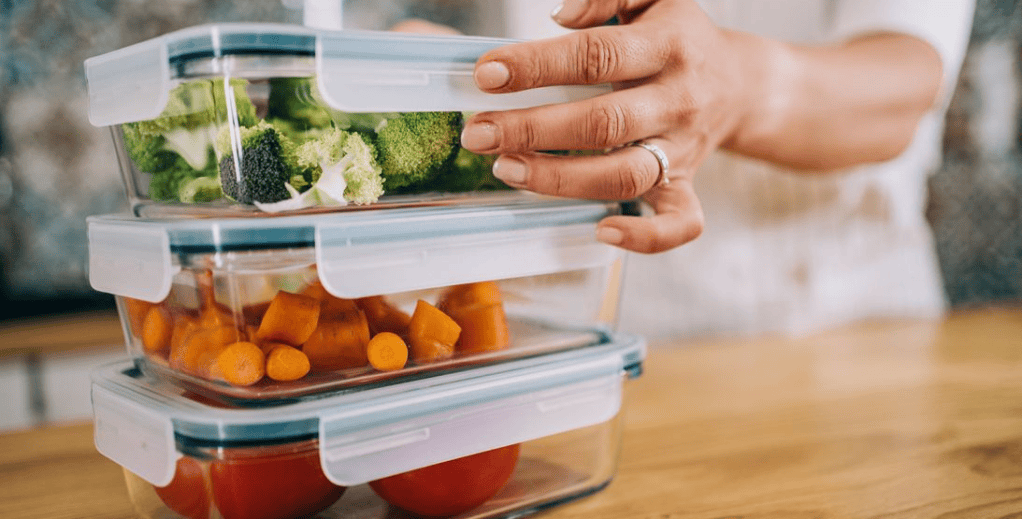
These are on regular rotation at our house. Most travel well, and many can be made ahead.

  • Meat and cheese sandwich + an apple with peanut butter or seed butter
  • Chicken and rice with sliced avocado
  • Protein pasta with your favorite sauce
  • Eggs + bagel + avocado or peanut butter (or seed butter)
  • Tortellini with red sauce and spinach
  • Turkey and cheese wrap + fruit
  • Hawaiian pita: ham, pineapple, and cheese tucked into a pita
  • Taco bowl: rice, seasoned meat or beans, cheese, salsa, and avocado
  • Mediterranean bowl: rice or quinoa, chicken, cucumber, tomato, hummus, and feta
  • PB&B: peanut butter (or seed butter) and banana on bread or a tortilla
  • Tuna salad with crackers or on a sandwich
  • Overnight oats with fruit and a spoonful of nut or seed butter
  • Mini pizzas on sandwich thins
  • Meat and cheese snack box with crackers, fruit, and cheese curds

Nut allergy at home or at school? Almond butter, seed butter, or organic soy-based spreads swap in nicely almost anywhere you see peanut butter. Always check your school’s or team’s allergy rules, and read labels for cross-contact.

Hydration: Top Priority

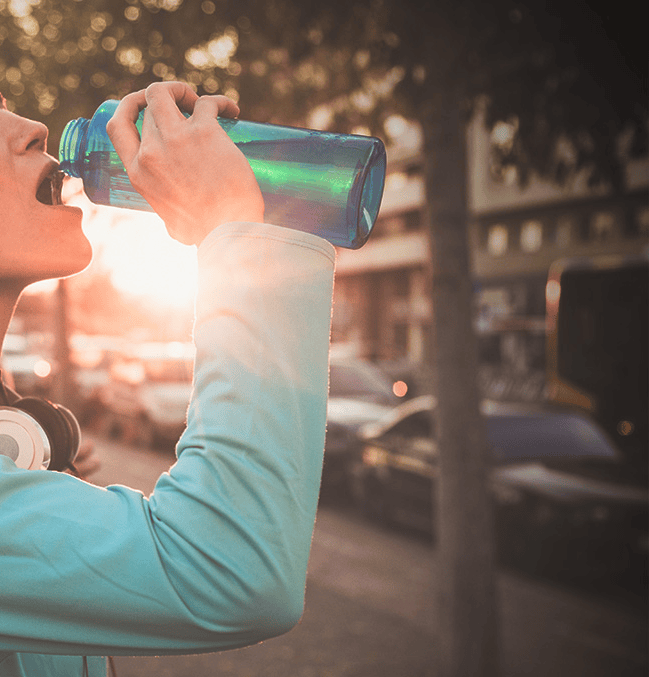
If you only change one thing this week, make it water. Even mild dehydration can make practice feel harder and leave kids feeling tired, headachy, or off. And teens are notorious for forgetting to drink until they’re already thirsty.
What works for us:

  • Send a full water bottle to school every day, and refill it before practice.
  • Drink through the day, not just at practice. Chugging a bottle in the car rarely makes up for a dry school day.
  • For longer or harder sessions (think long runs, hot football practices, two-a-days, all-day meets or tournaments), fluids with electrolytes and some carbohydrate, like a sports drink, can help replace sweat losses and support energy. For a regular practice of about an hour, water is usually enough.
  • Pay attention to heat. Hot days, heavy pads, and indoor gyms without air conditioning all raise fluid needs.

A Note on Caffeine

Energy drinks, pre-workouts, and coffee drinks are everywhere, and teens see older athletes using them. Caffeine isn’t recommended for kids and teens. It can disrupt sleep, which growing athletes badly need for recovery, and it can leave some kids jittery, anxious, or with a racing heart. Energy drinks – even Bubbler – are a firm no in our house. A good snack, enough water, and a decent night’s sleep do far more for a teen athlete.

Between Sessions, Drills, or Events

Hydration is the priority here. For long sessions, two-a-days, tournaments, or meets, a small, easy carb snack during breaks can help support energy.

On long days with breaks, such as meets, tournaments, or races with multiple events, easy options include:

  • Applesauce or yogurt pouches
  • A smoothie
  • Fruit, pretzels, or crackers
  • Trail mix

A sport-specific tip on trail mix: it’s great between sessions, but it’s heavier on fat and fiber, so it’s not ideal right before or in the middle of training. For gymnastics, save it for longer breaks rather than between rotations. For football, it works better at halftime of a long day or after practice than mid-drill. For cross-country, save it for after the race; before a run, stick to simpler carbs like a banana or pretzels.

Recovery: Refill the Tank

The car ride home is prime refueling time. A snack with carbs + protein within about 30 to 60 minutes after practice helps muscles recover and refills the tank, especially when dinner is still a ways off. We keep recovery snacks in the car for exactly this reason.

The simple rule: Carbs + protein within about 30 to 60 minutes.

After harder or longer sessions, some families like aiming for roughly twice as many carbs as protein. That ratio is optional. Getting a solid mix of carbs and protein in, and soon, is what matters most.

Our Favorite Recovery Picks

  • Cottage cheese + crackers + peaches
  • Snackle box: nuts or seeds, pretzels, cheese, and dried fruit in a tackle-box-style container
  • Yogurt parfait with granola and berries
  • Trail mix (with seeds instead of nuts if needed)
  • Bagel with peanut butter or seed butter + a hard-boiled egg
  • Chocolate milk + peanut butter toast (or seed butter toast)
  • Eggs in a frame: an egg cooked in the middle of a slice of toast
  • Half a turkey sandwich + a piece of fruit
  • Leftover pasta or rice bowl from last night’s dinner

Chocolate milk deserves a special shout-out. It’s cheap, kid-approved, travels in a lunch box with an ice pack, and brings both carbs and protein plus fluid.

When to Worry: Signs a Teen Athlete May Be Under-Fueling
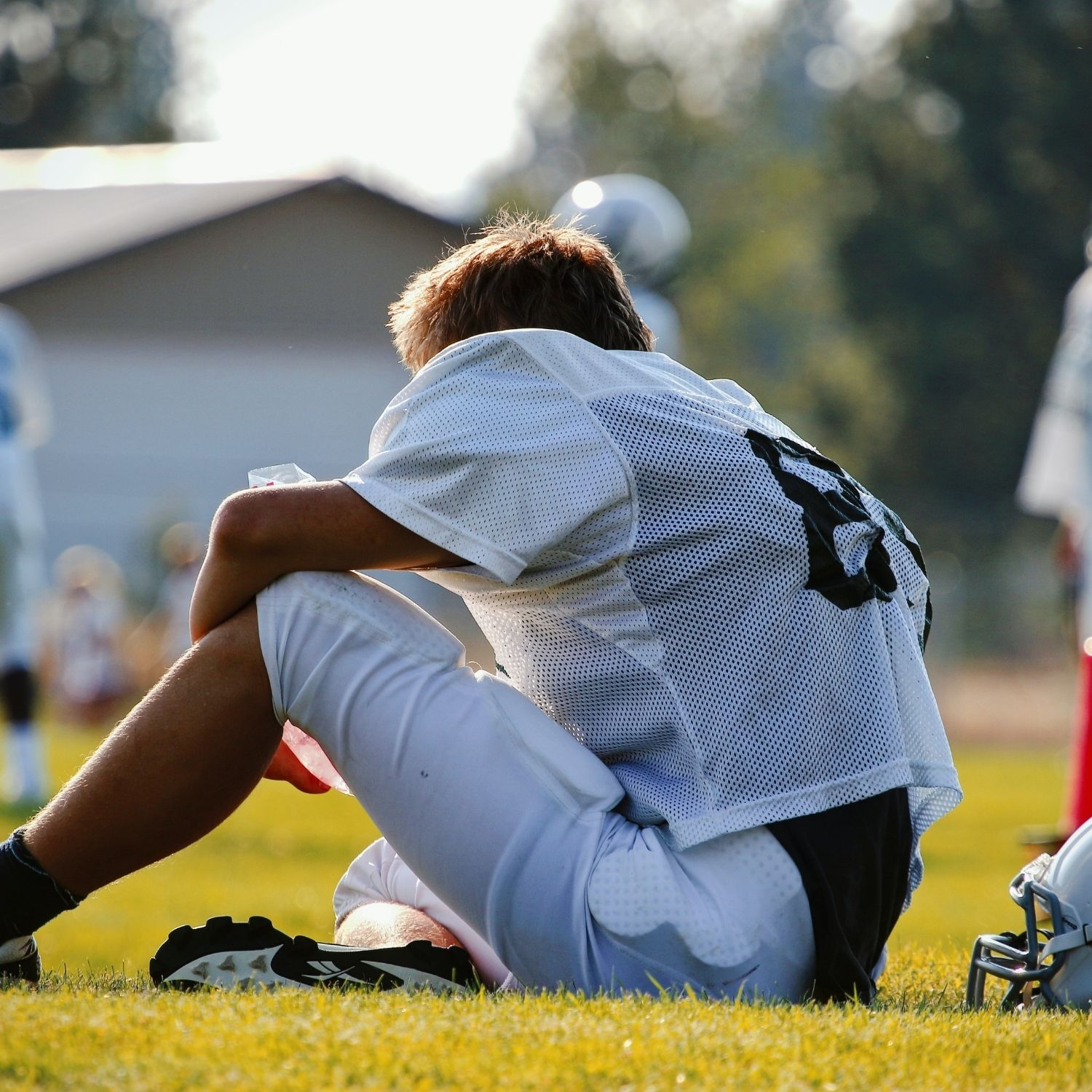
This section is for parents and the clinicians who care for your child, like your pediatrician or a registered dietitian. It is not a checklist for coaches to screen athletes. If you notice something, the next step is a conversation with your child’s doctor or dietitian.

One symptom on its own doesn’t mean something is wrong. Teens get tired, moody, and hungry for all kinds of reasons. But several of these together, or signs that keep showing up, deserve attention:

  • Low energy that doesn’t bounce back with rest
  • Performance stalling or getting worse despite hard training
  • Frequent injuries, especially stress fractures or injuries that are slow to heal
  • Getting sick often
  • Mood changes: more irritable, anxious, down, or withdrawn
  • Trouble focusing at school
  • Growth slowing, or weight dropping or stalling during a time they should be growing
  • Feeling cold all the time, dizziness, or lightheadedness
  • Skipping meals, eating much less than teammates, or avoiding whole food groups
  • Strong worry about food, body size, or “earning” food through exercise
  • Changes in periods: periods that stop, become irregular, or haven’t started when expected
  • Labs that keep coming back low (like iron) at checkups

What’s Going On When Athletes Under-Fuel

When an athlete consistently doesn’t eat enough to cover training plus growth plus everyday life, the body starts cutting back to save energy. Doctors call this relative energy deficiency in sport, often shortened to RED-S. In plain words: there isn’t enough fuel for the amount of training.

You may also have heard of the female athlete triad. That describes three connected issues in girls and women: not enough fuel, changes in periods, and weaker bones.

But this isn’t just a “girl thing.” Boys and teen athletes of every gender can under-fuel too. It can show up as low energy, mood changes, slowed growth, hormone changes, and more injuries. My son’s football schedule and my daughter’s cross-country miles can drain a body just as fast as my gymnasts’ practices.

Many cases aren’t on purpose. A busy schedule, a small appetite, a long gap between lunch and practice, or a big growth spurt can all leave a kid short without anyone noticing. Sometimes, though, under-fueling is tied to disordered eating or an eating disorder.

Early care matters. Getting help sooner lowers the chance of lasting effects on growth, bones, and health. If you’re worried, call your pediatrician and ask about seeing a registered dietitian who works with young athletes.

If you suspect an eating disorder, please don’t try to handle it with a meal plan. This post isn’t medical advice or treatment for eating disorders. Reach out to your child’s doctor right away. If there are signs of immediate danger, such as fainting, chest pain, or thoughts of self-harm, seek urgent care or call or text 988.

A Simple Plan Beats a Perfect One

Most weeks at our house are not Pinterest-worthy. There are drive-thru nights, cereal-for-dinner nights, and nights when somebody eats a granola bar in the car while finishing a worksheet. That’s okay.

What keeps us steady is a handful of simple habits:

  • Eat breakfast, even a small one.
  • Pack the backpack snack the night before.
  • Carry a water bottle everywhere.
  • Fuel before practice: carbs + a little protein.
  • Refuel after practice: carbs + protein within an hour.
  • Protect sleep.
  • Watch the big picture, and loop in your pediatrician or dietitian if something feels off.

Our kids are growing, learning, and training all at the same time. When we fuel them for all three, they don’t just perform better. They have what they need to grow, recover, and enjoy the sports they love.

That’s what Fuel to Flourish™ is all about.

This post is for general education and isn’t a substitute for individual medical or nutrition care. Every athlete is different. Talk with your child’s pediatrician or a registered dietitian about your family’s specific needs, allergies, or health concerns.
From Baby(ies) to Big Kids: Thirteen Years of Becoming

This week, the V5 turn thirteen. Thirteen. I sat with that sentence for a minute because for so long, our story was defined by the beginning. The shock of discovering there weren’t one, two, or even three babies growing inside me but five.

The appointments. The preparation. The uncertainty. The NICU. Then, the bottles and diapers and feeding schedules. Five car seats. Five cribs. Five tiny people who somehow needed us all at once.

When I wrote Bump to Baby(ies), I told the story of how our family began. It was a story about pregnancy, surrender, survival, and discovering courage when life multiplied in ways we never could have imagined.

That first season passed quickly. The days were long but the years short. They became toddlers with opinions. Preschoolers with personalities. Elementary schoolers discovering friendships, sports, strengths, and struggles. And now, somehow, they are teenagers.

The Story After Survival

People have asked us versions of the same question since the kids were born: How do you do it with five?

When they were babies, the answers were practical. Schedules. Systems. Preparation. Teamwork. And probably more coffee than medically advisable.

But as they grew, the question became much more complicated. How do we raise five children at the exact same age while honoring that they are five completely different people?

How do we create structure without controlling them?

How do we help them become resilient without protecting them from every struggle?

How do we teach responsibility while making home a place where mistakes are safe?

How do we stay connected as schedules, sports, school, friends, emotions, and independence begin pulling everyone in different directions?

And maybe the biggest question of all: How do we raise children who know they are deeply loved while preparing them to eventually walk into the world without us?

I definitely don’t have all the answers. Thirteen years into this parenting, social experiment, I’m more convinced of that than ever.

What I do have are lessons. Lots and lots of lessons. Some learned beautifully. Others learned the hard way.

One of the surprises of parenting has been realizing that children aren’t the only ones growing. The parents we were when five babies came home are not the parents we are today.

We’ve learned that connection matters more than control. That repair matters more than getting every interaction right. That our children can share the same home, the same parents, and even the same birthday and still need completely different things from us.

We’ve learned to laugh. We’ve learned to apologize. We’ve learned to have hard conversations. We’ve learned that sometimes the best parenting happens around the dinner table, driving to practice, or during a completely ordinary Tuesday night.

And we’ve learned that resilient families aren’t families without struggle. They’re families who learn how to move through struggle together. That became the heart of Baby(ies) to Big Kids.

A Book About Becoming

Baby(ies) to Big Kids isn’t a story about how we figured out parenting. Quite the opposite. It’s about what we’ve learned while figuring it out.

The CALM parenting framework is about raising resilient kids while continuing to become resilient adults. It’s about communication rooted in curiosity, anchoring values, connection through words and actions, responsibility, emotional awareness, and creating a family culture intentionally even when real life is loud and messy.

And because reading about these ideas only takes us so far, the story grew again. I created companion workbooks for parents and youth so families could move from reading about resilience and connection to actually practicing them together. What began as a story had become a set of resources. 

We Were Never Meant to Do This Alone

There’s another lesson woven throughout these thirteen years that deserves its own chapter: Family resilience doesn’t happen in isolation.

Our children have been shaped by grandparents, teachers, coaches, healthcare professionals, neighbors, friends, and people who have simply shown up again and again. So have I.

We have been privileged to grow up alongside two of our people, Alex and Danielle. Frank and Alex became best friends in high school, two kids from neighboring towns bonded by Seinfeld, classic rock, and countless hours writing and playing music in Alex’s basement before rocking talent shows and benefit concerts together. Their friendship followed them to college, where they joined the same fraternity and eventually served as president and vice president, and where Alex met Danielle, who quickly became part of our story,  too. Over the years, the four of us have celebrated, struggled, built careers, raised families, laughed, challenged one another, and become family. We are iron that sharpens iron, but perhaps our greatest lesson has been that even strong people need a village.

Danielle has been part of ours through so many chapters, which makes it especially meaningful that she wrote the foreword to Baby(ies) to Big Kids. There is something incredibly special about having someone who has witnessed the messy middle of your story help introduce it to the world.

And Now There Are Five Teenagers

On the weekend of their thirteenth birthday, I find myself looking backward and forward at the same time. I can still see those five tiny babies. But I also see five young people becoming increasingly themselves. And I know the next chapter will bring questions I haven’t even thought to ask yet.

But this week? I’m going to celebrate five thirteen-year-olds. I’m going to marvel at the fact that somehow we made it from five NICU isolettes to five teenagers. And I’m going to remind myself that we still haven’t arrived. Thank goodness.

Happy 13th birthday, Theo, Bella, Lily, Kali, and Ellie!

What an extraordinary adventure it is to grow alongside you.

Looking Back at Lily (2020-2021)

Make-believe Lily is always up for an adventure! Her magical schemes lead her out into the yard using sticks as sceptors riding imaginary horses and jaquins. While she is not your everyday princess, Lily’s magical spirit and transform a room from gloom to laughter.

She is a natural entertainer and hopes to foster her skills at singing and playing the ukelele. Thank you to Uncle JD and Papa Ron for her lessons!

Lily is also an animal lover and is committed to helping Cooper (our new goldendoodle) stay active everyday. She also makes it a point to say good morning and goodnight to Mittes, our kitty, too.

Lily’s eyes are set on becoming a baker when she grows up. She hopes to own her own cafe where she is the lead cook and baker and keeps a secret menu for those who may not have enough money to pay for their own meal. I have a lot to learn from Ms. Lily’s perspective on life.

Join me as we take a look back at Lily’s last year to the tune of Walking on Sunshine by Katrina and the Waves…

Lily at seven years…

Lily at six years…

Lily at five years…

Lily at four years…

Lily at three years…

Lily at two years…

Lily’s First Year…

Looking Back at Rosie (2020-2021)

Little Miss Rosie remains our firecracker who routinely goes from zero to 60 in emotion and physicality. She is the household gymnast and is committed to doing at least 30 gymnastic tricks each day to fine tune her cartwheels, splits, front walk over and back handspring. She is excited to try team gymnastics this fall.

Ellie prides herself in her organization skillset and takes pride in the cleanliness of her space.

Rosie was also over-the-moon this last year when we purchased a family cat, named Mittens. She has commenced her journey as a cat lady.

Now, a look back at our Ellie Rosie over the last year set to the tune of Fast by Luke Bryan…

Ellie at seven years…

Ellie at six years…

Ellie at five years…

Ellie at four years…

Ellie at three years…

Ellie at two years…

If you really want to turn back the clock, check out Ellie’s First Year…

Looking Back at Theo (2020-2021)

This year, we decided to sandwich Theo right in the middle of his four sisters! This is how this gentleman felt over the last year and a half. He was a trooper in playing whatever his sisters had in mind but also got an abundance of boy-time with Dad.

Theo dove head first into his first little league in house and traveling seasons this year coached by his Daddy. He continues to love short stop but worked his way around the diamond and strengthened his skills at third, first and pitcher. He even got his first home run at the last tournament of the season. He is looking forward to continuing to play with a 8U/9U team this fall and explore boys gymnastics with the sister crew.

When Theo doesn’t have a mitt on he typically is building, creating or seeking answers to his many questions. He proudly presents me with a fun fact of the day. I’m learning a lot, too!

Now, a look back at Theo’s last year to a song by Florida Georgia Line entitled Simple…

Theo at Six Years…

Theo at Five Years…

Theo at Four Years…

Theo at Three Years…

Theo at Two Years…

Theo’s First Year…

Looking Back at Bella (2020-2021)

Isabella Marie remains the creative quint from singing to a variety of art; Bella loves to create!

Her sweet voice continues to be heard at night, long after her sibs have fallen asleep. Her lullabies last until Mom and Dad’s bed time and are usually the sounds that we all wake up to. This night owl also has the strongest gratitude practice in the house. It is not uncommon for her to sneak in a quick thank you, hug and kiss for even the smallest of tasks.

This last year, Bella fell in love with American Idol and was Willie Spence’s BIGGEST fan! However, her love for Willie is rivaled by her fandom for Javier Baez and Patrick Mahomes.

Now, a look back at Bella’s last year set to the tune of the Friends Theme song…

Bella at seven years…

Bella at six years…

Bella at five years…

Bella at four years…

Bella at three years…

Bella at two years…

Bella’s First Year…

Looking Back at Kali Mae (2020-2021)

The birthday countdown to 8 begins! This year we’re starting with Kali Mae!

As many of you know, Kali is a unique blend of sugar and spice. She has been on a journey of exploration this last year. The social isolation that accompanied COVID-19 was hard on Kali; she would often comment on how many days, weeks, months it had been since she saw her besties.

As we open back up, Kali’s spirit returns and is highest when she’s with friends.

Kali’s curiousity rivals Theo’s and her love for animals is great! She has also discovered a new adventure- horseback riding! She even hopes to become a professional equestrian!

Before we dive into our montage, due to copyright claims all music had to be muted in the videos. Kali’s song for this year was Refrigerator Door by Luke Combs.

Now, let’s look back at Kali over the last year…

Kali at seven years…

Kali at six years…

Kali at five years…

Kali at four years…

Kali at three years…

Kali at two years…

If you really want to turn back the clock, check out Kali’s First Year…

Trick, Treat, or Teaching Opportunity

Halloween can be a scary time for more reasons than the goblins and spooky ghosts. Halloween seems to kick-off the season of treats beginning with the tempting sweets that line the grocery store aisles. Many parents dread Halloween due to the amount of candy that their child drags home after a long night of trick-or-treating.  However, I am looking forward to this teaching opportunity.

img_1380

Many of you know that food, nutrition and overall wellness are near and dear to my heart. I love equipping and empowering people in their health pursuits… especially my children. Trick-or-treating is a great time to teach moderation. There is a growing body of research that encourages families to mark no food as forbidden. Ellyn Satter encourages parents to help their children to, “Learn to manage sweets and to keep sweets in proportion to the other food [they] eat.” Moderation can be a difficult concept to grasp, but it is a lesson worth learning. According to research, treat-deprived children often end up weighing more later in life due to hoarding forbidden foods. I appreciate these findings but also recognize that these lessons need to be age-appropriate.

At three years young, my kiddos still are led by their frontal lobes (aka Impulsivity) therefore, we have tailored the moderation conversation to one of “wants” versus “needs” and “wants” have a time and a place. Since candy and sweets are unnecessary “wants,” my children have never had any. We don’t have any in the home so, if they encountered a candy bar on the street they wouldn’t know what it is. This is intentional because I know the power of sugar and I also know the consequences. Sugar is a sweet and silent killer that is a great contributor of morbidity and mortality around the world. Because of this I often associate excess sugar with excess alcohol or even smoking. As parents, we are guides and guardians for our children. We are blessed with the opportunity to guard their hearts, minds, bodies and souls until they are able to “digest” the media and message and then tasked with helping to guide them through this muddy world.

This does not mean my children will never have the pleasure of candy; recall those that are deprived often become the secret hoarders. Instead, we will continue to be intentional about when, where, why and how we introduce these types of foods and experiences. I also feel led to set others up for success that is why we will continue to be the weirdo house on the street that does not handout candy, but rather an allergen free snack. There are also a host of other food and non-food alternatives including…

Non-Food Alternatives:

  • Stickers
  • Glow sticks
  • Play dough
  • Rings
  • Toothpaste/Floss/Toothbrush
  • Pencil/Erasers
  • Seasonal Post-it’s
  • Bubbles

Food Alternatives:

  • Gum
  • Granola Bars
  • Pretzels/Crackers
  • Popcorn or Puffed Corn

So, with moderation in mind may the force be with you as we forge into the season of sweets and continue to guard and guide our children in the days to come!

Taking on Three

dsc00919

The V5 have fully embraced being three! They love being “big” kids who can pick out their own clothes and dress themselves, go potty on their own, take on any playground equipment mom will let them and enjoy new foods, which were previously no-go’s due to fears of choking. I believe my favorite part of them being three is watching their imaginations grow! They are finally learning how to engage with one another in thoughtful and dramatic play. Some days… okay most days… it is tug of war and a battle of wills, but there are moments when I catch them caring for one another, using nice words, and even complimenting each other.

dsc00935

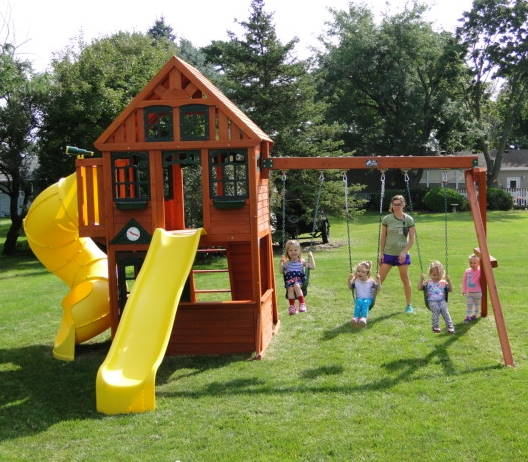
Their favorite play time activities include whipping up their favorite meals in their play kitchen, taking care of their dear stuffed animals, running pretend errands to the grocery store, heading to work or church, the doctor’s office and even tournaments (like Daddy). Outdoors they enjoy going to local parks, swinging on their play set, hunting for caterpillars, gardening (or picking unripened fruit) and playing in the sand.

They also are growing like never before. They love discovering which new ledges they can reach, how fast they can run from point A to point B and now which doors and windows they can open. It is a new challenge to stay one step ahead of this gang. Our best “red flag” that danger is impending is silence.

The girls’ hair also was growing so fast and so long that we took them for their first haircuts. They did so well that the stylist thought they were regulars. And, of course, Mr. Theo played “I spy” patiently throughout the salon as he waiting for his four sisters.

img_1145

Their knowledge of the world, emotions and others is also ever-increasing. I, now, have to agree with many parents when they say that threes are more difficult than two’s. The two-year-old is still learning to navigate the world before them and tantrums can often be the result of simple confusion; I have pity on the two-year-old. The three-year-old, while of course still learning, knows their world better, knows what they want, and knows each and every strategy to get it, or at least try to get it; I do not pity the three-year-old. I also am now a firm-believer in threenagers; they’re real and they’re nasty.

I can’t say it better than the Huffington Post’s Top 10 Signs You Are Living with a Threenager

  1. You live in constant fear of how to cut the shape of their toast. Do they want triangles today, rectangles, squares? And when they do tell you, they change their mind right after you cut it.
  2. They say things like (with hands firmly placed on hips), “I don’t want to. I want to do what I want to do!”
  3. You go through three or more wardrobe changes a day.
  4. Your child goes boneless the second you remind them that a transition is coming, especially when they are asked to stop playing. By the way, when was this ability given to children? You know, lay limp and double your body weight so mom can’t move you. It’s a talent reminiscent of a possum playing dead…
  5. They run away from you when it’s time to get dressed, or undressed, or do anything they deem unnecessary. In fact running away from you is their favorite activity. (Cardio workout?)
  6. To nap or not to nap, that is the question. A threenager’s answer will always be emphatically “NO!”
  7. They want three (or more) of everything because they are three.
  8. Threenagers do not possess patience.
  9. You have to leave a 10 minute buffer on any activity so they can it all on by their “OWN SELF!”
  10. You realize they’ll be a great trial lawyer one day when they’ve just negotiated their way out of a time-out.

I won’t miss the drama of the threenager years, but I know I will miss the sweet cuddles, sincere naivete, and their expressions when trying something for the first time.

Looking Back at Kali Mae

Kali Mae is the most compassionate quint. She has a sixth sense for the needs of others and truly enjoys caring for her brother and sisters. She also has a special place for animals in her heart. She loves Papa’s dog, Holly, and enjoys going to the local petting farm to see all of the “cute” animals.

K-Mae is our little firecracker and the queen of temper-tantrums. It doesn’t take much to lay Kali out on the floor and send out that shrill, monkey screech. Her cure is typically an outlet for her anguish (stomping her feet, talking it out, etc.) or simple reassurance that it is okay to be angry. She is also the human emoji and has a collection of facial expressions for every occasion.

Kali’s name has ebbed and flowed over the years, but has settled on the originally Kali Mae. She enjoys a variety of nick names, including K, K-Mae and Mae. But, when asked what her name is, she now replies Kali Mae.

Kali has many loves, but the following are her favorites…

Her Favorite Animal: Piggy

Her Favorite Stuffed Animal: Piggy Pancake (featured in If You Give a Pig a Pancake), but you will also find her Moose (If You Give a Moose a Muffin), Minnie Mouse and Yellow Bears tucked in her bed with her.

Her Favorite Animated Character: Peppa Pig

Her Favorite Show: Super Simple Turn and Learn ABC’s

Her Favorite Food: Anything sweet, but in all honesty she’s enjoys everything

Her Favorite Activity: Gardening

Now, here’s a look back at Kali Mae’s second year…

Kali at two years…

If you really want to turn back the clock, check out Kali’s First Year…