
Redefining What “Struggling” Really Looks Like
For a long time, health was measured by what we could see; Blood pressure. Weight. Lab values. Physical endurance. If those checked out, we called ourselves “healthy.” But something has shifted. We’re beginning to understand that mental and social wellbeing aren’t secondary – they are foundational. You can be physically “fine” and still be carrying a level of emotional weight that quietly erodes your quality of life.
And the data is catching up to what many have been feeling:
- Among youth, rates of persistent sadness and hopelessness have risen significantly over the past decade, with nearly 1 in 3 adolescents reporting poor mental health in recent national surveys.
- Adults report increasing levels of anxiety, burnout, and emotional exhaustion, especially those balancing caregiving, careers, and constant connectivity.
- Older adults face rising levels of loneliness and isolation, both of which are now recognized as serious health risks comparable to chronic disease.
Here in the Midwest, including communities across Wisconsin, these trends are showing up in our schools, our workplaces, and our homes.
Struggling doesn’t always look like falling apart. Sometimes it looks like showing up… while quietly unraveling.
The Cost of Holding It All Together
There’s a version of strength that gets praised in our culture; the ability to push through, stay composed, keep going no matter what. But there’s a cost to that kind of strength when it comes at the expense of processing what we carry.
Unresolved guilt.
Shame we never spoke out loud.
Hurt we minimized.
Forgiveness we haven’t fully worked through.
These don’t just disappear because we stay busy. They settle. And over time, that emotional weight doesn’t stay contained to the mind, it begins to show up in the body. It can look like irritability that feels disproportionate to the situation. Exhaustion that sleep doesn’t fix. A sense of numbness where joy used to live. When we carry things we haven’t acknowledged, the body keeps score in quiet, persistent ways. Holding it together isn’t the same as being okay.
The Brain–Body Connection
We often think of “impact on the body” as something reserved for major trauma. And while trauma absolutely leaves a physiological footprint, it’s not the only thing that does. Chronic, unrelenting stress – the kind that feels manageable day-to-day – can have a profound biological effect over time. When the body perceives stress, it releases cortisol. In short bursts, that’s helpful. It keeps us alert and responsive (think fight or flight). But when stress becomes constant, cortisol stays elevated. And that matters because sustained high cortisol levels are associated with increased visceral adiposity (fat stored around vital organs) which is linked to higher risks of cardiovascular disease, metabolic dysfunction, and inflammation. In other words: the body responds to emotional strain as if it were a physical threat.
This isn’t about blame – it’s about awareness.
Because the same system that responds to stress can also be supported and regulated. Small, consistent practices can help. The goal isn’t perfection. It’s giving the body signals of safety again.
The Turning Point: Holding Two Things at Once

There’s a concept introduced by Dr. Kim Whitmore in her book Grateful and Grieving that resonates deeply: the “ampersand” moments. The idea that two things can be true at the same time.
You can be grateful and grieving.
Strong and struggling.
Functioning and not okay.
That tension isn’t something to fix, it’s something to acknowledge. For many of us, the turning point doesn’t come from a dramatic breakdown. It comes from a quiet moment of honesty: Something feels off… and I’m willing to notice it.
Naming a feeling doesn’t make it worse. It makes it visible. And visibility is where change begins.
Even when your mind tells you to push it down. Even when old messages from childhood, culture, or expectation tell you to “get over it.” You’re allowed to feel what you feel.
Small Steps That Actually Help
When everything feels heavy, the answer isn’t to overhaul your life overnight. It’s to start small and start honestly. Here are a few simple ways to begin:
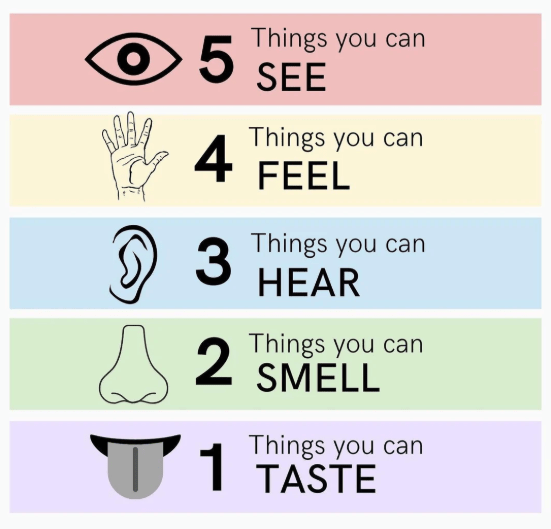
A 5-Step Grounding Exercise
This brings your body out of overwhelm and back into the present.
- Name 5 things you can see
- 4 things you can feel
- 3 things you can hear
- 2 things you can smell
- 1 thing you can taste
Name the Feeling (Without Fixing It)
Instead of “I’m fine,” try:
- “I feel overwhelmed.”
- “I feel frustrated.”
- “I feel hurt.”
Clarity reduces internal tension.
Control What You Can, Release What You Can’t
Draw two columns:
- What I can control
- What I cannot
Seeing it visually helps your brain stop trying to solve the unsolvable.
Gentle Body Reset
A short walk. Stretching. Deep breathing. Not as punishment but as support.
One Honest Conversation
With yourself, or someone you trust. You don’t have to carry everything alone.
A Small Invitation Forward
You don’t have to solve everything today. You don’t have to unpack every layer of what you’ve been carrying. But you can start here:
Name one thing that’s been sitting beneath the surface.
Acknowledge it without minimizing it.
And take one small step forward.
Because progress in mental health doesn’t come from force. It comes from awareness followed by gentle action.
What’s Next
In the next piece, during Mental Health Awareness Month, I’ll be inviting a perspective that’s often missing from this conversation – our kids. Not as observers of mental health, but as participants in it.
Through their own words, we’ll explore what it looks like to experience emotions, pressure, resilience, and growth in the first 12 years of life. Because mental health isn’t something we arrive at later. It’s something we’re building together from the very beginning.

