Trick, Treat, or Teaching Opportunity

Halloween can be a scary time for more reasons than the goblins and spooky ghosts. Halloween seems to kick-off the season of treats beginning with the tempting sweets that line the grocery store aisles. Many parents dread Halloween due to the amount of candy that their child drags home after a long night of trick-or-treating.  However, I am looking forward to this teaching opportunity.

img_1380

Many of you know that food, nutrition and overall wellness are near and dear to my heart. I love equipping and empowering people in their health pursuits… especially my children. Trick-or-treating is a great time to teach moderation. There is a growing body of research that encourages families to mark no food as forbidden. Ellyn Satter encourages parents to help their children to, “Learn to manage sweets and to keep sweets in proportion to the other food [they] eat.” Moderation can be a difficult concept to grasp, but it is a lesson worth learning. According to research, treat-deprived children often end up weighing more later in life due to hoarding forbidden foods. I appreciate these findings but also recognize that these lessons need to be age-appropriate.

At three years young, my kiddos still are led by their frontal lobes (aka Impulsivity) therefore, we have tailored the moderation conversation to one of “wants” versus “needs” and “wants” have a time and a place. Since candy and sweets are unnecessary “wants,” my children have never had any. We don’t have any in the home so, if they encountered a candy bar on the street they wouldn’t know what it is. This is intentional because I know the power of sugar and I also know the consequences. Sugar is a sweet and silent killer that is a great contributor of morbidity and mortality around the world. Because of this I often associate excess sugar with excess alcohol or even smoking. As parents, we are guides and guardians for our children. We are blessed with the opportunity to guard their hearts, minds, bodies and souls until they are able to “digest” the media and message and then tasked with helping to guide them through this muddy world.

This does not mean my children will never have the pleasure of candy; recall those that are deprived often become the secret hoarders. Instead, we will continue to be intentional about when, where, why and how we introduce these types of foods and experiences. I also feel led to set others up for success that is why we will continue to be the weirdo house on the street that does not handout candy, but rather an allergen free snack. There are also a host of other food and non-food alternatives including…

Non-Food Alternatives:

  • Stickers
  • Glow sticks
  • Play dough
  • Rings
  • Toothpaste/Floss/Toothbrush
  • Pencil/Erasers
  • Seasonal Post-it’s
  • Bubbles

Food Alternatives:

  • Gum
  • Granola Bars
  • Pretzels/Crackers
  • Popcorn or Puffed Corn

So, with moderation in mind may the force be with you as we forge into the season of sweets and continue to guard and guide our children in the days to come!

The V-5 “Enjoy the Taste of Eating Right”

The V-5 definitely “Enjoy the Taste of Eating Right.” As a registered dietitian nutritionist (RDN) I couldn’t miss the opportunity of featuring my beautiful children during National Nutrition Month®!

Lily enjoying some pre-meal tummy time.

Eating well is a pillar in the pursuit of overall wellness, especially if you are/were a premature infant. I attribute my children’s well-being to their healthcare team’s (which includes Mommy & Daddy) dedication to feeding them well from day one.

I have bragged on and on about breast milk in past posts, including Mommy Nutrition and 2 Simple Acts, so the following will feature the best solid foods for infants, or Baby’s Super Foods. These also happen to be super foods for the oldest of children- aka adults. I selected the following foods based on their nutrient density, ease of digestion and preparation and friendliness to the young palate.

Tummy time-out for Kali

Grass-fed Beef & Organic Poultry

Meat and poultry are great first foods due to their iron content.  Baby’s stores of iron begin to fade around 6 months so, a food rich in iron is important. Additionally, iron from animal sources (heme-iron) is much easier to absorb and use by the body. Meat also is loaded with B-vitamins and zinc. If you opt for grass-fed over grain-fed cattle, you will also get meat with more healthy omega-3 fats, vitamins A and E, and less of the unhealthy saturated fats, hormones and antibiotics. Organic poultry is ideal for the same reasons; basically more time and attention are directed towards the birds living quarters and nutrition creating a better quality end product.

Lentils

Lentils may be small but they are mighty. They are loaded with protein, fiber, iron, zinc and a host of B-vitamins. They are also a good source of copper, potassium and molybdenum. These legumes are quick and easy to prepare and generally more tender than other types of dried beans.

Bone Broth

This nutritional powerhouse can be made by boiling chicken or beef bones in water and a touch of vinegar. It is a significant source of GAGs, or glycosaminoglycans, chondroitin sulfate, keratan sulfate and hyaluronic acid, which are all “ingredients” for cartilage. Additionally, the red marrow has myeloid stem cells, which supports red blood cell development and the immune system. This broth also is a great source of glycine and proline, which are the building blocks for other amino acids (protein). Glycine and proline are also used by the body to aid digestion, promote healing, and create healthy plasma. Logically, bone broth also provides a good source of minerals found in bone: calcium, phosphorus and magnesium to aid in bone development and maintenance.

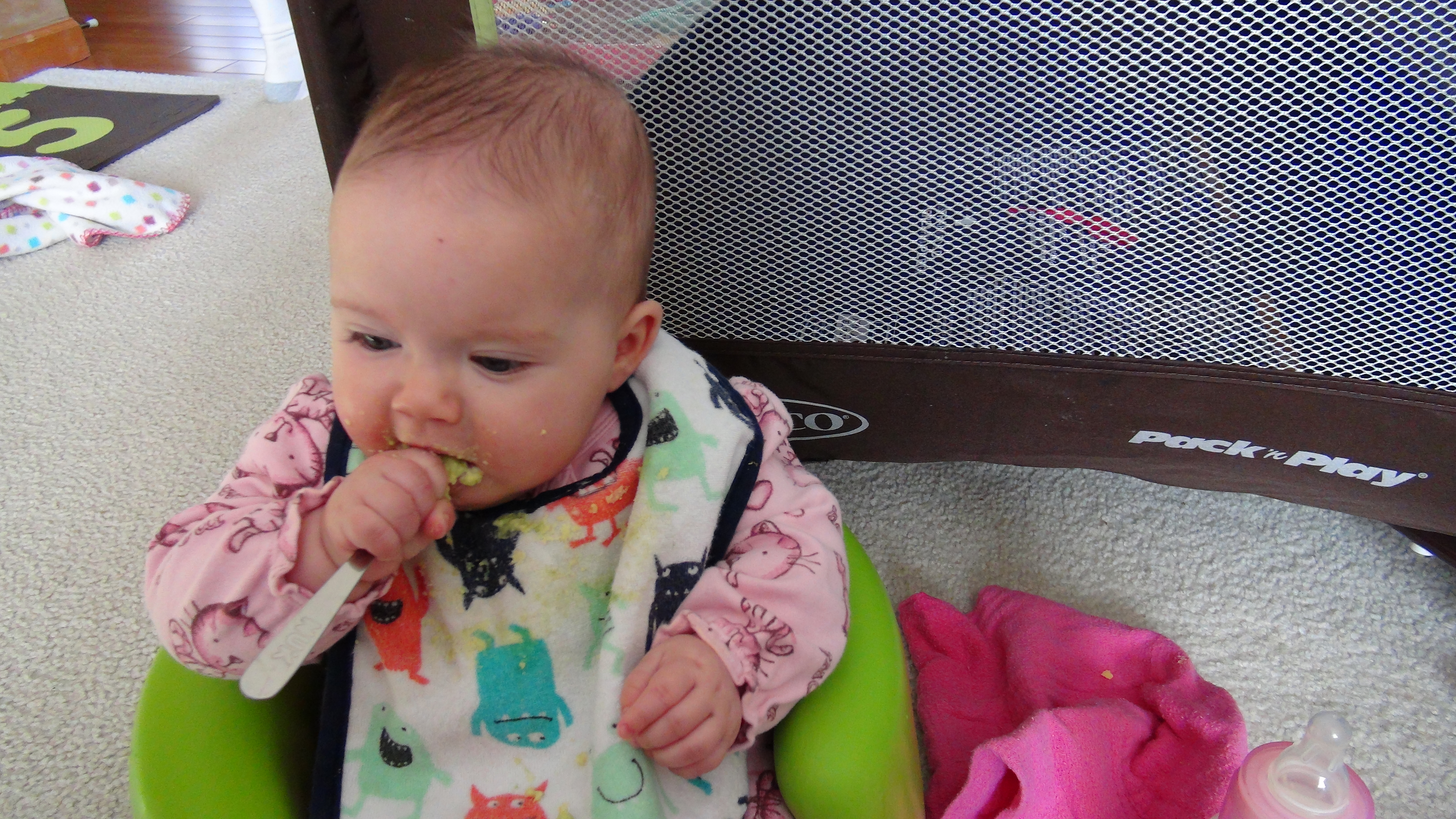
Theo chowing down on avocado

Avocado

This fatty fruit is a good source of fiber, vitamins K, E and C, a few B-vitamins, as well as, potassium, and copper. Avocadoes provide a host of anti-inflammatory phytochemicals (antioxidants from plants) and can help with absorption of other nutrients, like carotenoids (orange, yellow and red phytochemicals). Besides aiding in blood sugar regulation and heart health, they also make a great beauty product.

Butternut Squash

This orange, winter squash may require some extra prep work but the sweet flavor and benefits are well worth it. Although squash are a starchy vegetable, their carbohydrate is much different than a potato; it has anti-oxidant and anti-inflammatory properties. The orange color gives away that it is a great source of vitamin A, but it is also loaded with vitamins C, B6 and several minerals.

Gluten-free Oatmeal

This hardy cereal is a great first food for infants. My vote goes to oats over rice for an infant cereal because it is rich in iron, zinc, phosphorus, fiber and protein, as well as, several other vitamins and minerals. It also comes without the worry of arsenic toxicity.

Why gluten-free? Well, gluten is a very inflammatory agent that is found in wheat, rye, barley and some oats and can be difficult to digest. Often times, traditional oats can also be “contaminated” with wheat due to shared processing equipment. I feel it is best for babies to be wheat-free until their first birthdays when they dive into that cake! Overall, I opt for gluten-free because it is much nicer to the kiddos’ digestive tract.

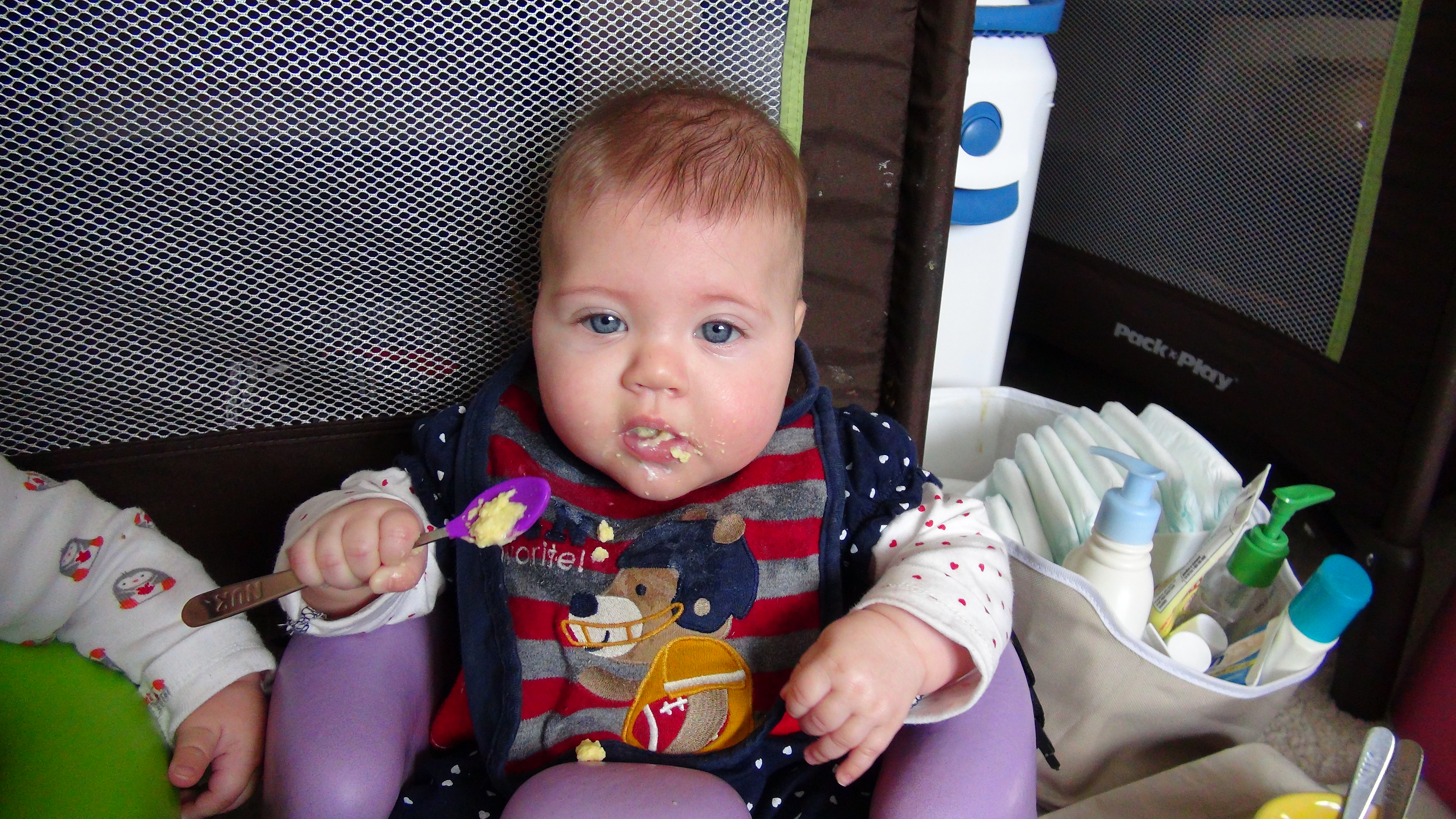
Bella loves to help feed herself

Banana

I had to include at least one common fruit. Bananas are a great first fruit because they are a good source of vitamins C, B6, B2 and of course, potassium. They also provide bone-building minerals, including magnesium, calcium and phosphorus. Besides the benefit of being very convenient to prepare, they are also known as nature’s antacid because they contain a substance that can help the stomach and intestines produce the mucus lining.

Another bonus of the foods mentioned above is that when they are pureed they contain at least 20 calories per Tablespoon, which is equivalent to the average amount of calories in one-ounce of breast milk. When you have picky bottle-feeders who love solids this can be a huge lifesaver!

Ellie loves to help feed herself, too.

Whether these foods are old favorites or perhaps news ones to try, I encourage children of all ages to serve up these super foods and “Enjoy the Taste of Eating Right!”

The sign of good food (Kali)

Let the Games Begin!

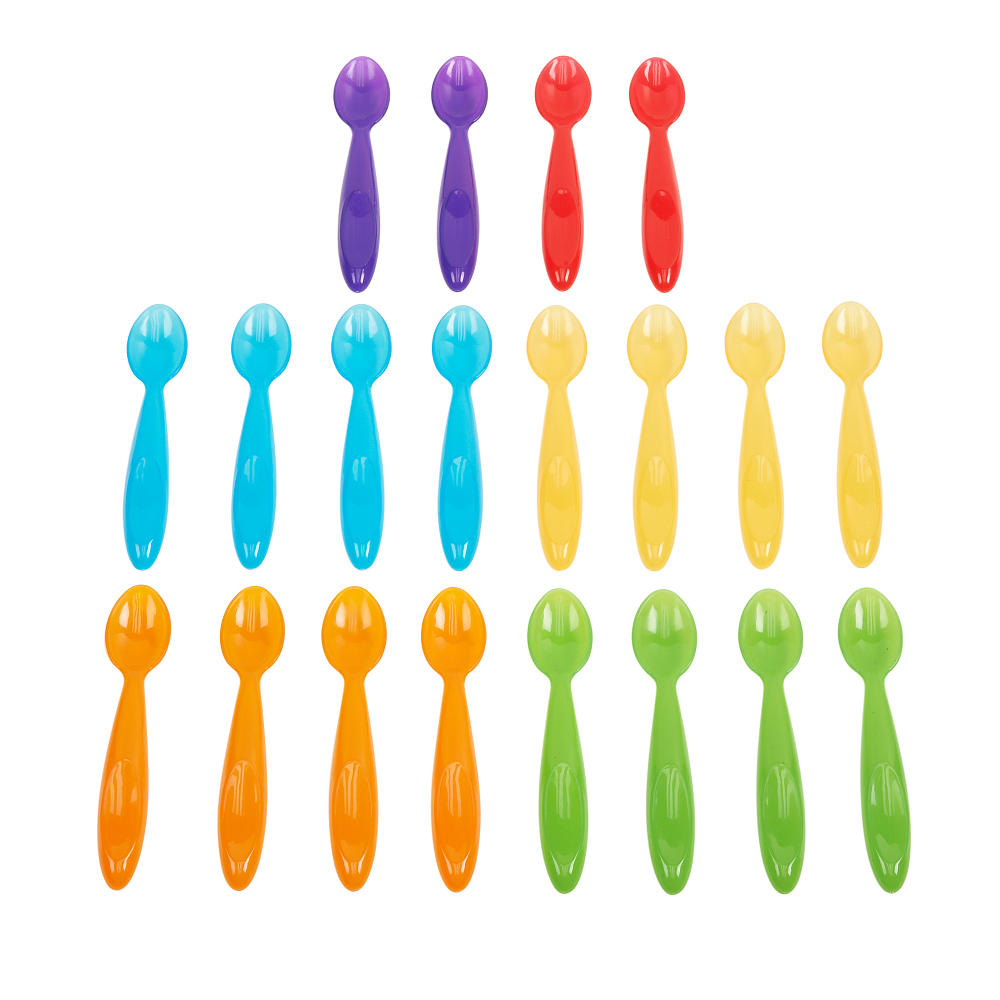
At 5 ½ months the quints are starting solids!spoons

How do you know when to start solids?

There are several signs that a child is ready to start solids:

  • At least 4 months old (Check!)
  •  Significant weight gain.

The quints have definitely doubled their birth weights)

    • Theo is now 14½ lbs.,
    • Bella is 11lbs,
    • Lily is our little one at 10½ lbs.,
    • Kali is 12 lbs., and
    • Ellie is just shy of 12 lbs.
  • Able to make chewing motions and loss of “extrusion reflex.”

The extrusion reflex is when an infant uses their tongue to push solids from their mouth. An infant’s mouth develops in sync with their digestive tract. Therefore, if the little one is able to push food to the back of their mouth with their tongue and simultaneously swallow their gut is ready to accept the food.

  • Able to support their own heads with good neck strength. bumbo

In preparation for solid food we began feeding the kids in their bumbo seats. At first this was a disaster! The bumbo is designed to teach little ones to use their core to sit up, so you can imagine what happens when they are all tensing their abs during mealtime. Spit ups and blowouts galore! But, thank goodness this did not last long. A week’s worth of feedings and they got the hang of it.

I attribute the great gains in their neck and head strength to their time in the bumbo seats. Even big brother, Theo, with his 95th percentile noggin can hold that coconut up proudly!

  • Good appetite and often still hungry after their feeding.

This is definitely the case for Theo, Kali and Lily who often are quite upset to be sucking air at the end of their bottles.

  • Curious with what Mom and Dad are munching on.

So, needless to say after reviewing the list above, I was confident that the quints were physically ready for solids.

Which foods do you start with?

There is a bit of a debate on which food is best to start with. Currently, there is no strong evidence to support a specific sequence of introduction. Nutritionally, the best foods to start with are those that are highest in iron. This is because around 4-6 months of age a child’s iron stores are becoming depleted. This is especially true for premature infants because their time to accrue these stores was cut-short. Additionally, foods high in zinc and vitamin D are especially important because these nutrients are traditionally low in breast milk.

Traditionally, people start with iron fortified rice cereal. However, from my research this appears to be merely a generational tradition and in fact meat is a much better first food. This article from Dr. Greer, one of the quints’ physicians at the Madison NICU, offers a great explanation! Rice cereal is very easy to digest and has a very low allergy risk, but the iron from the food is not as easily absorbed and this food is high calories and low in nutrition. Plant-based iron (non-heme iron) is not used by the body as easily as that from an animal source (heme iron). Additionally, meat is a great source of zinc.  I believe that chicken is a fantastic first food, followed by beef.

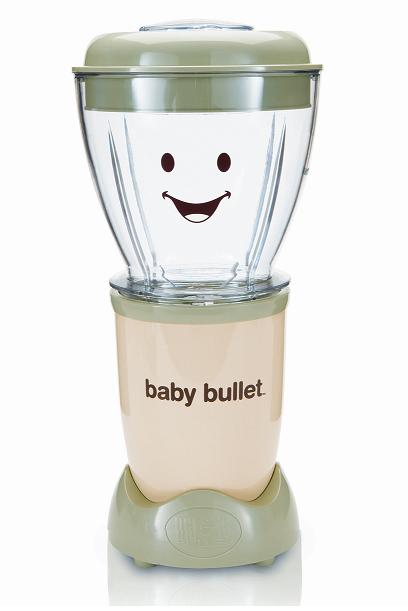
The quint’s sequence will be as follows, with a new food every three days: Baby-Bullet-Batchbowl

I chose butternut squash and sweet potatoes because they are fairly high in vitamin C. The body uses vitamin C to help the absorption and use of iron. Zucchini was next as their first dark green vegetable because it is easy to digest and a low allergy risk. Their first grain will be gluten-free oatmeal because it is naturally high in iron and B-vitamins.

This delicious faire will be homemade with an awesome Baby Bullet, courtesy of a fellow quint mom. I puree the vegetables using breast milk and the meats using bone broth. Both are fantastic sources of vitamins and minerals and freeze very well! In just one hour, I had a month’s worth of food for the kiddos.

Let the games begin!

Frank and I thought we would catch this monumental meal on film. This video illustrates why it is important to feed your little one their bottle before trying solids. Can you guess which quints had eaten first?

If you guessed Theo and Lily you were right! They were cool and calm during their trial. Ellie and Bella were quite the opposite and approached meltdown mode. Kali, well, Kali enjoys mealtime in whatever order it is presented.

The other very important reason to offer solids after their milk is because breast milk should remain the primary source of nutrition for infants until at least 1 year of age, and thus you don’t want to ruin a feeding with an unfortunate food trial. I do promise you that Theo, Ellie and Bella all recovered from this feeding experience.

So, at the conclusion of food trial #1, all of the quints tolerated chicken. I would say that Lily, Ellie and Kali even liked it. I believe Bella will come around to liking it, too. As for Mr. Theo…I’m pretty sure he just wants a butter burger and some crinkle cut fries.

Double Time

It’s double time!  For those bandies and musicians or Tae-bo pros out there, you know this means it’s time to pick up the pace.

During the 2nd trimester, from weeks 15 to 20, babies double in size. So, you can imagine that the nutrient needs of both mom and babies alsoescalate. There are a variety of methods to determine how many calories are ideal during pregnancy. There are estimated energy requirement equations, some just say 300 extra calories and 30 extra grams of protein per day, and others encourage moms to add 500 calories per fetus and 25g protein. I, personally, think it is best to consume the amount of calories that promotes the ideal weight gain per week. For a mom of high order multiples it is 2.0-2.5 lbs. per week.

I was able to gain this at 3,000 Calories per day during the first trimester. This was a true blessing because with the nausea there was no way I was going to get to the original 5,000-calorie estimation. During weeks 13 to present, I have watched this weight gain slow-down, so I know it’s time to bump up the kCals. I really was quite surprised that there were not any meal plan examples- that I could find anyway- on the Internet. My best resource was in Dr. Barbara Luke’s book, “When you’re expecting twins, triplets, or quads.” This is where I derived the information regarding calorie and food group goals. Since there seems to be a gaping whole on the World Wide Web, I thought I’d go ahead and fill it.

Below you will find recommendations for calories, macronutrients (carbs, protein and fat) and suggested food group goals during pregnancy. While this information is targeted at high order multiple pregnancies, it is of course applicable to any pregnancy.

Calories goals may vary from 3,000-5,000 Calories per day, and I recommend watching your average weight gain from week-to-week to be sure you are getting enough. The composition of these Calories is important and different than the recommendations for the average American. Typically, it is recommended to consume a daily diet composed of 50-55% calories from carbohydrate, 15-20% calories from protein and 25-30% calories from fat. However, during pregnancy with super twins it is recommended to consume 40% of calories from carbohydrate, 40% calories from fat and 20% calories from protein. The reduction in calories from carbohydrate, I presume is to decrease one’s risk of gestational diabetes, which is much higher in pregnancies with 3 or more. Per Dr. Luke, this breaks down to the following:

Nutrients

3,000

3,500

4,000

4,500

Protein

 150g

176g

200g

225g

Fat

 133g

155g

178g

200g

Carbohydrate

 300g

350g

400g

450g

Food Groups

Servings per day

Lean Protein

4

5

5

6

Dairy

4

8

10

12

Grains

8

10

12

12

Fat

5

6

7

8

Fruit

7

7

8

8

Vegetables

4

4

5

6

This type of meal plan is quite different than my pre-pregnancy diet, so my typical pattern is a bit different. For example, prior to pregnancy I ate very little dairy and meat/poultry and the majority of my protein came from beans, peas, lentils, whole grains, and fish. It has been easiest for me, and my mild lactose intolerance, to add the lean meats versus 8-10 servings of dairy per day.  Also, before pregnancy I ate a lot of veggies and not so many fruits, so I continue to consume only 2-3 fruits per day and 8-plus servings of vegetables.

As mentioned previously, I have been consuming 3,000-3,500 Calories per day so I decided to share a few meal plans, or as RD’s call them “Typical days” to help make these recommendations real.  There are a few original high calorie, high protein recipes in the meal plans that I will add later. If you’re interested check back because I will be adding a recipe section to my blog. Also, I did not comment on the variety of supplements that I believe are a crucial safety net, so look out for that content coming soon!

Day 1

(3,065 Calories: 316g Carb, 92g Fat, 175g Protein)

Breakfast

  • Breakfast Taco Dip
    • ½ tsp Olive Oil
    • 1 Organic Egg
    • ½ Avocado
    • 4oz 0% Plain Greek Yogurt
    • Lentil Loaf (Recipe coming soon)
    • 2 Hard Shell Tacos, broken into chips
    • Up Your MassBanana Smoothie (Recipe coming soon)

AM Snack

  • Fruit and Yogurt Parfait with Granola
    • ½ cup Fresh berries
    • 1 cup Low-fat Vanilla yogurt
    • ¼ cup Nutty Granola

Lunch

  • Turkey and Avocado Sandwich
    • 2 slices Homemade Whole Wheat Bread
    • 3 oz Oven-roasted Turkey Breast*
    • ½ Avocado
    • 1 cup Fresh Spinach
    • 2 Clementines
    • ½ Cup Baby Carrots

PM Snack

  • Oat and Nuts Cereal
    • 1 ¼ C Oat Cereal
    • 1 C Unsweetened, Organic Soy Milk
    • ¼ C Roasted Pepitas
    • ¼ C Slivered Almonds

Dinner

  • Basil Mac & Cheese (Recipe coming soon)
  • 12 medium shrimp, cooked
  • 1 C Asparagus Spears
  • Skinny Cow Ice Cream Sandwich

Evening snack

  • PowerBarHarvest Peanut Butter Chocolate

Day 2

(2,993 Calories: 319g Carb, 94g Fat, 171g Protein)

Breakfast

  • 4 Up Your MassBanana Nut Pancakes (Recipe coming soon)
  • 1 C Unsweetened, Organic Soy Milk

AM Snack

  • Cinnamon Raisin Bagel with 1oz Cream Cheese
  • 1 C 2% Milk

Lunch

  • 1 Large Baked Potato with Lentil Loaf, melted Cheese stick and 2 Tbsp Salsa
  • 1 C Asparagus spears
  • 1 C Fresh Pineapple

Dinner

  • ¾ C Cooked Quinoa with 1 tsp Olive oil
  • 4oz Organic, Skinless Chicken Breast
  • 1 C Steamed Zucchini Squash
  • Skinny Cow Ice Cream Sandwich


Day 3

(3,710 Calories: 367g Carb, 154g Fat, 176g Protein)

Breakfast

  • Stuffed Baked Potato
    • 1 Large Baked Potato
    • ½ tsp Olive Oil
    • 1 organic Egg and 1 Egg white
    • 1 Melted Cheese stick
    • ¾ C Kidney Beans
    • ¼ C Salsa

AM Snack

  • ¼ C Dried Fruit
  • ½ C Almonds and Pumpkin seeds, mixed
  • 1 C Organic Skim Milk

Lunch

  • ¾ C Pasta with ½ C Meat Tomato Sauce and ¼ C Melted Mozzarella Cheese
  • 1 C Steamed Spinach
  • 1 Banana
  • 2 Tbsp Peanut Butter

PM snack

  • 1 Whole Wheat Pita
  • ½ C Original Hummus

Dinner

  • 5 oz Salmon with ¼ C Avocado Salsa
  • 1 C Wild and Brown Rice
  • 1 C Steamed Broccoli

Evening Snack

  • 1 ½ C Neapolitan Ice Cream**

* I try not to consume deli meat, so this was a baked turkey breast. I do reheat any lunch meat/protein that I bring as a food safety precaution.

** When you want to promote glycemic (blood sugar) control, eating sweets and desserts alone is a no-no. However, if the dessert is consumed within 1 hour of a meal or healthier snack, typically the blood sugar response is more favorable.

Written by: Cassie Vanderwall, MS RD CD CDE CPT

Eating for…Six

“Let food be thy medicine and medicine be thy food.”  -Hippocrates

Food-Is-Medicine

This is a statement I passionately believe in. Medicine is defined as “the science or practice of the diagnosis, treatment and prevention of disease,” and thus nutrition is also the science of the diagnosis, treatment and prevention of disease.

This is especially true when educating and counseling persons with chronic diseases, such as diabetes, high cholesterol, high blood pressure, kidney disease and the list goes on and on. Tweaks in what these persons eat on a daily basis can dramatically improve their disease state.

Many of you are probably waiting for the link to pregnancy, well here it comes. While I continue to believe in the power of nutrition, my view of food has shifted during pregnancy. I believe food during pregnancy is very similar to food for the elite athlete; it is its most basic form- fuel.

While dietary quality is of the utmost importance during both pregnancy and athletics, but quantity often is slightly more important. I have been intrigued by the amount of energy (Calories) required to grow and sustain life, let alone 2, 3, or 6 at one time.  The average adult woman needs approximately 1600 Calories per day and the average adult male needs nearly 2000 Calories per day. These amounts of course vary depending on an individual’s metabolism, body composition and daily physical activity. But, the average woman pregnant with one child needs approximately 300 additional Calories per day beginning in their 2nd trimester. However, this is not the case with multiples. This additional energy requirement starts in the 1st trimester and quickly escalates with each fetus:

  • Twins: 3,500 Calories
  • Triplets: 4,000 Calories
  • Quads: 4,500 Calories
  • Quintuplets: 5,000 Calories

One may be jumping for joy at this amount, because it’s like Thanksgiving everyday! Unfortunately, when you add in morning sickness, indigestion and limited belly capacity, this feat requires a bit of creativity.  Again, it is important to remember that quality is a close second to quantity and thus the type of Calories consumed is also very important.

The average dietary composition is 50-55% Carbohydrate, 25-30% Fat and 15-20% Protein. During pregnancy, this also shifts to approximately 40% Carbohydrate, 40% Fat and 20% Protein. Fat, primarily from unsaturated sources high in omega 3’s, like DHA, is critical for neurological development. Protein is known as the building block for life and food sources that maintain a complete amino acid profile, animal-based proteins, are ideal. The percentage of carbohydrates decreases during pregnancy, and my assumption for this decrease is two-fold: 1) To account for the increases in necessary fat and protein and 2) To limit edema, or swelling and bloating. Carbohydrates tend to pack on water has they are stored and extra L.B.’s from fluid tend to be unappreciated, especially later in pregnancy.

Overall, we know that nutrition is an individualized science and all of the energy goals have to be adapted to the individual. I believe the best outcome for measuring a person’s nutrition during pregnancy is maternal weight gain. Future mom’s of multiples are to gain an average of 2-2.5lbs per week beginning with week one, so that by 30 weeks mama has gained nearly 80lbs. Maternal weight gain is highly associated with fetal growth and gestational age, which we know are the two variables that often influence fetal complications.

So, for you “bump” lovers out there I will be sure to post a pic or two in the coming weeks along with some updated ultrasounds. Until then, hang tight…patience is a virtue (lol). And, for you nutrition geeks and foodies out there, much like myself, there will certainly be future posts on nutrition tips and meal planning for mom’s of multiples.

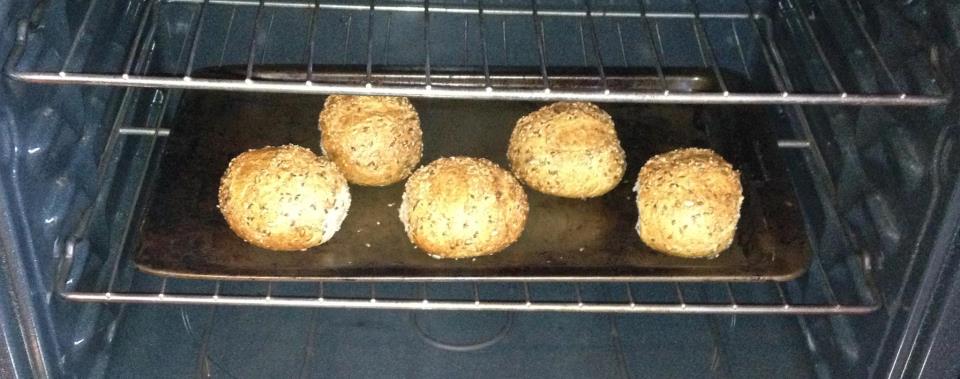
Five Buns in my oven

Written by: Cassie Vanderwall, MS RD CD CDE CPT