Looking Back at Lillian

Lillian Grace is as sweet as she is silly. She is consistently seeking to please both her parents and her siblings. She is our household helper and loves to lend a hand. Her favorite way to help is to find and retrieve “lost” items. She’s amazing at finding what other’s need, but somehow can’t find what she needs even if it is right under her nose.

Lily’s best friend remains her stuffed koala, Uti. He has been her companion for years now and will not close her eyes at night if he is not tucked right under her chin.

Lily can be silly, but she can also be a tease. She is the best at “pushing her sibs’ buttons.” Whether it be stealing their toy, calling them a goofy name or squishing them, she knows how to rile up the crowd. Her signature move is the Lily Lean; it is Theo’s “fave.” She’s been practicing that one since the womb.

Her other favorites include…

Her Favorite Animal: Koala and Turtle

Her Favorite Stuffed Animal: Uti (of course) but her Mousey (featured in If You Give a Mouse a Cookie) is a close second

Her Favorite Show: Blue Clues

Her Favorite Food: Meat, Lily is a true carnivore

Her Favorite Activity: Family Hugs

Now, here’s a look back at Lillians’ second year…

Lily at two years…

If you really want to turn back the clock, check out Lily’s First Year…

The 1st Snow

SnowBunnies

The first snow of the season is a sudden reminder that the Holidays are just around the corner. This year the Vanderwall Quints are more aware than ever of all the hustle and bustle. “New House,” gobbling turkeys, snow, “Kiss-mas” lights, and “Frosties” abound!


It is so much fun to take a fresh look at all of these events from the eyes of the V5. Their expressions and experiences are priceless and a stark reminder to appreciate the little things that otherwise would be overlooked. These include the winter wind on your cheeks, learning how to walk in big clunky snow boots, having snowflakes land on your eyelashes, and sliding down a slick snow hill. In addition to all the wonderful elements of winter and the holidays, the kiddos have also grown to enjoy:KMae Cheese Burger

  • Coloring
  • Forming animals with Play-doh
  • Cooking and tasting new fruits and vegetables
  • Playing matching games
  • Hide and Go Seek with their animals
  • Writing their names

The biggest challenge of the day is naptime. Since saying good-bye to our cribs and hello to toddler beds, their mid-day nap has been nearly non-existent. Bella is your typical, “Jack in the Box” child and thus almost always needs to be removed from the situation in order to allow the other munchkins time to sleep. Other obstacles that we have been navigating include the typical two-year-old-tantrums. We ride the emotional rollercoaster of being a toddler right along side of them. We hope that the additional space that our new home will bring will help to ease some of the tantrums that result from simply being too close to one another. In the mean time, we are rolling with the punches… hair pulling… biting… and “puddling” on the floor. One new tool in our tool box for combatting these days is exploring the winter wonderland!

Sledding Video:

BellaSnow

Ellie Sled

Lily YOLO

Theos Ready

Lily and Ellie


Baby Theo

Theo is quite possibly, in our unbiased opinion, the cutest little infant baby-boy in the history of the world. It’s amazing how at just 31 weeks of age he is already showing quite a personality. It’s also amazing how much of a prototypical boy he can be at times. Here is a snapshot of  sweet little Theodore Joseph who has more than stolen mommy and daddy’s hearts. (If you click on an image, it will give you a full-screen slideshow of all the pictures).


Not pictured above:

  • In an unprecedented incident, during the night, Theo escaped out of his little bed, pulled himself across his isolette, and positioned himself right in front of one of the entry portholes. Apparently, he thinks he’s ready to go home :-)
  • We were photographing Theo and he felt the session was running a bit long. We kid you not, he looked right into the camera, conjured up an epic scowl for his little face, and then flipped us the bird. The picture was too obscene for this blog, but it was all captured in high-definition. We’re quite positive it will resurface in the years to come, accompanied by much laughter.
  • When Dad finally decided to jump in for one of Theo’s diaper changings, Theo made sure it was an unforgettable experience – if you catch our drift, literally :-) Welcome to fatherhood!

We hope you have enjoyed the pics and stories of our precious little Theo.

Please pray for his continued health, well being, and many smiles and blessings to come.

Stay tuned for photo galleries of all Theo’s little sisters!

The Cost of Good Care

American-flag-stethascope

The healthcare industry is constantly evolving. Scientific research spurs on new discoveries, techniques, surgeries and cures. The economic environment dictates the distribution of healthcare. In the present day and age, there are many “what-if’s” about how and to whom healthcare is delivered. This post is not intended to be an epic dissertation on healthcare in America. The purpose, rather, is to explain to those inquiring why we are no longer pursuing medical care for our pregnancy in Madison, WI.

Upon learning that we were pregnant with quintuplets, the initial meetings with our fertility specialist and perinatologists were an emotional undertaking, to say the least. These medical specialists fought long and hard to convince us to pursue multi-fetal reduction. They wanted us to take the five and reduce to 2, maybe 3. This was never an option for us, and we made it very clear from day one. However, despite our stance, the perinatologists would not discuss a plan of care with us for over a month under their supervision.

Finally, nearly two months into our pregnancy we were able to sit down and discuss how we were going to make our pregnancy a success and give our unborn children the best chance at a happy and healthy life. We came prepared to this meeting, well read on terms and proactive treatments and even brought along a few research articles to discuss. The docs may have been a bit thrown off; one was not even prepared to discuss how to combat pre-term labor. Luckily, his colleague was.

We had a long conversation about what their practice was willing to provide and what they were not. They were willing to provide monitoring prior to 24 weeks of gestation, which simply meant monthly ultrasounds. They were willing to provide a nutrition consult with their dietitian and psychological care with their social worker. But, they were not willing to consider preventative measures, and what I would consider proactive care. Despite the research I held in my hand, they would not acknowledge the efficacy of a cerclage (stitching of the cervix), non-stress testing (contraction monitoring), intensive tocolysis (treatment of contractions to delay labor), or even bed-rest. Instead they encouraged me to continue to take my prenatal vitamin and told me it was fine to exercise up to 30 minutes a day.

This information did not sit well with me, so I reached out to other mothers of quints and they were appalled. They encouraged us to get a second opinion and quickly. I didn’t at that point. I decided that I needed to come to trust my current healthcare practitioners; I did not want to seek care elsewhere knowing: 1) This would mean leaving home and 2) Our insurance would not cover it.

Then, at 18 weeks we sat across the table from another perinatologist from the same practice and a clinical nurse specialist. They informed us that we would most likely lose this pregnancy in the next 3-4 weeks. I asked and begged for them to reconsider a cerclage, and they said it would not help but would actually put me in more danger of losing my pregnancy. They shared that cerclages are only provided to persons with incompetent cervixes, which is a diagnosis typically given to moms only after having a previous miscarriage prior to 24 weeks. He told us not to give up hope but that there was essentially nothing else we could do. He encouraged me to continue to eat right and said I could still exercise up to 30 minutes daily. I asked about bed rest, tocolytic drugs and contraction monitoring and was once again told these treatment options would be of no help. Then, came the moment I realized that care at this clinic was not our only choice. I sought a second opinion.

The second opinion came from a renowned high-risk perinatologist in Arizona, who many other quint mom’s highly recommended and adored. They loved him for a very important reason; he saved their pregnancies. After a 30-minute phone call with this doc, also known as the, “Quad God,” I learned that if I didn’t have a cerclage within the next 3 days, we would, in all likelihood, lose our babies. He had a recipe for success that was incomparable to other docs’ practices due to his extensive experience with high order multiples. He has delivered 101 sets of quadruplets, 15 sets of quintuplets and 2 sets of sextuplets. To put that in perspective, our previous docs had delivered just 1 set of quads, no quints, and no sextuplets. Additionally, the average gestational age of quints delivered under his care is 33 weeks and 1 day… Academic research indicates the total population gestational average is somewhere between 25 and 27 weeks. The “Quad God’s” success was quite simply unheard of.

The next few days flew by as we attempted to plead with our insurance company to cover this care. However, to this day, they continue to deny us because:

  1. The services requested are/were with a non-participating provider.
  2.  The services are/were not medically indicated because they are not appropriate to treat the condition and do not represent the standard of care to treat the condition.
  3.  The utility of prophylactic cerclage is unproven and there is evidence to suggest it may be detrimental and may be associated with an increase in preterm delivery and pregnancy loss.

However, here I sit to write this post at 24 weeks- 6 weeks later- with healthy babies developing within me.

So, many ask why am I still here? I have the cerclage, the pregnancy is stable and insurance continues to not be willing to pay a dime towards our care. Why would I not come back to Madison?

The answer to me is plain and simple:

1. There were no other participating providers in our insurance network besides our  initial maternal and fetal medicine specialists.

We were concerned with the care that was being provided by our previous providers for several reasons, including their unwillingness to consider preventative and proactive measures of care.  Even after the cerclage, they informed me that they would be unwilling to provide intense tocolysis, contraction monitoring and support strict bed rest. I have been receiving these treatments here in AZ since the moment I arrived.

2. Emergent care, via cerclage, strict bed rest, contraction monitoring and tocolysis, were/are all required and medically indicated, in order to, prevent pre-term labor.

There is a body of research, which supports these facets of care during multi-fetal gestation. Additionally, a cerclage is not an “experimental therapy” but again is considered a component of normal perinatal care in a high-order multiples pregnancy.

My current perinatologist has published over 25 peer-reviewed articles on the management of high-order multiples and has delivered 15 sets of quintuplets whom have exceeded the average gestational age by over 5 weeks. The previous specialists have never delivered, or managed, a quintuplet pregnancy and while they are revered clinicians in their areas of research, they have not published on the management of high-order multiple pregnancies.

The peace that I feel in pursuing treatment under this new doctor’s care is overwhelming. For the first time in this pregnancy, I am confident in the care that I am receiving.  I would fear for the well being of my babies if they were subject to the care of the practitioners in Madison. They have not demonstrated that they truly care about our five miracles, nor do they appear willing to proactively fight for a healthy pregnancy.

Unfortunately, these reasons are not convincing to our insurance provider. Therefore, we will continue to appeal and grieve this process with them, as we have since we initiated care outside of network. It is truly unfortunate that we cannot find comparable care within our insurance providers network. Our current doctor even offered to communicate his care plan to our previous docs, so that we could remain in-network, however they have denied all collaboration at this point.

Our biggest concern at this point, outside the healthy delivery of our 5 babies, is the financial livelihood of our family. The medical practitioners we are working with are very cognoscente of our financial situation and have been more than accommodating. But, we know that once I am admitted for closer monitoring and more intense treatment, the bills will begin to accumulate. Then, of course, will come the likely astronomical Neonatal Intensive Care Unit bill for 5 babies.

And so, we are witness to the cost of good healthcare in America. Still, we are simply unwilling to sacrifice our right to choose a qualified practitioner just because an insurance company is holding us financially hostage. We feel as parents-to-be that we now represent our children; we are now responsible for their well being until they are able to take on that responsibility themselves. We will fight, and continue to fight, for our children’s God given right to life, liberty, and the pursuit of happiness.

The Starting Line-Up

Quints

As many of you may have heard, our starting line is four girls and one boy!

The boy is currently guarding the gate and is located at the very bottom with the four little ladies piled on top.

On Tuesday, I had another ultrasound to assess heart rates and fluid. It also was another opportunity for a photo shoot. It appears that we have some shy gals and guy because each time they went to take a close up on their faces they drew there hands in front of their face. Either that or there was an epic game of peek-a-boo that we were witnessing!

17 weeks and counting

We are now at 17 weeks and counting, which is halfway to 34 weeks!

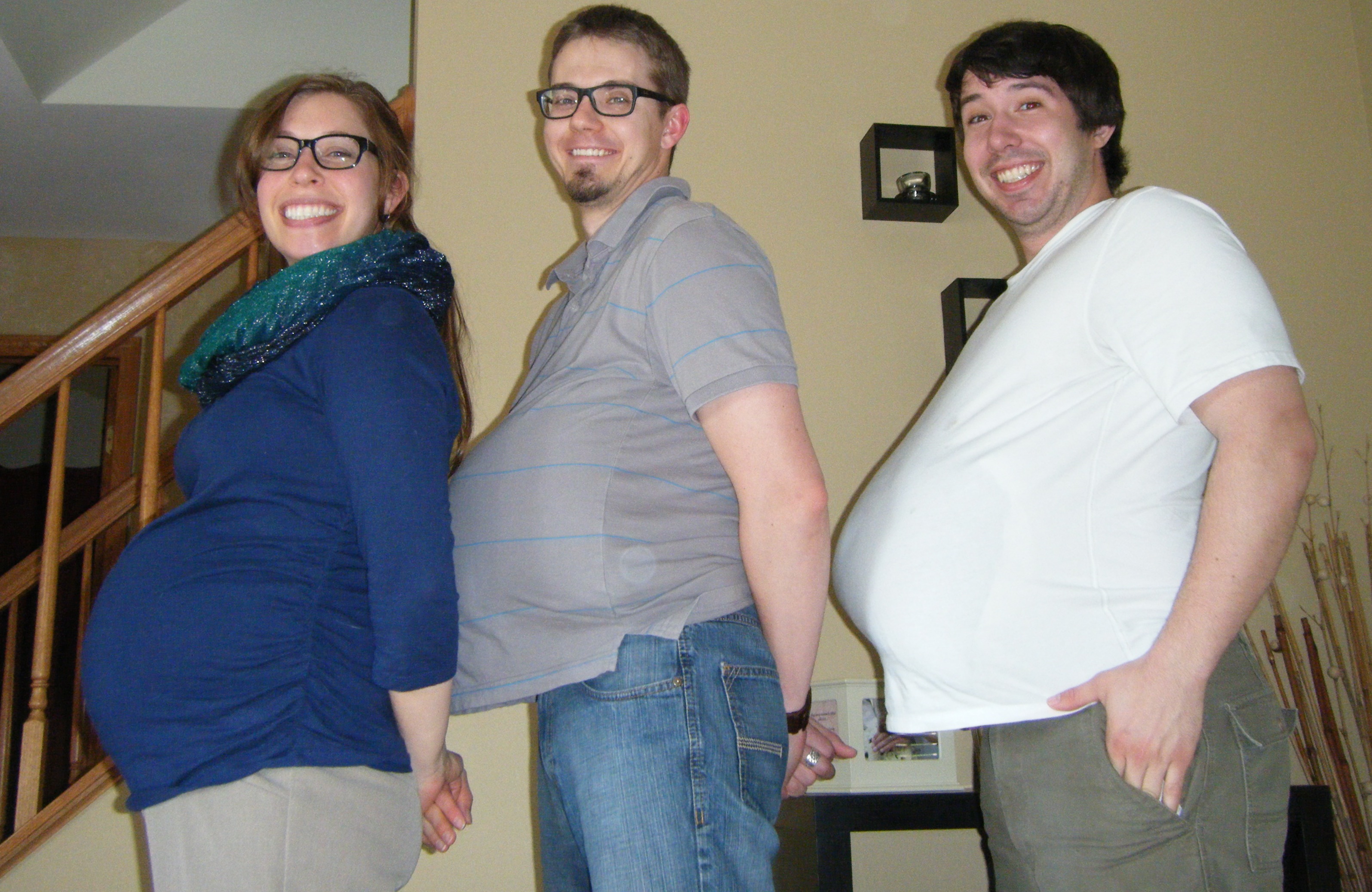
I thought I would show the fruit of all those supplements that I referenced in my previous post. I’m growing, the babies are growing and apparently it’s a bit contagious!

Cassie, Frank & JD at 17 weeks

We also thought we would share our bumps with my mom and Grandma-to-be!

Mommy in the Middle
Mommy in the Middle

This picture is very special to me!

Mother's Day 2013
Mother’s Day 2013

The Elite Eight Plus One

food and supplementsRegistered dietitians stand behind the mantra of “food first;” which means skip the supplements, as long as, you can obtain what you need from what you eat or drink. I have also always practiced and preached this stand point, but now I can no longer obtain enough of certain vitamins and minerals to reach the recommended daily values.

The Institute of Medicine (IOM) publishes dietary reference intakes, or DRI’s, for most vitamins and minerals. This administration individualizes the values based on gender, age, pregnancy and lactation. For example, it is recommended that a 30 year old woman strive for 18 mg of Iron everyday, however if that woman is pregnant she now needs 27 mg. As one can imagine the needs for moms-to-be of multiples are even greater, and while the IOM does not have current recommendations for these individuals, such as myself, the research literature does. I have obtained most of my micronutrient goals from Dr. Barbara Luke‘s and Dr. John Elliott‘s publications, which give specific recommendations for the following vital amines (vitamins) and minerals.

Vitamin B6This water soluble vitamin, like the other B-Vitamins, is critical for the metabolism, or breakdown and use, of protein, fat and carbohydrates. It also helps to form the developing brains and nervous systems of all the growing babies, while also playing a role in the formation of new red blood cells, antibodies to support the immune system, and neurotransmitters, which are those happy hormones such as serotonin, dopamine, and DHEA.

It can be found naturally in chicken, fish, pork, chickpeas, and baked potatoes. The DRI is 1.9 mg, but people can tolerate up to 600 mg without side effects. The literature also supports the use of vitamin B6 to help control morning sickness/nausea with recommendations of 25mg, three times per day along with Vitamin B12. Although, the mechanism of how this works remains unknown, my hypothesis is that it alters pathways in the vomiting center of the brain by increasing serotonin.

Folic Acid (Vitamin B9): This B-vitamin is one of the most popular pregnancy vitamins, partially due to the movement to fortified all refined grains in the United States to insure adequate folate to prevent neural tube defects during pregnancy. Most prenatal vitamins have 400-800 mcg of this vitamin, which is the DRI for a singleton and multiple pregnancy, respectively. Thus, it is evident that folate plays a critical role in the neural development of the babies, but also is required for DNA synthesis and aids in cell division. Also, like vitamin B6 it helps in the formation and maintenance of red blood cells to prevent anemia. Good sources of folate include dark leafy green vegetables, beans and legumes, egg yolk, sunflower seeds and liver.

Vitamin B12: B-12 is another powerhouse for neural and blood development and maintenance. It also helps to regulate DNA synthesis and can be found in every cell of the body. It can be found naturally in animal-based foods (meat, chicken, fish), dairy and eggs, as well as, from fermented teas such as kombucha. The DRI for B12 is 2.6 micrograms. As mentioned previously, Vitamin B12 can also be taken in conjunction with vitamin B6 for morning sickness. The recommended doses vary from 4 mcg per day up to 25 mcg, two times per day.

Vitamin DThis fat-soluble vitamin is unique in that in can be synthesized in our skin with the help of the sun. Unfortunately, for folks in the Midwest there is only adequate sunlight in a small window of the year. Therefore, most are commonly deficient in this vital amine. The DRI for vitamin D is 200 IU, however the human body can make 10,000 IU in about 20 minutes in the sun, which tells us our bodies can handle much more. Some research literature suggests that some women need up to 4,000 IU to obtain adequate serum levels during pregnancy. Vitamin D is not found in very many foods, but can be found in mushrooms, eggs, and fatty fish. It is also added to some foods such as in the case of milk.

Most people know that vitamin D helps to support bone development and maintenance by increasing the absorption of calcium and magnesium from the gut. It also plays a role in preventing cardiovascular disease, multiple sclerosis, and some forms of cancer.

IronIron is commonly supplemented during pregnancy and is the cause of several unwanted side-effects, such as nausea and constipation, but it is important in providing oxygen-rich blood to both mom and babies. Most moms-to-be need more than the DRI (27mg) for iron to maintain adequate amounts. The research that I have reviewed recommends 325 mg of iron daily for moms of multiples.

Iron can be found in red meat, liver, chicken, fish, beans, leafy vegetables and molasses. But, typically a supplement containing Iron sulfate is recommended. I encourage, and take myself, a slow releasing version of iron. SlowFe is a common name brand for this type. I also always take iron with vitamin C to improve absorption, and avoid taking it with calcium-rich foods which tend to inhibit absorption and utilization.

Calcium and MagnesiumThese minerals are the super heroes for building and maintaining mom’s bones while constructing baby’s skeletal structure. The DRI for calcium is 1,000 mg, however the research literature recommends closer to 2,000 mg and the DRI for magnesium is 36o mg but again the literature suggests 1,200 mg per day. In addition to calcium’s bone building role, it also acts as a signaling messenger for some hormones and a co-enzyme, or “right-hand man” in blood clotting. Magnesium also has significant roles in over 300 bodily reactions, including muscle and nerve function, maintaining a steady heart rhythm and regulating blood sugar and blood pressure. There is also a growing body of research on the use of magnesium sulfate to prevent pre-term labor. It is usually administered intravenously (via IV) in boluses of 4 to 6 g over 30 minutes and then maintained at 1 to 3g per hour to achieve serum levels of 5 to 8 mg/dL. This level is considered therapeutic at inhibiting, or stopping, myometrial (middle layer of the uterus) activity a.k.a. contractions. Needless to say, food sources of calcium and magnesium, as well as, supplements are very important for moms of multiples. Calcium is found in high amounts in tofu/soy, green vegetables, sardines, molasses and of course dairy products. Magnesium is found in wheat bran, dark leafy green vegetables, nuts and seeds and beans and legumes.

ZincThis mineral is required for an assortment of processes in the body. It is necessary for the activation of over 100 enzymes, and plays a large role in immune function, protein and DNA synthesis, cell division and wound healing. Therefore, one can see how it helps to support normal growth of the fetus during pregnancy. The DRI for zinc is 11 mg and daily intake is very important because it is not stored in the body. This mineral is another one that researchers believe is required in larger amounts. It is recommended to strive for 45 mg per day when preparing for a multiple birth.

So, those are the elite eight! Or, the eight micronutrients that are touted for playing very crucial roles in the maintenance of mom and growth and development of babies during a multiples pregnancy.

There is one more nutrient, a macronutrient, that recent research has pin-pointed as another key to neural development during pregnancy- DHA. Omega 3 fatty acids have exploded in popularity due to their powerful role in reducing inflammation, or putting out the fire, in the body. This decrease in inflammation can be attributed to two of the omega-3’s found in fatty fish, Docosahexaenoic acid (DHA) and Eicosapentaenoic acid (EPA).  DHA, specifically, is now being added to some prenatal vitamins due to studies noting that DHA can help reduce risks of poor retinal (eye) development and poor cognitive development. The International Society for the Study of Fatty Acids and Lipids currently recommends 300 mg per day of DHA for pregnant and lactating moms.  A new article published in the American Journal of Clinical Nutrition stated that mom’s who took 600 to 900 mg of DHA per day had longer gestations, bigger babies and longitudinal data points to better cognition for the children in their preschool years.

Despite obtaining 150-200% of the DRI for the nutrients listed above, supplements are still a critical part of my daily dietary regimen. If you’re a mom-to-be and have questions, or recommendations, about the information above, please contact me.

Written by: Cassie Vanderwall, MS RD CD CDE CPT