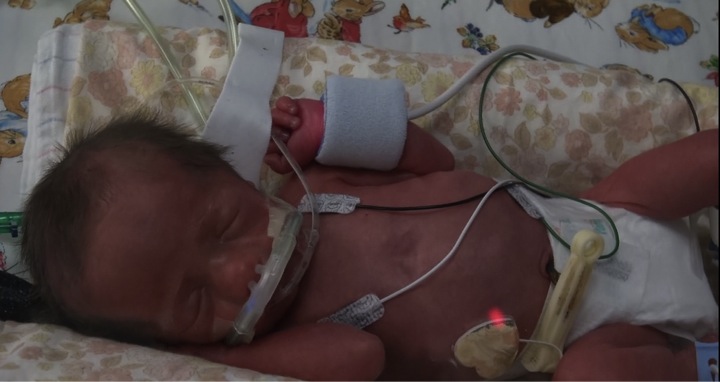
Isabella Marie

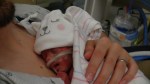
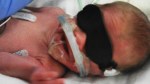
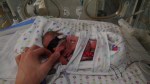
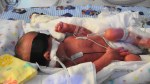
Big sister, Isabella Marie, is the oldest girl but one of the smallest at birth. She is our “I don’t do drama” queen. This blonde Bella has very keen senses of hearing and sight. When the others’ start sounding their alarms, or she has had enough photos for one day the little hands go up and shield her little eyes and ears. Bella also takes the cake (literally) as our best eater and grower. She is tolerating 6 times as much milk as her siblings.  “Beautiful Marie” gets her looks from her Daddy with her light hair, long face and tendency to crinkle her forehead. We are excited to introduce you to our little Bella Bean.

If you click on an image, it will give you a full-screen slideshow of all the pictures.

Not pictured above:

  • When Daddy gets the camera too close or her neighboring brother causes a racket, little Bella flashes her hands Vogue-style until peace resounds. Her little spirit finger-spread has caught on in this NICU pod as her signature move.
  • Our big sis also knows how to grab your attention. She’ll hold her breath just long enough to get mom or dad to pay her a visit and then rebounds back to healthy limits.

We are so thankful that Bella has been the most well of the bunch, evading spontaneous ruptures and breathing issues.  Prayer requests for Isabella include her continued tolerance of her feedings, as well as, sustained growth and development.

Keep coming back to meet Lily, Kali and Ellie, too!

Baby Theo

Theo is quite possibly, in our unbiased opinion, the cutest little infant baby-boy in the history of the world. It’s amazing how at just 31 weeks of age he is already showing quite a personality. It’s also amazing how much of a prototypical boy he can be at times. Here is a snapshot of  sweet little Theodore Joseph who has more than stolen mommy and daddy’s hearts. (If you click on an image, it will give you a full-screen slideshow of all the pictures).


Not pictured above:

  • In an unprecedented incident, during the night, Theo escaped out of his little bed, pulled himself across his isolette, and positioned himself right in front of one of the entry portholes. Apparently, he thinks he’s ready to go home :-)
  • We were photographing Theo and he felt the session was running a bit long. We kid you not, he looked right into the camera, conjured up an epic scowl for his little face, and then flipped us the bird. The picture was too obscene for this blog, but it was all captured in high-definition. We’re quite positive it will resurface in the years to come, accompanied by much laughter.
  • When Dad finally decided to jump in for one of Theo’s diaper changings, Theo made sure it was an unforgettable experience – if you catch our drift, literally :-) Welcome to fatherhood!

We hope you have enjoyed the pics and stories of our precious little Theo.

Please pray for his continued health, well being, and many smiles and blessings to come.

Stay tuned for photo galleries of all Theo’s little sisters!

Who Loves Cute Pictures of Little Quintuplet Babies?!

Over the next week, we will be starting a “Meet the Quints” series on our blog! Each post will feature one of our little cuties with lots of pictures and commentary. As we referenced in our previous somber-toned post The Quint’s First Two Weeks there have been many moments of pure joy in addition to the bumps in the road we’ve experienced thus far. These upcoming posts are our chance to share those joyful moments with you!

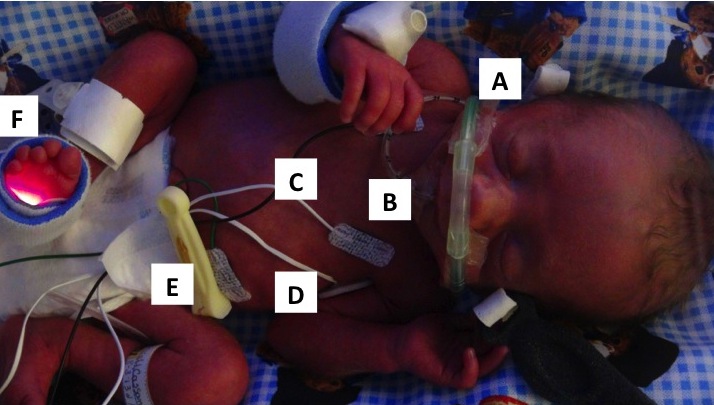
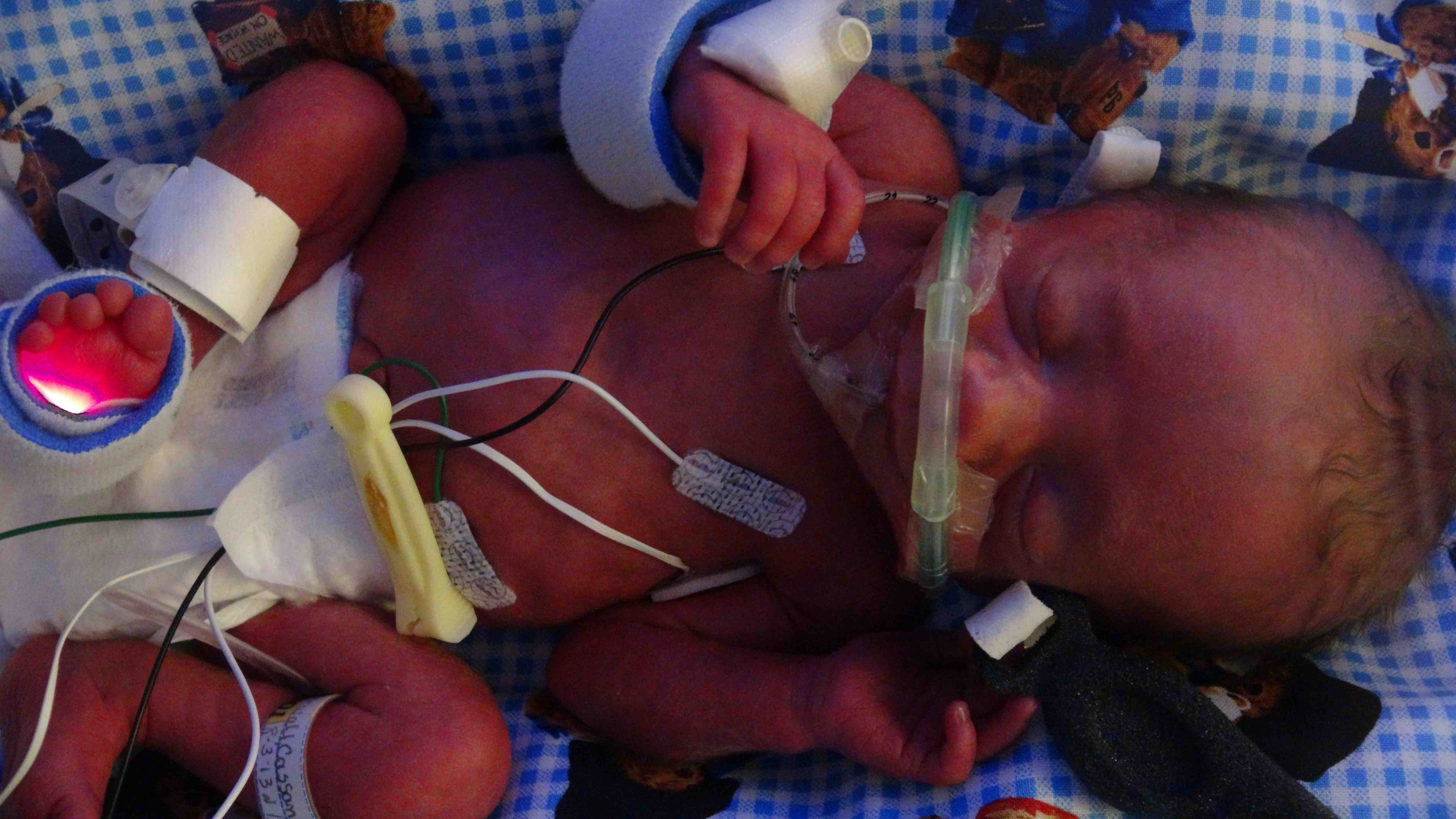
One last thing to prep you for the next five posts. The V5 are collectively in the best health they have been since birth. Still, they are hooked up to all kinds of Medical Miracle Machines (technical term) that are helping them to develop and grow into normal healthy babies. To help quell any concerns about their condition when we post wire-laden photos, below is a brief visual introduction into the anatomy of a typical NICU infant. Mr. Theodore Joseph has been selected to help enlighten you on the purpose of the lines and tubes you’ll see in the upcoming week’s pictures:

Anatomy of a NICU Baby, featuring Theodore Joseph

A: Free Baby Oxygen Bar/Spa Treatment – AKA: Nasal Cannula used to provide a variety of respiratory therapies

B: Hands-Free Food and Beverage Dispenser – AKA: Oral-Gastric (OG) tube used to provide breast milk and to check their bellies for residuals from prior feedings. It also can help to remove excess air from their tummies.

C: Personal Fitness Monitors (e.g. Nike+) – AKA:  All of these wires are leads which are connected to a monitor which help to assess heart and respiratory rates.

D: Remote Thermostat Adjuster – AKA: The wire tucked under the heart sticker is a temperature probe which helps to identify the baby’s temperature and keep it in an ideal range.

E: Belly-Button Jewelry Clip – AKA: this is a clamp placed on the umbilical cords and is later removed.

F: Oxygen Bar/Spa Treatment Membership Card – AKA: This is a pulse oximeter which is used to assess and monitor the baby’s oxygen saturation.

The Quint’s First 2 Weeks

The quint’s first 2 weeks outside of Mama have been quite active. Frank and I have truly gotten a crash course in what it is like to be NICU (neonatal intensive care unit) parents. The highs are very high, the lows are very low, and often times they occur within minutes of eachother. We have been blessed with the time away from work to spend 8-12 hours everyday buzzing around the NICU watching nurses, taking part in our little ones’ care and meeting with the multidisciplinary team. Our most recent post announced the arrival of the V5 and told the story of our 24 hour honeymoon with five seemingly happy and healthy babies. After day 2 however,  the honeymoon was over.

Here is a summary of some of the medical trials and tribulations our quints have experienced in their first weeks:

  • Spontaneous Intestinal Perforation (SIP): Two of our little ones had bowel perforations within the first 3 days. Both required emergent surgery, which they handled well. One of the SIP’s may have been caused by NEC, which they found in surgery. The other occurred higher in the small intestine, and the informed us that this may result in a feeding intolerance later on.
  • Necrotizing Enterocolitis (NEC): NEC is one of the most common GI diseases in newborns and preemies. It is when the bowel does not get adequate blood flow (Ischemia) and begins to die (Necrotize). Early and aggressive treatment is imperative because it can result in dire consequences – NEC is the second leading cause of death in premature infants. The good news for our quints, is that they did identify it early and were able to remove the affected portion completely.
  • Gastritis versus Bleeding ulcer: Inflammation of the stomach wall and ulcers can be common as the immature digestive track is learning how to work. One of our little girls experienced this and as a result we found blood in her gastric residual. This appears to be resolving with the help of Zantac.
  • Spontaneous Lung Perforation: One of our quints got a hole in their lung, which required emergent chest tube placement. Luckily, this incident resolved quickly.
  • Complication of PICC: PICC lines, or Peripherally Inserted Central Catheters, generally have limited complications. So, yet another rare event for one of our girls where her PICC moved from her heart to near her shoulder. This resulted in infiltration into her subcutaneous tissues and ultimately her lung. She became very swollen as her upper body filled with fluid. But, this tough cookie fought it hard and it appears to have resolved rather quickly.
  • Grade 2 Intraventricular Hemorrhage (IVH): Infants born before 30 weeks are at the highest risk for brain bleeds. Grades 1 and 2 have similar outcomes and typically resolve within a month. They do cause an increased risk of developmental delay but not much more than from being a high order multiple. We continue to pray for the health of our little one diagnosed with a Grade 2 IVH.
  • Apnea and Bradycardia: Apnea is a pause in regular breathing lasting more than 20 seconds and bradycardia is a drop in the heart rate. All of our quints have experienced this at some point. “A’s and B’s” are typically caused by an immature nervous system. The good news is that all of our children are learning to pull themselves out of these events without stimulation (aka rubbing their backs).
  • Respiration machines: All of our little ones had to be intubated after day 2, which was expected. Unfortunately, one of their endotracheal (ET) tubes moved too low and collapsed their little lung. This has since resolved. All of them are continuing to advance through the variety of machines, but I thought it was noteworthy to introduce inquiring minds of the different types.
    • Intubation with an endotracheal tube (ET tube) with a ventilator
    • Intubation with an ET tube and continuous oscillation
    • RAM cannula with NIPPV (Nasal Intermittent Positive Pressure Ventilation)
    • Nasal Cannula on CPAP, Continuous Positive Airway Pressure
    • Nasal Cannula with higher concentration of oxygen than room air.

Needless to say, the first two weeks have been quite eventful. Although the events listed vary greatly in severity, it is difficult to watch our little ones experience any hardship. At the same time, it is certainly empowering to watch our children fight hard for life. Their resiliency is awe-inspiring! Today, we can say our little ones are collectively in the best health they have been since birth.  You will get to see and hear more about their progress and personalities in our posts over the next week or so.

Oh, and one more update for everyone. We learned that our insurance company has agreed to cover the quints birth and NICU stay for each of our children. They have also agreed to cover medical transport of our children back to a NICU in Madison once they are stable enough to bring back to Wisconsin. What an answer to prayer! We now are hoping that everyone will be healthy, and ready to be transported at the same time.

Thank you for praying along with us through both the euphoric highs and near-death lows on this wonderful roller-coaster of a journey,

Zero to Quints

quintuplets31n-3-web

I believe further explanation of how we went from “status quo” to “the babies will be delivered within the next 45 minutes” is warranted.  I was settling in for a day’s work on the morning of July 31st, when I felt like I wet my pants. Now to be honest, I just assumed little Theo was going to be controlling my bladder for the day. But, upon further investigation, I realized he had popped his little sac and I had “broken my water.” I called my doctor’s office, but since they were closed it directed my call to the physician on-call, which just so happened to be Dr. Elliott’s “bat phone.” I felt awful for bothering him on vacation, but he didn’t mind one bit. He encouraged me to pack a bag and head to Ob triage (the moms’ ER).

We arrived at the hospital and were quickly shuffled in for an assessment. They tested the fluid and confirmed that indeed it was amniotic fluid. Then, they discontinued my nifedipine (calcium-channel blocker), gave me a steroid shot (Betamethasone) to enhance fetal lung development, and started me on 3g of Magnesium sulfate. I was then whisked away to ultrasound to confirm the culprit. It was indeed little Theo (baby A) whose deepest vertical pocket went from around 5cm to about 1.6 cm, which indicated that he only had about 1.6 cm of fluid surrounding his little body in his sac. His head was now so low in my pelvis he appeared as though his little body stopped at his neck.

The nurses assured me that once my contractions stopped, it was entirely possible I could remain pregnant for several weeks. This amazed me but they said it happens all of the time. Unfortunately, this scenario is only true if 1) your contractions do stop, 2) you tolerate the medicinal anti-contraction regimen and 3) you do not develop an infection. My contractions did stop, thanks to the “mag.” But, it was clear after 24h on the magnesium sulfate that I was not tolerating it, and my lungs began to fill with fluid.

Magnesium sulfate is used for contraction management. It is thought to affect calcium channels to slow uterine contractions. Typical side-effects include water retention, muscle weakness, sweating/flushing, nausea, vomiting, constipation, and blurry vision. For most, these symptoms are tolerable and some mom’s of multiples can again remain on magnesium sulfate for several weeks, in order to prolong their gestation. Unfortunately, I hit the jackpot and experienced all of the symptoms noted above.

My body was only able to combat these side effects for about 3 days. I was placed on b-pap to increase my oxygen saturation and Lasix to try and rid my body and lungs of the extra fluid.  On the morning of August 3, I was moved back to labor and delivery due to my pending diagnosis of pneumonia. When I spiked a fever and my white blood cell count shot up, we knew today was the day. It was then that we got the news that we would get to meet the quints within the next few hours.

They informed us that Dr. Elliott was speeding to the hospital, on his way back from vacation, and we were going to try and wait for him to arrive around 4pm. But, when he heard that I had a fever, he gave the go ahead to deliver in his absence.

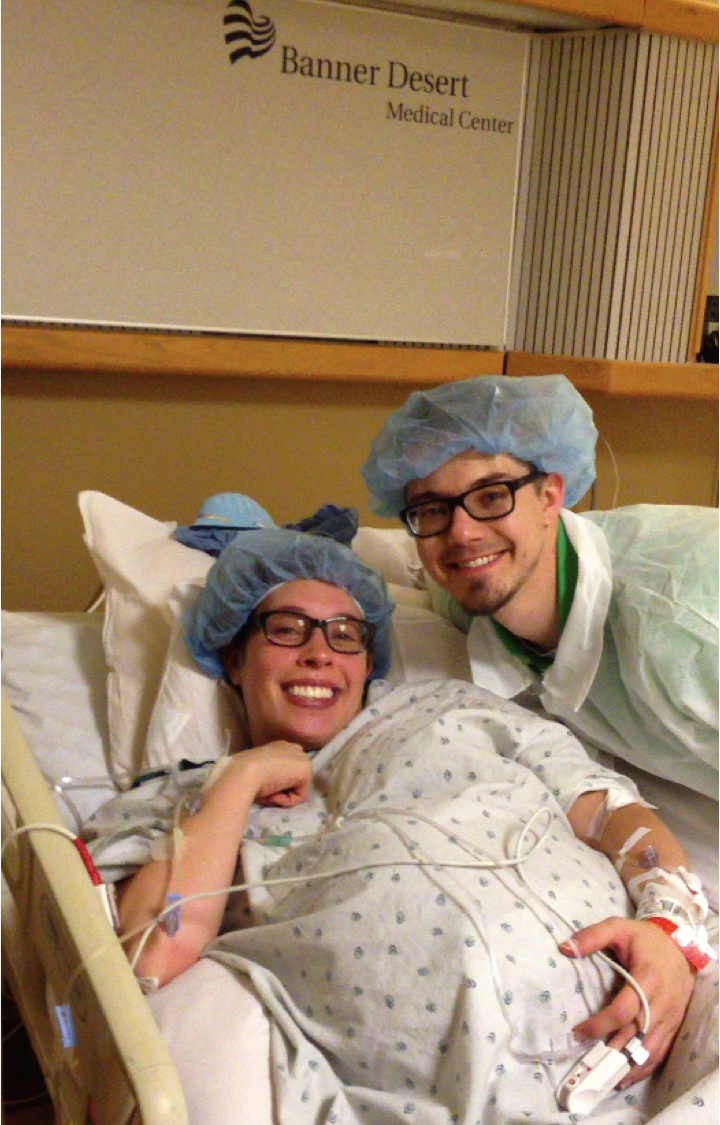
A moment to smile before delivery.

Thus, they unraveled the most well-orchestrated delivery I have every heard of. With over 20 people in the delivery room (6 teams: one for me and one for each baby), they delivered the quints in about 3 minutes. The entire “operation” took about 45 minutes. I vaguely remember these moments, but Frank was right by my side to catalog it all.

Following delivery, Frank headed to the quints’ recovery room. By the time I arrived, all were gone and up to the NICU. My mom awaited me in the recovery room, and was over-joyed to see me safe and sound. I, unfortunately, could not see our little angels until my fever subsided and my breathing had stabilized.

Frank is ready to be a Daddy!

Dr. Elliott arrived and it was clear he was upset that he could not deliver our babies, but we truly respected his decision. He shared with Frank that sometimes as a physician you have to make a decision with your head and not your heart. If we had waited even a moment longer my infection may have complicated the babies course.

Those 48 hours preceding the birth of our babies, were some of the worst of my life. But, I know that without that treatment regimen, our 5 little miracles would not have passed the “steroid efficacy window” and may have been at an even greater risk for serious complications.

Our heartfelt thanks goes out to Dr. Elliott and the teams at Banner Desert for their superb, patient-centered care, compassion and wisdom. For I know that if we were anywhere else, the circumstances and outcome may have been very different.

We have much more to share with everyone and are working on getting some fantastic pics of the quints, so look forward to some more baby updates in the near future!

The V5 have Arrived

Ladies and Gentlemen,

It is our pleasure to announce that on the 3rd day of August, 2013, between the hours of 1:48 and 1:50pm, five beautiful new baby Vanderwalls came into the world. That’s right, it’s time to introduce you all to the V5!

First, is big brother Theodore Joseph – he was the first one out of the womb at 1:48 pm, weighing 2lb 14oz and measuring 14.5″. Upon being told by the nurse that he was the only boy, and had a life with four sisters to look forward to, he literally began screaming and kicking. It had everyone in the Neonatal Intensive Care Unit (NICU) laughing. I think he’s going to be a performer. I mean look at his picture, he’s already showing off his first public magic trick – making his feet glow.

Theodore1

Second out of the womb at 1:49pm, was 2lb 7oz Isabella Marie, also measuring 14.5″. Sporting a full head of hair at only 29 weeks, like her brother Theo, she was our first precious daughter to take a breath of real air. Already living up to the meaning of her name “Bella,” she is incredibly beautiful. We’ve requested she be kept away from any other boys in the NICU. I already caught one of the other premie boys eyeing her up on the way in 😉

Image

Born at the same time as Bella, 2lb 11oz, 14.6″ Lillian Grace entered the world with her mouth wide open. She let out a cute little scream then was whisked off to the NICU to join her brother and sister. Adorned in her little stitched hat, she’s certainly making a good case to be daddy’s favorite little girl. Unfortunately for her, this daddy is going to have four favorite little girls, not just one. Let’s not tell her just yet, though 😉 She seems to really be enjoying her self-proclaimed title.

Image

One minute later, at 1:50pm, our third little girl, 2lb 5oz, 13″ Kali Mae, joined her siblings. Kali, who you’ll see already has a striking resemblance to her very handsome father, was a kicker and a screamer from the get-go; further establishing the aforementioned resemblance to her father.

Kali

And last, but certainly not least, at 1:50pm Elliot Rose completed the V5’s arrival into the world. 2lb 6oz, 14.5″ Ellie was our little fighter, overcoming a couple weeks of very scary distress in the womb. She proved her tenacity once she exited as well. All of our little blessings performed admirably throughout their first day in the NICU, but it was Ellie who received the highest remarks, breathing all on her own with the least assistance from the NICU staff.

Elliott1

I am also happy to announce that after a medically difficult 12 hours, following delivery, Cassie has turned the corner and is back on track for a swift, full recovery. She made it up the NICU today (Aug 4) and FINALLY got to see our babies for the first time!

V5 Day 1 019

Thank you for all of your continued prayers, hugs, kisses, and well-wishes. We are humbled and most thankful for everyone’s support. Stay tuned for more updates.

Love you all!!!

Daddy V (and the rest of the V7)

The Cost of Good Care

American-flag-stethascope

The healthcare industry is constantly evolving. Scientific research spurs on new discoveries, techniques, surgeries and cures. The economic environment dictates the distribution of healthcare. In the present day and age, there are many “what-if’s” about how and to whom healthcare is delivered. This post is not intended to be an epic dissertation on healthcare in America. The purpose, rather, is to explain to those inquiring why we are no longer pursuing medical care for our pregnancy in Madison, WI.

Upon learning that we were pregnant with quintuplets, the initial meetings with our fertility specialist and perinatologists were an emotional undertaking, to say the least. These medical specialists fought long and hard to convince us to pursue multi-fetal reduction. They wanted us to take the five and reduce to 2, maybe 3. This was never an option for us, and we made it very clear from day one. However, despite our stance, the perinatologists would not discuss a plan of care with us for over a month under their supervision.

Finally, nearly two months into our pregnancy we were able to sit down and discuss how we were going to make our pregnancy a success and give our unborn children the best chance at a happy and healthy life. We came prepared to this meeting, well read on terms and proactive treatments and even brought along a few research articles to discuss. The docs may have been a bit thrown off; one was not even prepared to discuss how to combat pre-term labor. Luckily, his colleague was.
We had a long conversation about what their practice was willing to provide and what they were not. They were willing to provide monitoring prior to 24 weeks of gestation, which simply meant monthly ultrasounds. They were willing to provide a nutrition consult with their dietitian and psychological care with their social worker. But, they were not willing to consider preventative measures, and what I would consider proactive care. Despite the research I held in my hand, they would not acknowledge the efficacy of a cerclage (stitching of the cervix), non-stress testing (contraction monitoring), intensive tocolysis (treatment of contractions to delay labor), or even bed-rest. Instead they encouraged me to continue to take my prenatal vitamin and told me it was fine to exercise up to 30 minutes a day.

This information did not sit well with me, so I reached out to other mothers of quints and they were appalled. They encouraged us to get a second opinion and quickly. I didn’t at that point. I decided that I needed to come to trust my current healthcare practitioners; I did not want to seek care elsewhere knowing: 1) This would mean leaving home and 2) Our insurance would not cover it.

Then, at 18 weeks we sat across the table from another perinatologist from the same practice and a clinical nurse specialist. They informed us that we would most likely lose this pregnancy in the next 3-4 weeks. I asked and begged for them to reconsider a cerclage, and they said it would not help but would actually put me in more danger of losing my pregnancy. They shared that cerclages are only provided to persons with incompetent cervixes, which is a diagnosis typically given to moms only after having a previous miscarriage prior to 24 weeks. He told us not to give up hope but that there was essentially nothing else we could do. He encouraged me to continue to eat right and said I could still exercise up to 30 minutes daily. I asked about bed rest, tocolytic drugs and contraction monitoring and was once again told these treatment options would be of no help. Then, came the moment I realized that care at this clinic was not our only choice. I sought a second opinion.

The second opinion came from a renowned high-risk perinatologist in Arizona, who many other quint mom’s highly recommended and adored. They loved him for a very important reason; he saved their pregnancies. After a 30-minute phone call with this doc, also known as the, “Quad God,” I learned that if I didn’t have a cerclage within the next 3 days, we would, in all likelihood, lose our babies. He had a recipe for success that was incomparable to other docs’ practices due to his extensive experience with high order multiples. He has delivered 101 sets of quadruplets, 15 sets of quintuplets and 2 sets of sextuplets. To put that in perspective, our previous docs had delivered just 1 set of quads, no quints, and no sextuplets. Additionally, the average gestational age of quints delivered under his care is 33 weeks and 1 day… Academic research indicates the total population gestational average is somewhere between 25 and 27 weeks. The “Quad God’s” success was quite simply unheard of.

The next few days flew by as we attempted to plead with our insurance company to cover this care. However, to this day, they continue to deny us because:

  1. The services requested are/were with a non-participating provider.
  2.  The services are/were not medically indicated because they are not appropriate to treat the condition and do not represent the standard of care to treat the condition.
  3.  The utility of prophylactic cerclage is unproven and there is evidence to suggest it may be detrimental and may be associated with an increase in preterm delivery and pregnancy loss.

However, here I sit to write this post at 24 weeks- 6 weeks later- with healthy babies developing within me.

So, many ask why am I still here? I have the cerclage, the pregnancy is stable and insurance continues to not be willing to pay a dime towards our care. Why would I not come back to Madison?

The answer to me is plain and simple:

1. There were no other participating providers in our insurance network besides our  initial maternal and fetal medicine specialists.

We were concerned with the care that was being provided by our previous providers for several reasons, including their unwillingness to consider preventative and proactive measures of care.  Even after the cerclage, they informed me that they would be unwilling to provide intense tocolysis, contraction monitoring and support strict bed rest. I have been receiving these treatments here in AZ since the moment I arrived.

2. Emergent care, via cerclage, strict bed rest, contraction monitoring and tocolysis, were/are all required and medically indicated, in order to, prevent pre-term labor.

There is a body of research, which supports these facets of care during multi-fetal gestation. Additionally, a cerclage is not an “experimental therapy” but again is considered a component of normal perinatal care in a high-order multiples pregnancy.

My current perinatologist has published over 25 peer-reviewed articles on the management of high-order multiples and has delivered 15 sets of quintuplets whom have exceeded the average gestational age by over 5 weeks. The previous specialists have never delivered, or managed, a quintuplet pregnancy and while they are revered clinicians in their areas of research, they have not published on the management of high-order multiple pregnancies.

The peace that I feel in pursuing treatment under this new doctor’s care is overwhelming. For the first time in this pregnancy, I am confident in the care that I am receiving.  I would fear for the well being of my babies if they were subject to the care of the practitioners in Madison. They have not demonstrated that they truly care about our five miracles, nor do they appear willing to proactively fight for a healthy pregnancy.

Unfortunately, these reasons are not convincing to our insurance provider. Therefore, we will continue to appeal and grieve this process with them, as we have since we initiated care outside of network. It is truly unfortunate that we cannot find comparable care within our insurance providers network. Our current doctor even offered to communicate his care plan to our previous docs, so that we could remain in-network, however they have denied all collaboration at this point.

Our biggest concern at this point, outside the healthy delivery of our 5 babies, is the financial livelihood of our family. The medical practitioners we are working with are very cognoscente of our financial situation and have been more than accommodating. But, we know that once I am admitted for closer monitoring and more intense treatment, the bills will begin to accumulate. Then, of course, will come the likely astronomical Neonatal Intensive Care Unit bill for 5 babies.

And so, we are witness to the cost of good healthcare in America. Still, we are simply unwilling to sacrifice our right to choose a qualified practitioner just because an insurance company is holding us financially hostage. We feel as parents-to-be that we now represent our children; we are now responsible for their well being until they are able to take on that responsibility themselves. We will fight, and continue to fight, for our children’s God given right to life, liberty, and the pursuit of happiness.