After nearly a year of planning, our family took on Disney with confidence, gratitude and sheer awe. The Disney experience is truly life-changing. From the built environment to the personalities of the cast members, they truly transform the world for kids of all ages. Our 8-day plan included a 4 park pass to the Magic Kingdom, Animal Kingdom, Hollywood Studios and Epcot. We made sure to keep our park days manageable by getting their at rope drop and bowing out around dinner time each evening. This helped with the traffic and prevented major meltdowns. Since we were staying off property our fast pass opportunities were fair, especially because we were booking for a party of ten. But, it still helped to provide the necessary structure for our Disney Park agendas. At the end of the day, we were tired but not exhausted and after our 2-day respite we were ready for the remaining two parks.
Instead of rambling on about our daily itineraries, I’d like to tell the story in pictures, which starts of course with our BIG REVEAL!
I often get questions about if our routine as a big and busy household is any easier now that the V5 are older. I always must pause and reflect to think about what it was like when our life revolved around 90-minute feeding regimens, or the 3 critical naptimes. It is in these moments that I realize life is speeding by us and while moments can be difficult making the days long, the weeks, months and years feel quite short.
Our difficulties in previous years revolved around time management, physical safety and growth. While these are still priorities, our focus today is on social and emotional health. I have been reading Dr. Gary Chapman’s book entitled, “The Five Love Languages of Children.” I am a big fan of individualizing the way we love others to best fill their “tanks.” This has been important in our marriage and is becoming more important in our family. I have recognized from the beginning that even though the V5 are a unit; this unit is made of very different parts. Parenting is not one-size-fits-all. A post from Positive Parenting Connection states,
“When parents take into consideration that each child comes into the world with a mind and heart all their own, they can then explore the most effective ways to connect with and guide their child.”
This quite holds so much truth for me. It helps me to realize that not only do I need to individualize the way I love but also the way I teach, guide and discipline each of my children.
The Love Languages can also shine light upon the best way to discipline, or “the practice of training,” our children in the way we should go. We are not simply trying to modify behaviors, establish good habits and make little “yes” men and women, but we are in the business- as parents- in making good humans with strong and compassionate hearts. I don’t want to stifle my children’s questions and creativity with over-scheduling or take away their voice because I believe my way or ideas are better. I don’t want to raise robots; I want to raise 5 resilient, empathetic, creative adults who are not afraid to work, play, or even combine the two.
I am still investigating my children’s dominant love languages and in doing so I am also experimenting with the most effective way to discipline them. For those less familiar the Five Love Languages include:
Words of Affirmation
Physical Touch
Quality Time
Acts of Service
Gifts
I’m certain all my children enjoy getting gifts, but this doesn’t light their eyes up like a note in their bed-time journals, special time with them on the weekends, or getting to sit on our laps during story time. The more effort I put into loving them in their own way, I find that their trust and respect for my changes. These are two things that I hope to never lose. These languages also help me to prevent hurting their spirit when I need to discipline them.
We have tried several different strategies for discipline and sometimes we believe the lie that they will always be this sassy and disrespectful. In the moment, my frustrations, anger and lack of patience are at a climax but at night when the house is quiet I reflect on what was really going on. Often, I was modeling sass and disrespect seeking to “steam roll” versus redirect. I would love to be a perfect parent but I’m not. I’m an emotional parent who is easily over-whelmed. I also find that when I take away their voice, give them a time-out, or send them to their room that this doesn’t work for everyone. Some of them need this time and space to process; others feel abandoned in their inner turmoil. Finding the time and space to process these encounters is difficult but it is necessary. We know anger is a secondary emotion and underneath hides fear and sadness. We need to take the time to dig deep to help our children resolve these insecurities, fears and emotions.
Dr. Chapman, in the aforementioned book, states that the most profitable strategies for discipline are to love them through the correction. Start with an expression of their love language, avoid a discipline that is contrary to their love language and end with another expression of love. For example, if a child’s love language is words of affirmation, it would be best to start by identifying that you could see they were really trying to XYZ because you know that they do their best to XYZ. Then, move on to what you observed allowing their voice to clarify. End with more specific comments on their strengths and value. If we use harsh words with a harsh tone this can tear our little ones’ hearts apart who find vitality in others’ words. Another example, is if a child’s love language is physical touch we want to initiate and conclude discipline with endearing touch such as holding their hands, rubbing their back or embracing them.
This also makes so much sense when I read it and write it but is ever-so-hard to put into practice. But like most things practice makes more practice but eventually becomes routine. Thank you for joining me on this 6-year catharsis, I hope it inspires you to hold yours a little closer and love them a little harder.
Our house is loud. Our house is competitive. In our house, choices have consequences. Our has a schedule where there is a time to eat, play, sleep and head here and there. There is no doubt that this environment is stressful. I, the keeper of the schedule know that better than anyone. But, our home is also filled with love, laughter, prayer, gratitude, grace and mercy.
This home’s environment is much different than the one I grew up in but the values remain the same. Because of this I see my children evolving to be different than I was when I was younger. They are more confident, outspoken, expressive. They have to share everything from their bedroom to their time. None of this is bad. I just wonder at times what they are thinking and what this experience- this childhood- is really like for them.
There are moments when we find ourselves one-on-one where I catch a glimpse of them with their guard down. Whether it be their soft eyes, gentle smile or genuine laugh, it is then I know that they are doing okay, that they’re going to be okay. Rarely, are there uninterrupted conversations, but now that they can read and write, our conversations have become asynchronous. They can leave us a note, or a picture and we can do the same. It is in these stick figure drawings and scripted words that again I know that they’re going to be okay.
With each passing day they grow up a bit more. They become more independent and more united at the same time. They need others a bit more and us a bit less. While this is hard, I know it is good.
Translation: “Nobody go in this room”
But, I have to consciously combat the worry and the fear that perhaps this environment may perpetuate invisible illness and may pay a toll on their young hearts and minds. Our children, like all others, are developing a sense of mastery of their environment and themselves with each passing day. They can understand reasons for why life is the way it is; these may be logical or magical. I believe it is vital that we, as caregivers, know when to step in and when to step back, in order to foster resilience and not dependency or injury. The following 7 strategies were adapted from the American Psychological Association’s suggestions for fostering resilience across the lifespan.
Strategies to Foster Resilient Families
Make connections. Relationships expose us to another person’s journey which provides us with perspective and increases the skill of empathy. A strong network of friends and family can also provide social support which can provide a non-judgmental safety net when we fall.
Empower through Service. Age-appropriate volunteerism can help the helpless.
Maintain Routine. Most thrive with consistency because it can provide comfort. In times of change, it can be helpful to find rest in celebrating the child’s routine.
While routine and structure are beneficial if they lead to worry, they become counter-productive. Hit the pause button on life to explore with the child the source of worry. If it is the routine, celebrate spontaneity and re-construct the routine together.
Practice and Preach Self-care. Finding and making time to care for one’s self through solid nutrition, exercise and rest is pivotal for keeping one’s tank full; this is a necessity to prevent burn-out especially when caring for a child with any illness- visible or invisible. Children will also bare witness to our self-care and establish their own methods.
Nurture Positivity. Hardship can be handled with greater ease in the context of hope and trusting relationships. Helping a child trust the process, look for the positive and trust themselves to overcome life’s hurdles can build resilience and strengthen their self-efficacy towards present and future difficulties. While children may not be able to assess long-term consequences, we can help them see past the current situation and find hope while exploring optimism amidst fears.
Accept Change. Change can be scary but learning to accept and roll with change at an early age can foster resilience. Navigating opportunities for self-discovery amidst change continues to build into the child and provides a reflective skill-set which can aid in changing with change.
Big picture
Resilient parents raise resilient children who have “the ability to recover from or adjust easily to misfortune or change” and find calm amidst chaos. This ability to bounce back and grow is not just a process for self-development but a philosophy. We have the opportunity to plant “seeds of strength” and self-care so, our children can overcome the challenges of illness, a busy household, and/or hardships at home, work and school to courageously take on life with grace, generosity and gratitude.
Advent, or arrival, of the New Year has come! In the Christian tradition the first Sunday of Advent marks the New Year as individuals prepare for the coming of the Redeemer. Each Sunday of the Advent seasons prepares one with focus hope, peace, joy and love. Meditation on each of these values is a solid way to bring calm to one of the busiest times of the year but also sets the stage for the traditional New Year resolutions.
Now, looking back at the last 3 months of the holiday season I cannot help but see memories of hopeful children as they wrote and re-wrote and attempted to re-write their Christmas lists for a third time on Christmas eve… I hear the quiet and stillness of the household once they are all tucked in dreaming of tomorrow’s wishes… I see the joy written all over their faces as they embarked on new adventures trick-or-treating in October, trying new foods at Thanksgiving, and visiting family and friends over the Christmas celebrations… I feel and relish in the loving memories made at Christmas service as I watched each hold their own candle and sing silent night. All of these thoughts seem so fresh and I hope to keep them this way as we head into 2019.
Join me in refreshing the Advent New Year and refocusing on hope, peace, joy and love in 2019!
Minnie (Kali), Anna (Bella), Cat woman (Ellie), Capn America (Theo) and our resident Wiggly Gal (Lily) ready for some serious trick or treating!Visit to the Sun Prairie Fire Department to see Trucks, Police vehicles and the Med Flight team.
Celebrated Kali’s first Winter Dance performance and Lily and Ellie’s first session of Gymnastics. Theo is very excited to start basketball in 1 week.
Bella continues to enjoy her free time to be creative.
Thanksgiving Love, Joy, Snuggles and Sillies!
Family Christmas celebrations abounded! Great lessons of gratitude versus greed were learned. Lots of thank yous for the blessings that family and friends shared.
I even think they learned to like each other a bit more.
We capped off winter break with a surprise trip to the Dells!
The kiddos loved the waterpark, indoor amusement park and the arcade…
especially when Daddy won them each a ball from the claw machine!
We welcomed 2019 in with thoughtful reflection and resolutions, as well as, a whole lot of noisemakers!
Get better at building everything from Legos to planes to robots (Theo),
Playing nice with Lily (Bella),
Practice reading and gymnastics to get better each time (Lily),
Be more grateful (Kali),
Perfect her cartwheel and learn how to do a handstand (Ellie), and
To slow down enough in each moment to Selah, or to pause, reflect, look upwards, inwards and outwards before moving ahead in hope, peace, joy and love.
Yesterday we visited Busy Barns and had a blast exploring all of their friendly farm animals, working through the obstacle course and unwinding on the hay ride. These pictures were too cute not to share!
Now that we’re big elementary kids we are eligible for extra-curricular fun. While our little ninjas have been doing karate since 4K, they have been asking about other after school activities, too. We were holding on to our commitment to minimize extra-curriculars until, this summer when we were worn down by our budding ballerinas, flipping fanatics and aviation connoisseur.
Our biggest concerns for having kiddos in separate activities were 1) not having enough adult manpower to get kids from here to there and 2) not having enough energy to actively engage. Surprisingly, after school endurance is improving, however transitions remain difficult. It appears that the kids are emotionally spent but maintain a high degree of physical energy. If we aren’t careful, tantrums and disputes arise quickly and are difficult to manage. We have found that a post-school snack, quiet time and independent play are helpful. This is much easier with two adults on-deck but with one can pose to be a challenge.
We have surrendered and currently Kali and Bella are enjoying Ballet and Tap on Mondays, Lily and Ellie are enrolled in Gymnastics and all continue their karate two days each week. So far so good but we continue to wade carefully into these waters knowing that margin is a good thing.
Here are two videos which capture our baseline skills, can’t wait to see how these four ladies grow in their new found love for dance and tumbling!
Practicing our “Flips”
Pre Dance Lessons Sesh:
We also want our children to have capacity for spontaneous school and family events that arise. One fun run event that is coming up for them is the Terrapin Trot! This is a fun 20-minute run to raise school funds for everything from in-classroom technology to field trips. If you are interested in pledging, you can do so at the following links:
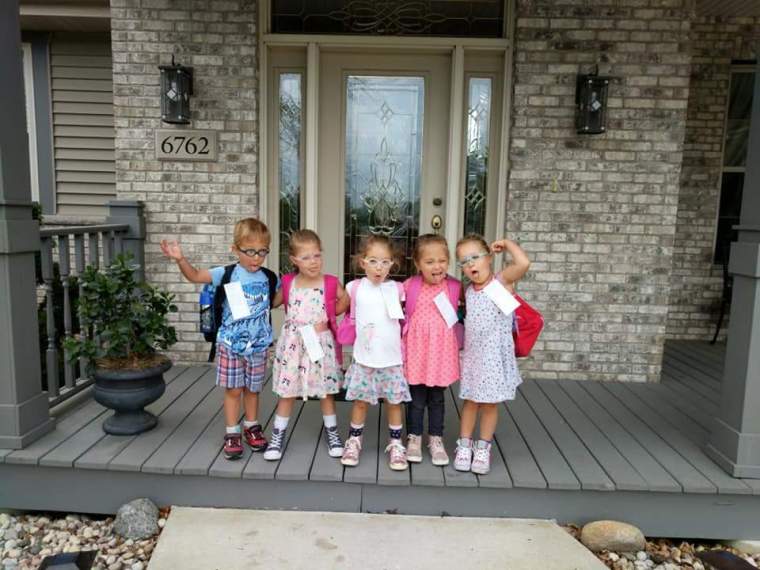
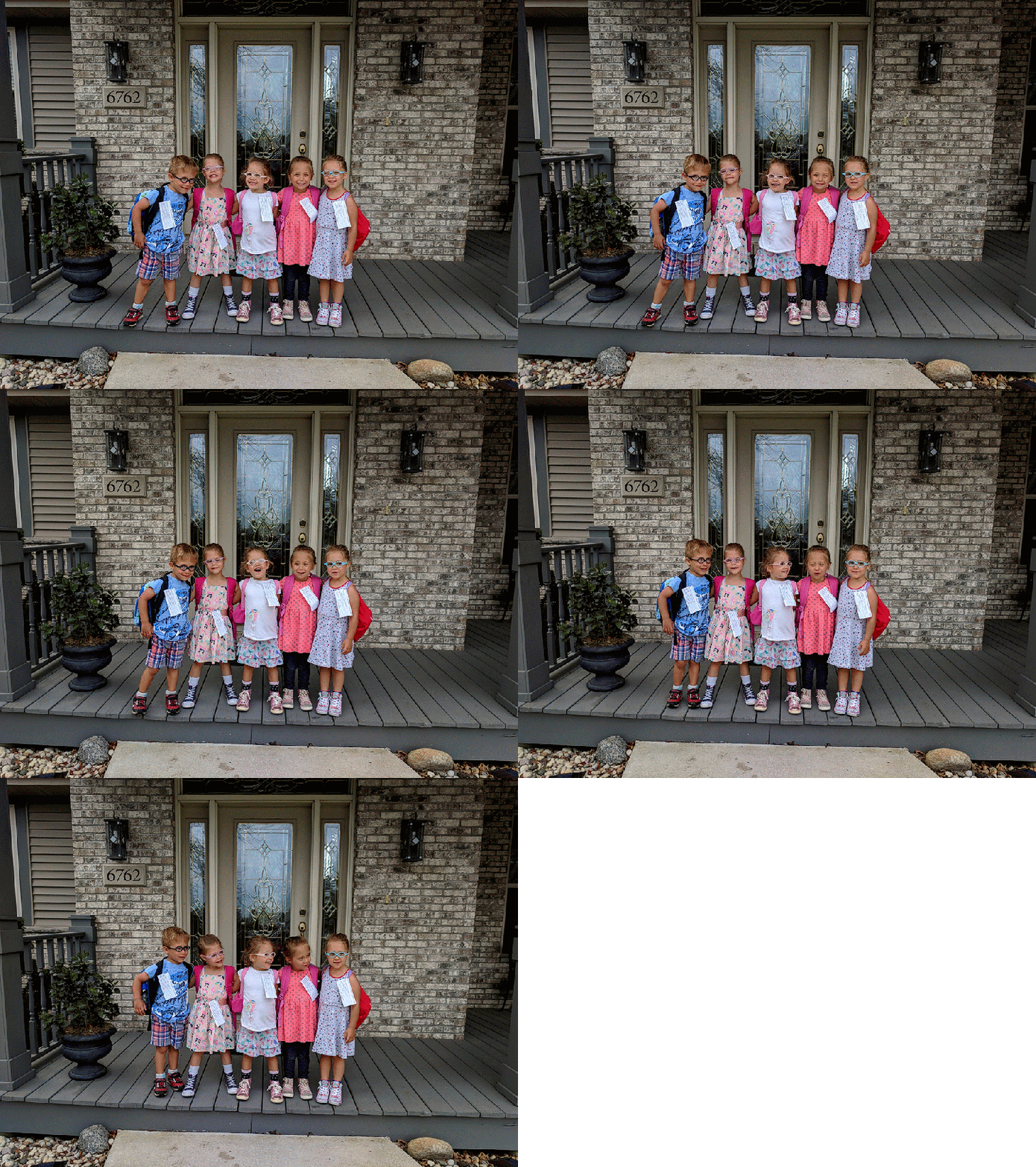
Our transition to kindergarten has been deemed a success! The kiddos are loving their new school, their teachers and their “specials.” The first week was very exciting but we quickly realized that we needed to be cautious and careful of after school activities because our endurance for a long school day was not up to par. Day one ended with a 20-minutes sob fest laid out upon the kitchen floor. We are still trying to navigate how to sneak in a cat nap or quiet time when they arrive home to assist with the transition… this remains a work in progress.
Overall, our keys to a successful transition are as follows:
Prepare. Preparation begins the night before or even weeks before and includes planning breakfast, lunch and snacks. Most of this preparation happens the night before when breakfast is partially prepared, lunches and snacks are packed and clothes for the next day are laid out. Sharing the plan with the youngest members of the team is also key because it can’t remain a best kept secret if it will be successful. It’s helpful to share the plan for the next morning or day the evening before.
Delegate. Mornings can be hurried and easily become chaotic, but delegating tasks to children and adults, all members can work as a team. Kid-friendly tasks include getting dressed, setting the breakfast table, filling water cups, serving themselves breakfast, brushing teeth and hair, etc. Older kids may be completely self-sufficient and simply need morning nudges to stay on task. Younger children may require more nudges and time stamps at each check point along the way. We have found our Alexa to be really helpful in these efforts. Our munchkins wake between 5-6a and often play upstairs until they are que’ed to come down. The first reminder comes via Alexa around 6:30 (Time to pick-up and get dressed), the second around 6:45 when “breakfast is ready.” We carry out these reminders every 10-15 minutes until we leave for the bus stop at 7:15.
Be Flexible. Stuff happens. A well thought-out plan can easily fall to pieces. Families can still get out the door in one piece and on time by remaining flexible. Flexibility can be difficult but by focusing on core values, remaining calm and being optimistic one can roll with the punches (easier said then done).
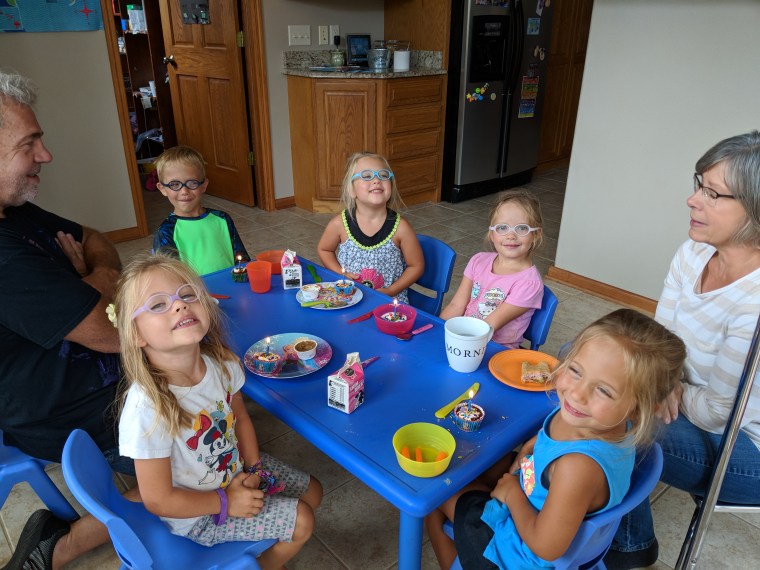
This year’s birthday felt monumental. Perhaps, it is because we are now a household of school-aged children with friends and these friends joined us in celebrating the V5. Or, perhaps it is because it was a multiple-golden birthday. Even more so, it may have been because the kiddos were more aware than ever what this celebration meant. Either way, it warranted a week-long party! A day for each and a weekend for all!
We kicked off the birthday week with a trip to the Dane County Fair
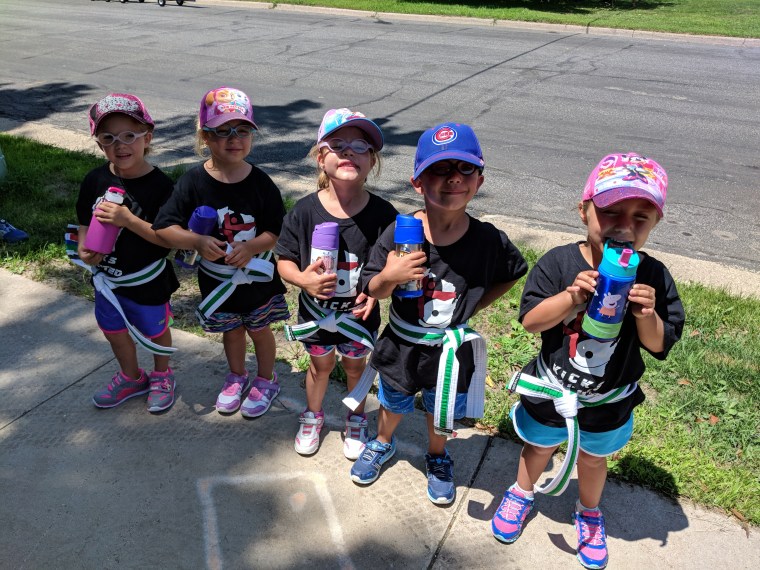
Earned their Purple-striped Belts
Took a trip to Sassy Cow Creamery and toured their Farm. Of course they had to dress the part.
Woke up at 5am on their Big Day and put on their Friday-best (all by themselves) ready to celebrate!
Celebrated Friday Morning with a trip downtown to meet a few of their favorite characters and to check out a real fire truck
Birthday Cupcakes with a side of Sunbutter and Carrots (No, I didn’t offer the veggies; they asked and it was there birthday so, how could I say no?)
Double B-day Bash Saturday. They loved celebrating with their friends in the morning and family in the afternoon. The mid-day break was just long enough to give this Paw Patrol crew a break.
The week concluded with each getting to break their very own birthday boards at karate!
Many, many thanks to all who made this year’s milestone birthday so special!
We have finally reached the age that everyone has been telling us about. The age of wonder with the ability to articulate curiosities, joys and fears. The age where memories are made by the minute. The age of near-self-sufficiency and ability to help… truly help. The age where messes are made but also cleaned up in a fraction of the time. The age where feelings are felt and are now being able to be navigated, understood and managed. Four- going on -five is an amazing age. This is partially why this summer has been so much fun. The other part is the opportunities that we have been blessed with to explore. Here are a few of our most memorable firsts this summer…
First Parade. The V5 represented Kicks Unlimited’s Little Ninjas class in the Flags of Freedom Parade.
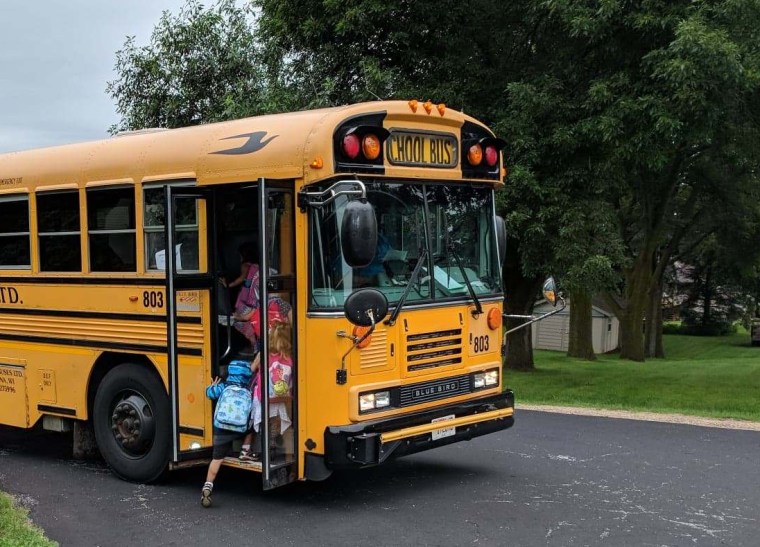
First Time Riding a School Bus. The kiddos are enrolled in the Kick-off to Kindergarten program this summer which include a bus-ride to and from school. They have been doing great! No fear.
First Firework Show.Talk about awe and wonder! It’s difficult to explain fireworks to a child. While not everyone was fond of the sound, they all loved the show. They also enjoyed the entertainment at WaunBoom!
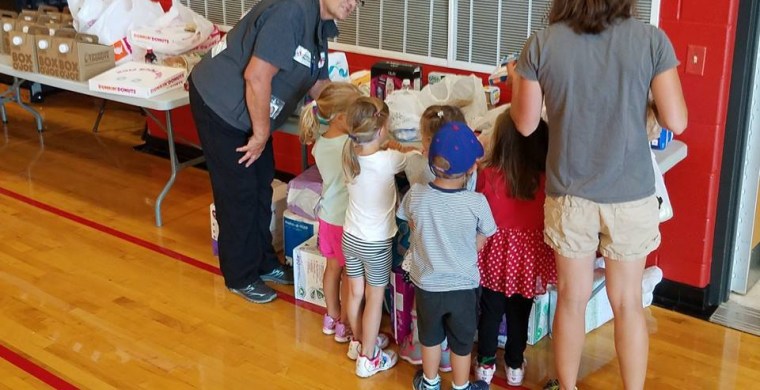
First Tragedy.The Sun Prairie community was literally rocked this last week with the tragic explosion downtown leading to the sudden loss of a hometown hero. We couldn’t have hid this from our children, if we wanted to. Instead, we chose to embrace it and use it as an opportunity to explain what happened, how it happened and how to respond. Service and social responsibility are very important to me and being able to serve alongside my children was very memorable. The V5 willingly headed to the store to make care packages for displaced kids and brought them to the Red Cross shelter at the high school.
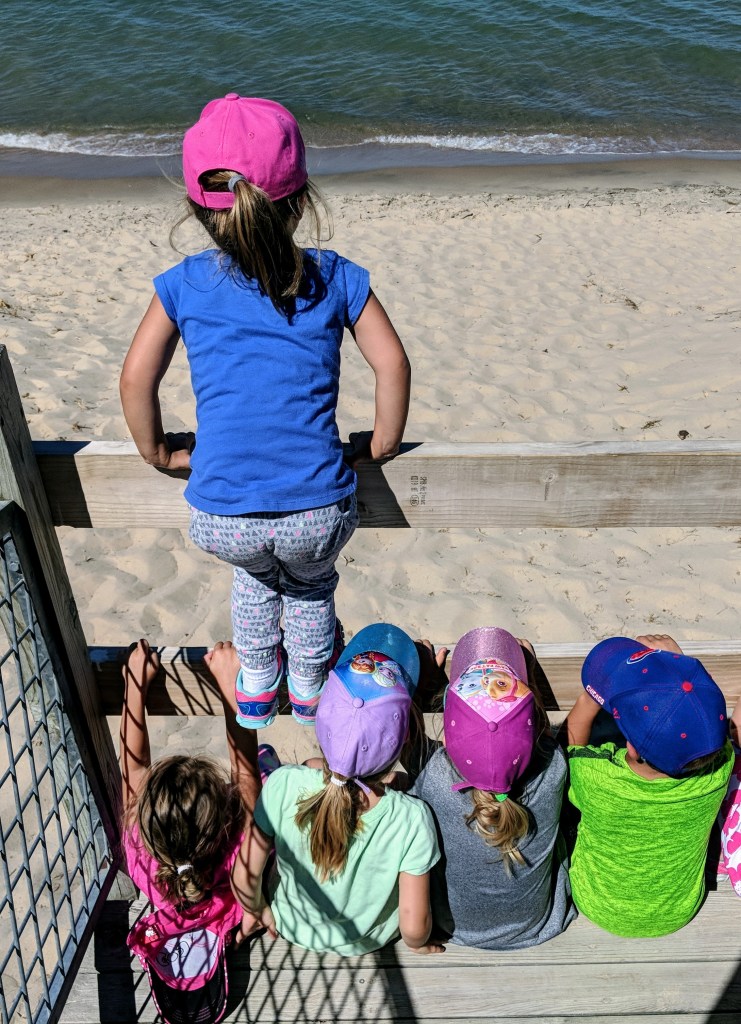
First Trip to Michigan. This first was inclusive of the first 4+ hour car ride (7 hours one way) with only 2 bathroom break (total victory). During our time in Michigan, they experienced their first: trip to the beach, sandcastle, sand dunes, boat ride, and hike.On the way home, we had the opportunity to ride the Ferry- another first! Many, many thanks to Uncle Jeff and Aunt Sue for their hospitality and these memories!
Over the last week, the V5 kissed their last nap goodbye. While it was bittersweet, after 7 days of being nap-free, we believe we did the right thing. The transition went surprisingly well so, I had to share the success.
How did we know it was time?
Most sleep consultants and specialists agree that most preschool-aged children between the ages of 3-5 years need 10-13 hours of sleep every day. For us, this was from 8pm at night to 6am and a nap from 12:30-2:30. In the last few months, we had more and more mutinies during nap time and surprisingly the munchkins that didn’t nap made it past dinner better than those who did. We also noted that they were having trouble falling asleep and winding down at night when they did nap. This Mama turns into a pumpkin before 9pm so the staying up until 9:30-10p had to go. The V5 have always been early birds but even the worms were still sleeping at 4:30am. So, all of these signs pointed to the need to transition.
How to Transition
Like most childhood transitions, whether it be starting solids, potty training or decreasing daily naps, it is best to let the child lead the way. Therefore, be sure not to disregard naps too soon. Those brain breaks are essential for emotional and physical resets during the day.
When it is time to transition, consider a slow fade where you decrease the nap by 15-20 minutes each day. While we didn’t technically follow this suggestion, I believe the kiddos did. In retrospect, their 2-hour nap had dwindled over time.
Practice quiet time. This is an invaluable practice that can follow them into adulthood. This gives our crew time alone to look at books, do puzzles, sing, color or draw. While it is tricky to keep them separated, it pays dividends in the afternoon.
It is important to note that quiet time isn’t equivalent to screen time. While a 30-minute episode of their favorite show may provide the adult with some quiet time, it is not going to provide rest that their mind is seeking but rather will stimulate the brain.
This last suggestion may be obvious, but one must also move bedtime earlier. Our home now becomes meltdown-city around 6:30p. Therefore, we moved the dinner hour 30-minutes earlier to have be able to head upstairs by 6:30p and those sleepy eyes are shut now by 7p.
Benefits of Being Nap-Free
If you would’ve asked me a month or two ago about the benefits of being nap-free, I may have struggled but now I am relishing in the freedom to schedule fun day-time activities without restrictions. It also has permitted more hours in the day to have fun family time as evidenced by the Springtime fun featured below. The best benefit of all may be that they are now sleeping through the night with greater consistency and the bed-time battles have also decreased. This means more time for Nana to recoup and more time for Dad and Mom to be husband and wife.




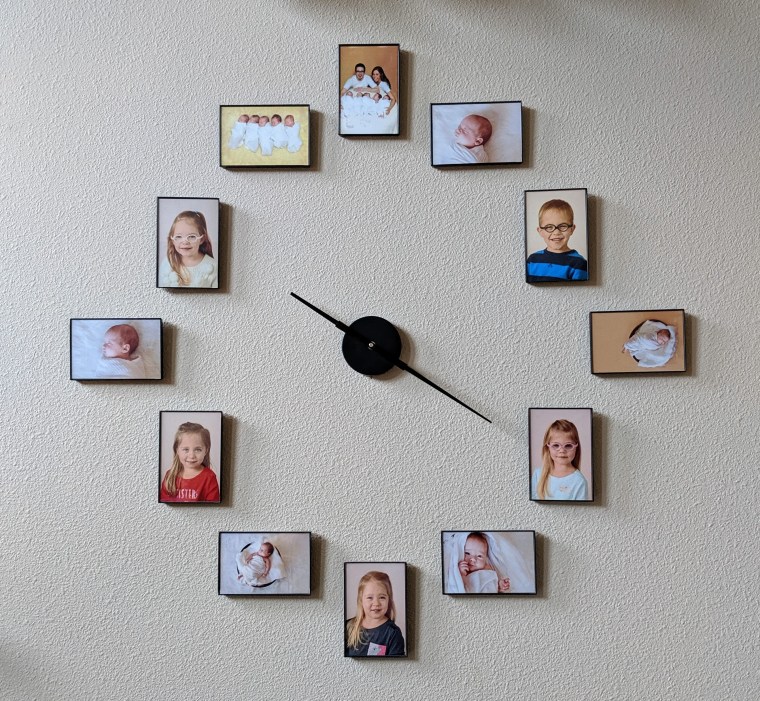





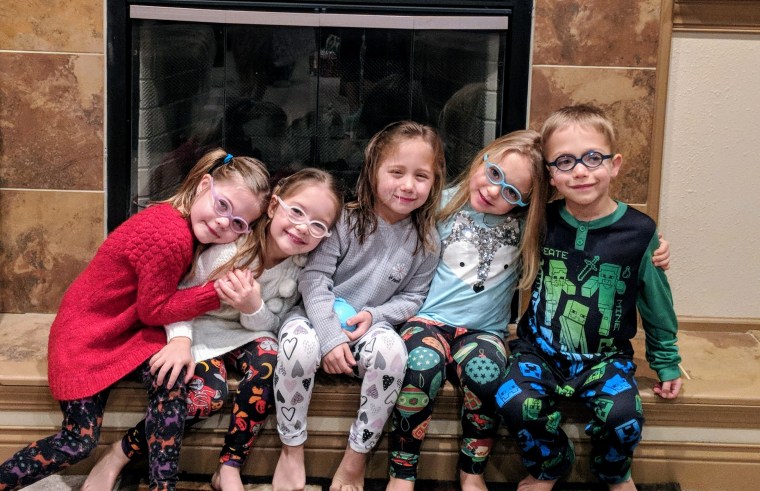
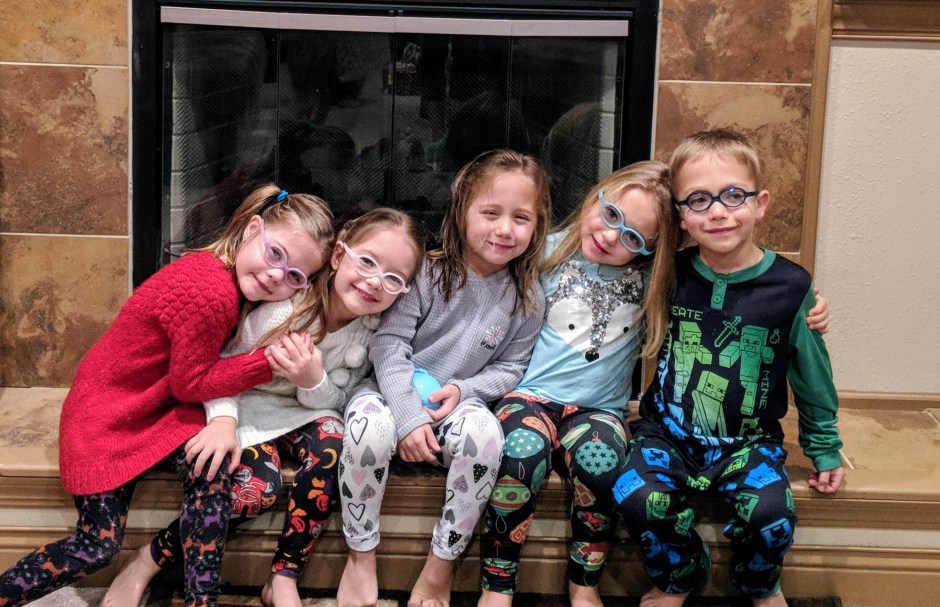


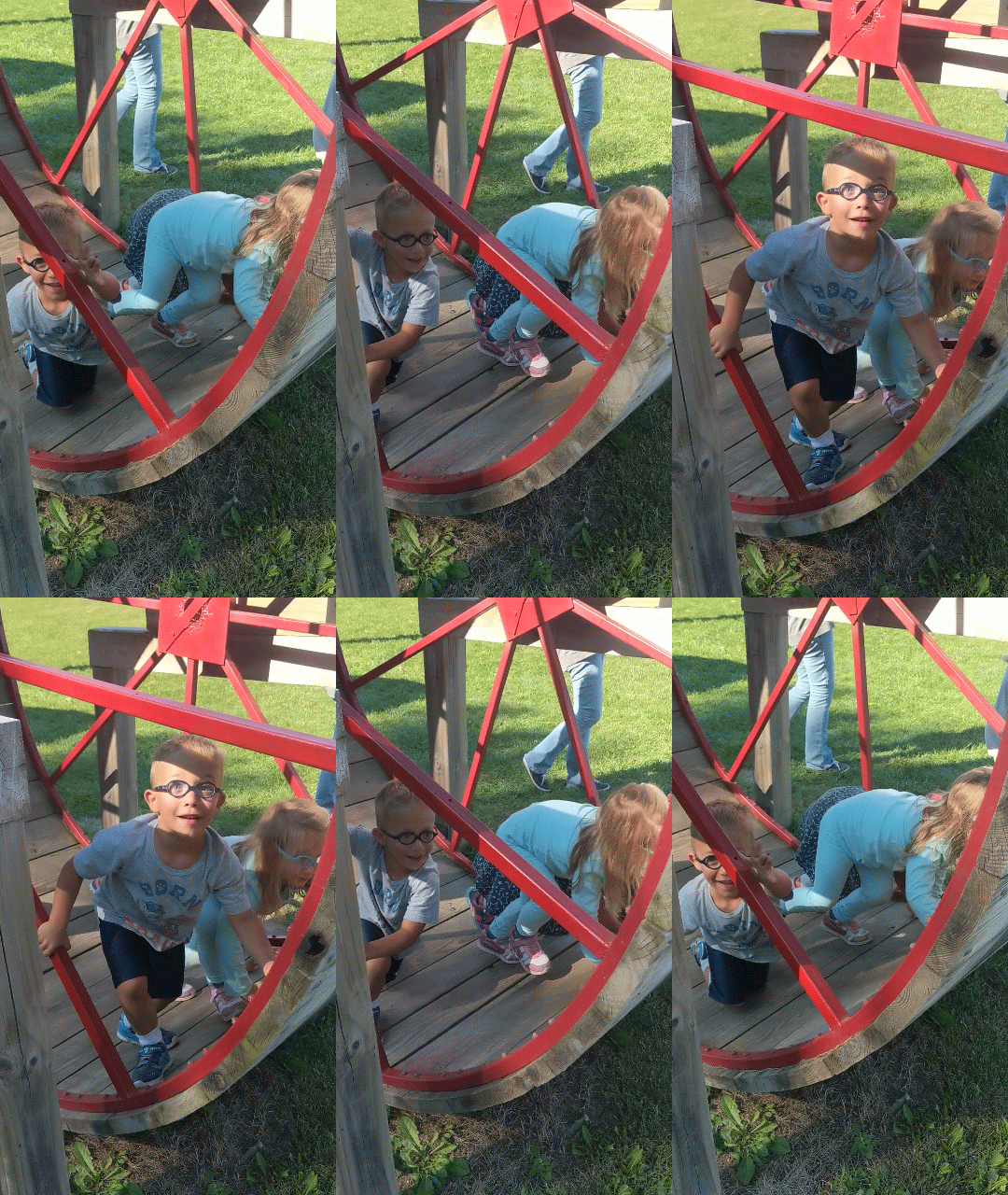


 Our transition to kindergarten has been deemed a success! The kiddos are loving their new school, their teachers and their “specials.” The first week was very exciting but we quickly realized that we needed to be cautious and careful of after school activities because our endurance for a long school day was not up to par. Day one ended with a 20-minutes sob fest laid out upon the kitchen floor. We are still trying to navigate how to sneak in a cat nap or quiet time when they arrive home to assist with the transition… this remains a work in progress.
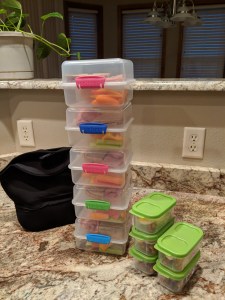 planning breakfast, lunch and snacks. Most of this preparation happens the night before when breakfast is partially prepared, lunches and snacks are packed and clothes for the next day are laid out. Sharing the plan with the youngest members of the team is also key because it can’t remain a best kept secret if it will be successful. It’s helpful to share the plan for the next morning or day the evening before.